In a world saturated with wellness advice, "mindfulness" has become the ubiquitous answer to nearly every modern malady. While its benefits are profound and well-documented, this singular focus often obscures a vast, rich landscape of meditative practices, each with its own unique purpose, mechanism, and power. The journey into meditation doesn't end with mindfulness; for many, it's just the beginning. This narrow view can leave individuals feeling that if one approach doesn't work, meditation itself is not for them. The reality is that meditation is not a monolith; it is a diverse toolkit of mental technologies refined over millennia.
The explosive growth of the meditation industry, with the global meditation app market hitting $1.39 billion in 2023 and projected to soar, underscores a collective yearning for inner balance. Yet, navigating this expanding world can be daunting. The key to unlocking its transformative potential lies not in finding a single, one-size-fits-all technique, but in understanding your own goals and matching them to the right practice. Whether you seek to sharpen your focus, cultivate deep compassion, manage chronic stress, or explore the fundamental nature of your own consciousness, there is a specific meditative path for you. This guide moves beyond the buzzword to provide a comprehensive map of the meditative world, empowering you to choose the practice that aligns perfectly with your personal aspirations.
Types of meditation?
Meditation encompasses a broad family of practices designed to train attention and awareness, ultimately leading to a state of mental clarity and emotional calm. Rather than a single activity, it's better understood as a category of mental exercises, much like "physical exercise" describes everything from weightlifting to marathon running. Each type of meditation employs a different technique and mental anchor to achieve its specific goals. Some focus on a single point like the breath, a sound, or a visual object to build concentration. Others cultivate an open, non-judgmental awareness of all sensations and thoughts as they arise. Still others use visualization, compassion, or analytical inquiry to transform one's emotional and cognitive state.
What are the different types of meditation?
The different types of meditation can be broadly categorized based on their core mechanism and intended outcome. The primary categories include:
- Focused Attention (or Concentrative) Meditation: This involves directing focus onto a single object—such as the breath, a mantra, or a candle flame—to the exclusion of all other thoughts and sensations. The goal is to build mental stability and concentration. Examples include Samatha, Mantra Meditation, and Transcendental Meditation.
- Open Monitoring (or Mindfulness) Meditation: This practice involves cultivating a non-judgmental awareness of all internal and external experiences as they arise and pass. Instead of focusing on one thing, you observe the entire field of your awareness. Mindfulness Meditation and Vipassana are primary examples.
- Compassion and Kindness Meditation: These practices are specifically designed to cultivate positive emotional states like love, kindness, and empathy towards oneself and others. Metta (Loving-Kindness) Meditation is the most well-known in this category.
- Visualization Meditation: This technique involves actively creating detailed mental images of specific scenes, goals, or calming environments to promote relaxation, healing, or achieve desired outcomes.
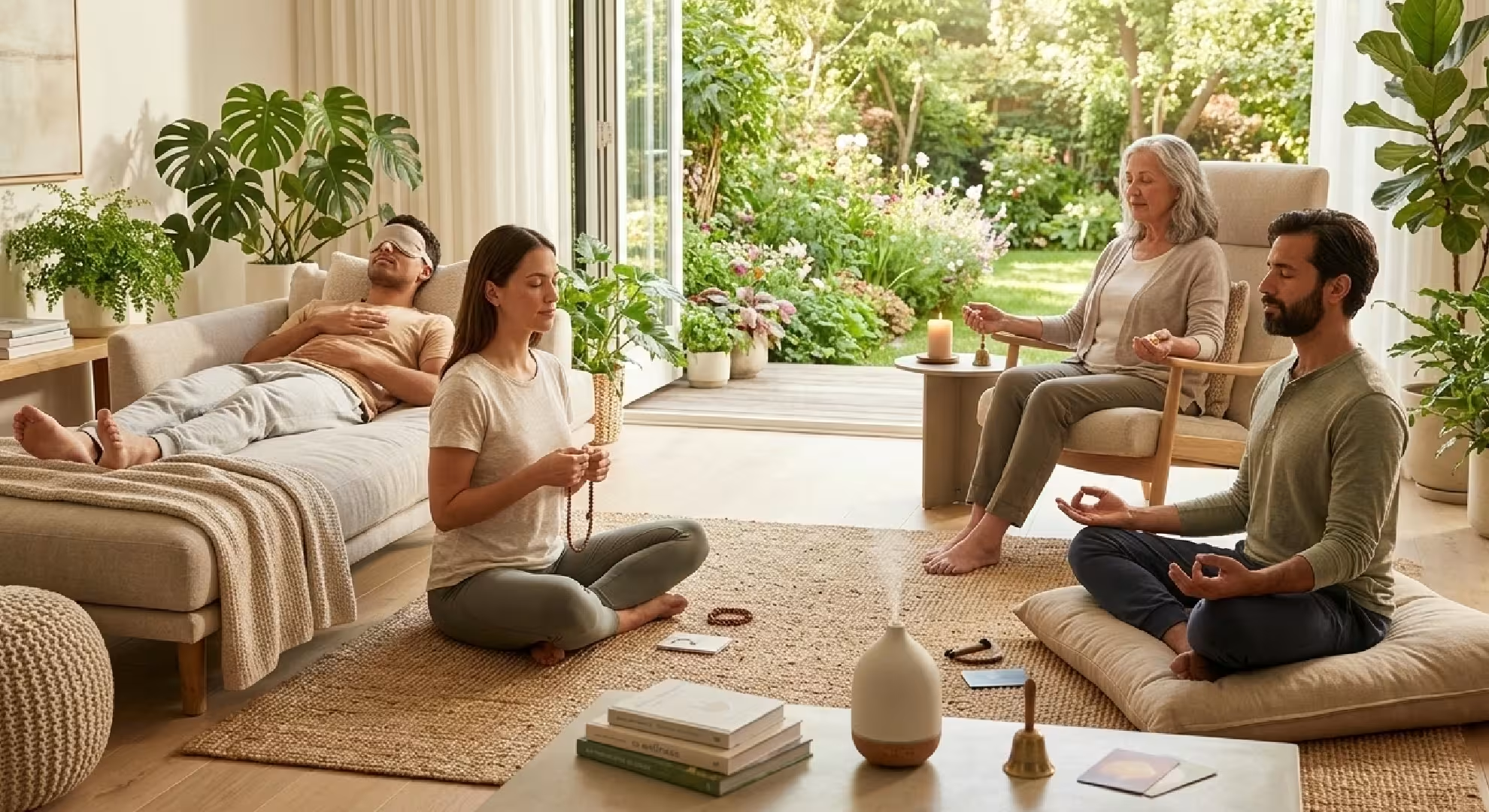
- Body-Centered Meditation: These practices use the body as the primary object of attention to ground awareness and release physical tension. Body Scan Meditation, Progressive Muscle Relaxation, and Yoga Nidra fall into this group.
How can one choose the right meditation type based on personal goals?
Choosing the right meditation type begins with a clear understanding of your "why." Instead of randomly selecting a practice, self-inquiry is the crucial first step. Ask yourself: What am I hoping to achieve? Is my primary goal to reduce the physical symptoms of stress? Do I need to sharpen my focus for professional performance? Am I seeking to heal emotional wounds and cultivate more positive relationships? Or am I interested in deeper philosophical and spiritual exploration?
Once you have identified your primary goal, you can align it with a specific category of practice.
- For stress and anxiety: Body-centered practices like Body Scan or Progressive Muscle Relaxation are excellent starting points because they directly address the physiological symptoms of stress.
- For a scattered mind and lack of focus: Focused Attention meditations like Mantra or Samatha are specifically designed to train the "muscle" of concentration.
- For self-criticism or interpersonal difficulties: Compassion-based practices like Metta can directly rewire neural pathways associated with empathy and positive emotions.
- For deeper self-understanding: Open-monitoring practices like Vipassana can provide profound insights into the nature of your own mind.
The most effective approach is to treat it as a personal experiment. Select a practice that aligns with your goal, commit to it for a set period (e.g., two to four weeks), and observe its effects. The right practice is the one that you can practice consistently and that yields tangible, positive changes in your life.
What are the best meditation types for reducing anxiety and stress?
For individuals specifically targeting anxiety and stress, the most effective meditation types are often those that directly regulate the body's physiological stress response—the "fight or flight" system. These practices work by activating the parasympathetic nervous system, which promotes a state of "rest and digest."
Among the best are:
- Mindfulness Meditation: By training the mind to remain in the present moment, it reduces the tendency to ruminate on past regrets or worry about future uncertainties, which are primary drivers of anxiety.
- Body Scan Meditation: This technique systematically brings awareness to different parts of the body, releasing stored physical tension you may not even be conscious of. This physical release sends powerful signals of safety to the brain.
- Progressive Muscle Relaxation (PMR): PMR involves intentionally tensing and then relaxing specific muscle groups. This process highlights the contrast between tension and relaxation, making it easier to release physical stress consciously.
- Yoga Nidra: Known as "yogic sleep," this guided practice induces a state of profound relaxation that is deeper than conventional sleep, allowing the nervous system to reset and repair.
- Loving-Kindness Meditation: Anxiety is often intertwined with fear and self-criticism. This practice counteracts those states by actively cultivating feelings of warmth, safety, and self-compassion, creating a resilient inner environment.
Introduction: Expanding Your Meditative Horizon
Beyond the Buzzword: Why Mindfulness is Just the Beginning
Mindfulness meditation is unequivocally powerful and serves as the gateway to contemplative practice for millions. It is the most researched form of meditation, with studies consistently showing positive effects on everything from cognitive function to depression. This research and accessibility have led to its market dominance; mindfulness meditation is expected to hold over one-fourth of the global industry market share by 2025.
However, its very popularity can create a blind spot. When mindfulness is presented as the entirety of meditation, individuals whose needs are better met by other techniques may miss out. Someone struggling with intense physical tension might benefit more directly from a Body Scan than from observing thoughts. An individual seeking to overcome deep-seated resentment may find Forgiveness Meditation more transformative. A person aiming for peak mental performance might require the unshakeable concentration built through Focused Attention practices. Viewing mindfulness as the foundation—a crucial skill of present-moment awareness—rather than the entire edifice allows us to build upon it, selecting specialized tools for more specific and ambitious personal work.
The Power of Purpose: How Goals Transform Your Meditation Practice
Approaching meditation without a clear purpose is like setting sail without a destination. While you may enjoy the journey, your progress will be aimless. Defining a specific goal transforms meditation from a passive, relaxing activity into an active, intentional training program for your mind. This purpose-driven approach provides three critical advantages.
First, it provides motivation. On days when the mind is restless or time is short, remembering your "why"—whether it's to be a more patient parent, a more focused leader, or simply to find a moment of peace—provides the necessary fuel to maintain consistency. Second, it provides a metric for progress. When your goal is to reduce anxiety, you can tangibly measure your success by observing your reactions to stressful situations. If your goal is focus, you can note improvements in your ability to concentrate on complex tasks. Finally, and most importantly, a clear goal allows for precise technique selection. Just as an athlete selects specific exercises to target different muscle groups, a meditator can choose specific practices to cultivate different mental and emotional capacities.
Understanding Meditation: More Than Just "Clearing Your Mind"
Defining Meditation: A Spectrum of Practices
At its core, meditation is a set of techniques used to intentionally regulate attention. It is the practice of training the mind, much like one trains the body through physical exercise. The ultimate aim is not to eliminate thoughts or achieve a state of blankness, but rather to change our relationship with our thoughts and experiences. Through consistent practice, meditation cultivates a state of calm concentration and heightened awareness, allowing for greater insight into the workings of our own minds. This process of self-observation leads to a range of benefits, including psychological balance, enhanced cognitive function, and a deeper sense of well-being. It is a systematic process of developing mental skills that can be applied to every moment of life.
Common Misconceptions and What Meditation Isn't
The popular portrayal of meditation has led to several persistent myths that can create significant barriers for beginners. Understanding what meditation is not is as important as understanding what it is.
- Myth 1: Meditation is about stopping your thoughts. The mind's nature is to think. The goal is not to force thoughts to stop, which is impossible and leads to frustration. Instead, meditation teaches you to observe your thoughts without getting entangled in them, noticing them arise and pass like clouds in the sky.
- Myth 2: You must sit in a specific, difficult posture. While certain postures can aid alertness, the only requirement is a stable, comfortable position where the spine is relatively straight. You can meditate sitting in a chair, on a cushion, or even lying down (though this increases the risk of falling asleep).
- Myth 3: Meditation is a religious practice. While many meditative techniques originated within spiritual traditions, the practices themselves are universal human technologies for training the mind. One can practice meditation in a completely secular context, focusing solely on its psychological and physiological benefits.
- Myth 4: You will feel calm and peaceful immediately. Meditation is a training process, not an instant relaxation pill. Many sessions will be marked by restlessness, boredom, or a cascade of thoughts. The benefit comes from the consistent effort of returning your attention, again and again, to your chosen anchor.
The Universal Benefits: Why Millions Practice (Stress Reduction, Mental Health, Health, etc.)
The widespread adoption of meditation is fueled by a robust and growing body of scientific evidence demonstrating its tangible benefits across multiple domains of health and well-being. Millions practice because it consistently delivers measurable results.
For mental health, meditation is a proven tool for managing stress, anxiety, and symptoms of depression. By calming the amygdala (the brain's fear center) and strengthening the prefrontal cortex (the center for executive function), it helps regulate emotional responses. This is why even short, regular use of meditation apps can reduce depression and anxiety while improving sleep.
Cognitively, regular practice has been shown to improve focus, attention span, and memory. It enhances mental clarity and cognitive flexibility, skills that can lead to greater productivity. One study highlighted that practicing mindfulness can boost employee productivity and focus by 120%.
Physically, meditation's stress-reducing effects have a powerful ripple effect. It can lower blood pressure, improve immune function, and reduce inflammation. It is particularly effective for improving sleep quality; a 2019 analysis of 18 studies found that mindfulness practices improved sleep quality more effectively than education-based treatments.
The Goal-Oriented Approach: Matching Meditation to Your Aspirations
Why Your "Why" Matters: Finding the Right Path for You
The single most important factor in building a sustainable and effective meditation practice is clarity of purpose. Your "why" is the anchor that holds you steady through the inevitable challenges of the practice—restlessness, doubt, and inconsistent motivation. Without a compelling reason, meditation can feel like a chore, another item on an already crowded to-do list. But when linked to a deeply felt personal goal, it becomes an act of self-care and a direct investment in your well-being.
Your "why" also acts as a compass, guiding you through the vast landscape of available techniques. If your goal is to manage a quick temper, Loving-Kindness Meditation is a more direct path than a simple breath-following exercise. If you are preparing for a high-stakes presentation, a visualization practice to mentally rehearse success will be more beneficial than an open-monitoring technique. By starting with the end in mind, you can choose your tools with intelligence and precision, dramatically increasing the likelihood of achieving the results you seek.
An Overview of Key Mechanisms: Focused Attention vs. Open Monitoring
Nearly all meditation practices can be understood through the lens of two fundamental cognitive mechanisms: Focused Attention (FA) and Open Monitoring (OM). Understanding this distinction is key to selecting the right practice for your goal.
Focused Attention (FA) is the act of voluntarily holding your attention on a chosen object, such as the sensation of your breath, a mantra, or a visual point. Every time your mind wanders—which it will—the instruction is to gently and non-judgmentally guide it back to the object of focus. This process is like a bicep curl for your brain's attention circuits. It directly trains the skills of concentration, stability, and mental discipline. Practices like Samatha, Mantra Meditation, and Transcendental Meditation are prime examples of FA. This mechanism is ideal for goals related to improving focus, calming a chaotic mind, and building mental stamina.
Open Monitoring (OM), in contrast, involves cultivating a broad, non-reactive awareness of the contents of your experience from moment to moment. Instead of focusing on one thing, you open your awareness to all sensations, thoughts, and emotions without getting lost in any single one. You are not trying to control or change your experience, but simply to observe it with clarity and equanimity. This mechanism trains the skills of mindfulness, emotional regulation, and insight. It helps you see your mental patterns more clearly and reduces your reactivity to them. Practices like Mindfulness Meditation and Vipassana are classic OM techniques. This mechanism is best for goals related to self-awareness, reducing emotional reactivity, and gaining insight into the nature of your mind.
For Stress Reduction & Deep Relaxation
Mindfulness Meditation: Cultivating present moment awareness to reduce stress and anxiety (Jon Kabat-Zinn, Mindfulness-Based Stress Reduction)
Mindfulness Meditation, famously systematized for secular use by Jon Kabat-Zinn in his Mindfulness-Based Stress Reduction (MBSR) program, is a foundational practice for stress management. The core technique involves anchoring attention to the breath and, when the mind wanders, gently returning it. This simple act trains the mind to stay in the present moment rather than being hijacked by anxieties about the future or regrets about the past. By observing thoughts and feelings without judgment, practitioners learn to de-identify from them, realizing they are temporary mental events, not absolute truths. This creates a crucial "gap" between a stressful stimulus and a habitual reaction, allowing for a more measured and calm response.
Body Scan Meditation: Releasing physical tension and fostering body awareness
The Body Scan is a powerful practice for directly counteracting the physiological symptoms of stress. The practitioner lies down and systematically guides their attention through different regions of the body, from the toes to the head, observing any sensations—such as warmth, tingling, pressure, or numbness—without judgment. This practice has a dual effect. First, it brings awareness to areas of chronic tension that often go unnoticed, allowing them to release. Second, it grounds the mind in the tangible reality of the body, pulling it away from anxious thought loops and into the present moment. It is an excellent technique for those who find it difficult to sit still or who experience stress primarily as physical discomfort.
Progressive Muscle Relaxation: Systematically tensing and relaxing muscle groups for deep physical calm
Developed by physician Edmund Jacobson in the 1920s, Progressive Muscle Relaxation (PMR) is a highly effective, active technique for inducing deep physical relaxation. The method involves systematically tensing a specific muscle group (e.g., clenching a fist) for 5-10 seconds, and then abruptly releasing the tension for 20-30 seconds while focusing on the sensation of relaxation. This process is repeated for all major muscle groups throughout the body. PMR works by teaching you to recognize the subtle signals of muscle tension and providing a direct method for releasing it. This deep physical calm sends a powerful feedback signal to the brain, reducing psychological anxiety and quieting the nervous system.
Yoga Nidra (Yogic Sleep): A guided practice for profound relaxation, mental clarity, and restorative rest
Yoga Nidra is a systematic, multi-stage guided meditation practiced lying down. It leads the practitioner through a journey of awareness, starting with body sensing and moving through breath awareness, emotional and sensory experiences, and visualization. The goal is to reach a state of conscious awareness in a state of deep relaxation, where the body is asleep but the mind remains alert. This state is profoundly restorative, believed to be more restful than conventional sleep. It is an exceptionally effective practice for combating stress, fatigue, and insomnia, as it allows the nervous system to completely reset and process subconscious information without interference from the waking mind.
Guided Imagery/Visualization: Using mental images to induce calm, manage stress, and promote positive states
Visualization meditation leverages the mind's powerful ability to influence the body's physiology. In this practice, a guide or the practitioner themselves creates a vivid, multi-sensory mental scene—such as a peaceful beach, a serene forest, or a warm, safe space. By engaging the senses of sight, sound, smell, and touch within the mind, the body begins to respond as if the experience were real. This can trigger the relaxation response, lower cortisol levels, and reduce heart rate. It's a highly effective technique for shifting one's emotional state quickly and can be used not only for relaxation but also for building confidence, rehearsing for performance, or fostering feelings of healing and well-being.
For Enhancing Focus & Mental Clarity
Mantra Meditation: Using a repeated sound or phrase (e.g., "Om") to focus the mind and quiet internal chatter
Mantra Meditation is a classic Focused Attention practice that uses a repeated sound, word, or phrase as the object of concentration. The mantra can be a single syllable like "Om," a meaningful phrase, or a specific sound provided by a teacher. The practitioner silently or audibly repeats the mantra, continually bringing their attention back to it whenever the mind wanders. The rhythmic, repetitive nature of the mantra has a deeply calming effect on the nervous system and helps to occupy the "auditory channel" of the mind, making it more difficult for distracting thoughts to take hold. This singular focus builds powerful concentration skills and leads to a state of mental stillness and clarity.
Transcendental Meditation (TM): A specific mantra-based technique for effortless concentration and deep rest
Transcendental Meditation is a specific, standardized form of mantra meditation introduced by Maharishi Mahesh Yogi. Practitioners are given a specific mantra in a formal training course and are taught a unique method for using it. Unlike some concentrative practices that require effortful focus, TM emphasizes an "effortless" approach. The technique is designed to allow the mind to naturally and spontaneously settle into quieter, more refined states of thinking, eventually "transcending" thought altogether to experience a state of "restful alertness." It is typically practiced for 20 minutes twice a day and is known for its ability to induce very deep states of relaxation and reduce stress significantly.
Zazen: Sitting meditation from Zen Buddhism, emphasizing focused, alert presence (Buddhism)
Zazen, which translates to "seated meditation," is the core practice of Zen Buddhism. While there are variations, it typically involves sitting in a stable, upright posture and paying close attention to the breath. The focus is not just on concentration, but on a state of alert, moment-to-moment presence. In some schools, the practice is "shikantaza," or "just sitting," where the practitioner does not focus on any particular object but remains keenly aware of whatever enters their field of consciousness—thoughts, sounds, sensations—without grasping or rejecting anything. Zazen cultivates a state of profound stillness, mental clarity, and direct, experiential insight