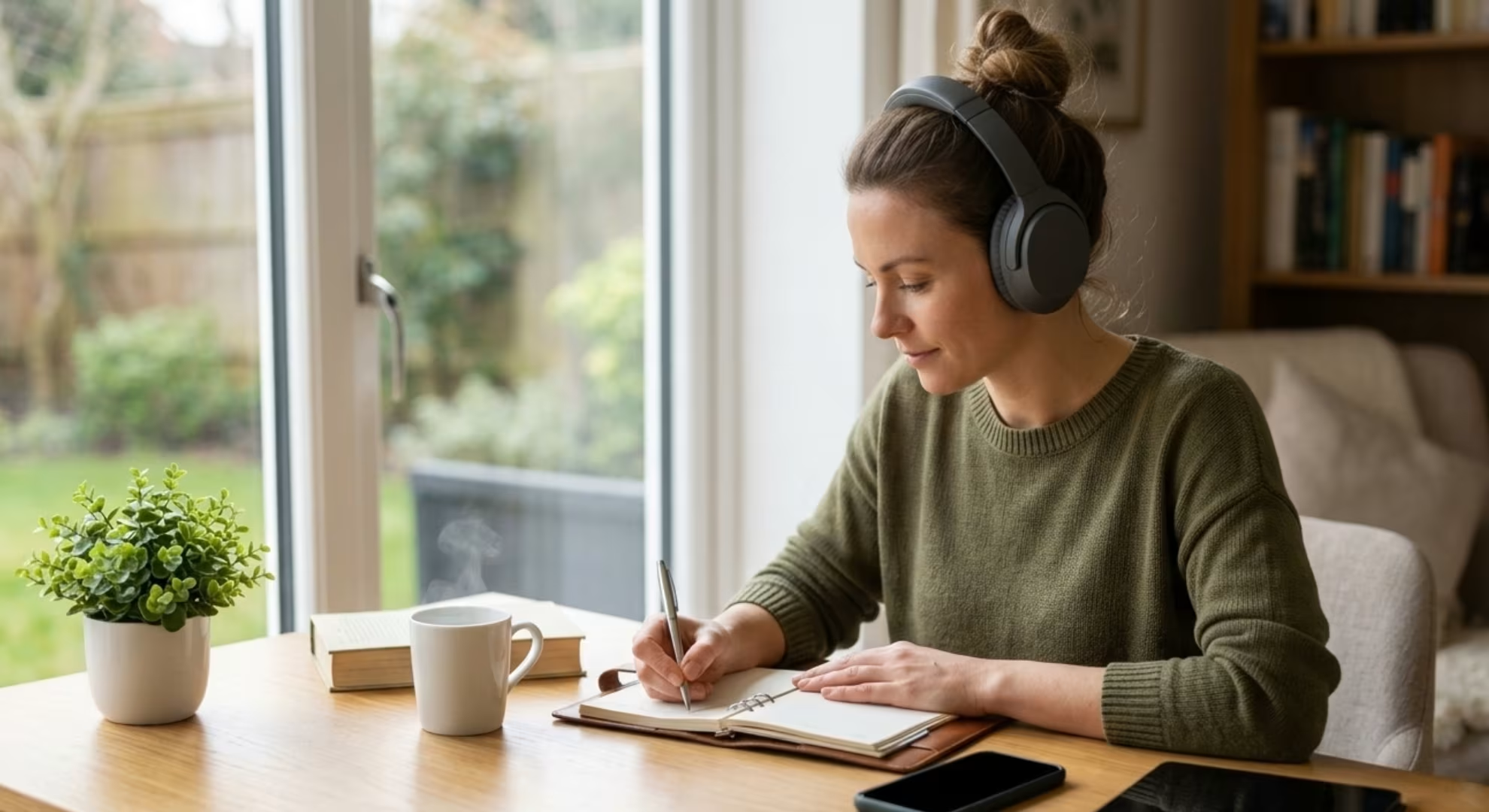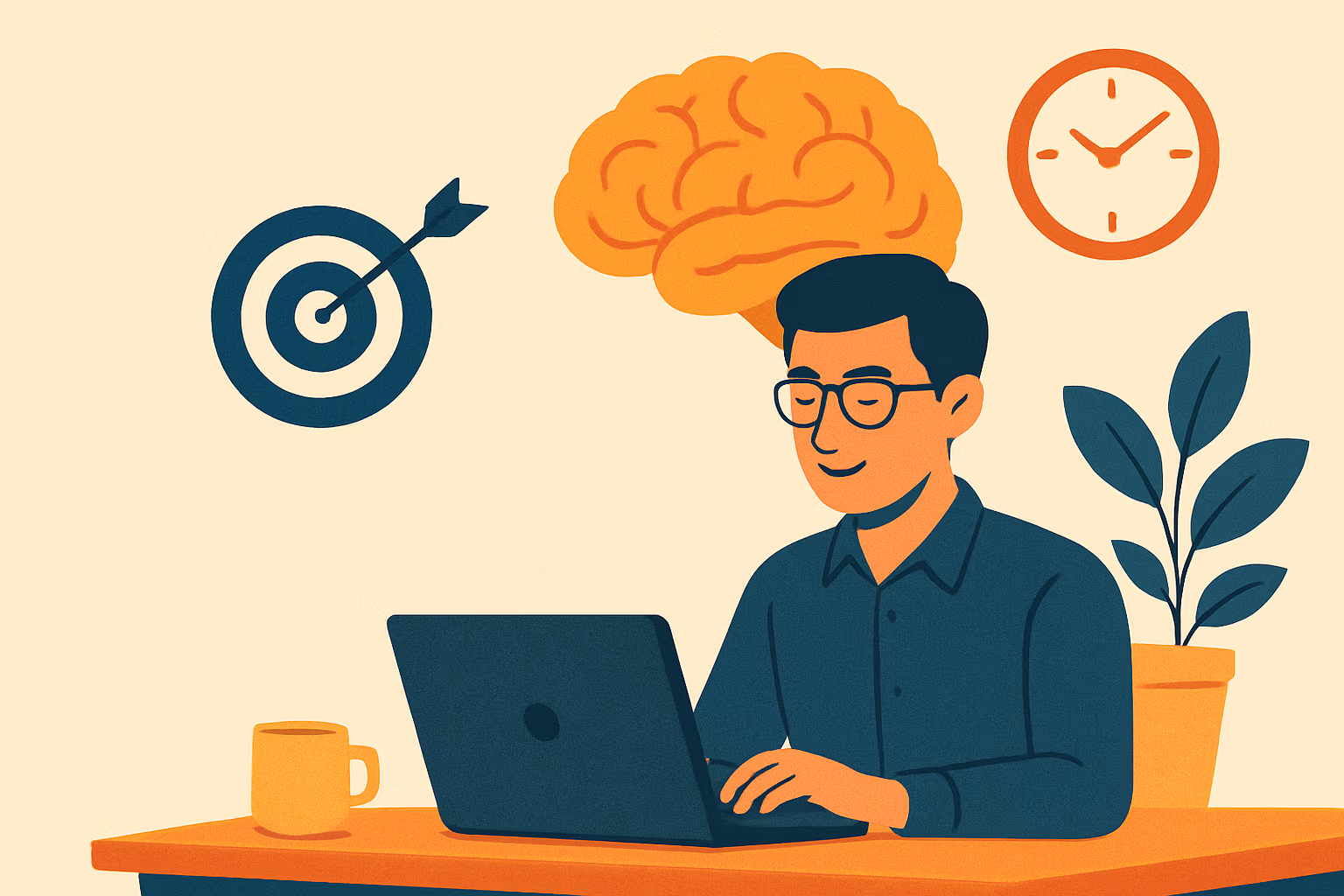
In a world of constant notifications, deadlines, and digital noise, the ability to find a moment of peace and clarity can feel like a superpower. This power, however, is not external; it resides within you, accessible at any moment through the simple, conscious act of breathing. Deep breathing is more than an automatic bodily function; it is a potent tool for managing your mental and physiological state. By mastering specific breathing techniques, you can intentionally shift your body out of a state of stress and into one of calm, while simultaneously sharpening your mental focus. This article serves as a comprehensive guide to understanding and mastering this innate ability. We will explore the science behind how a controlled breath can instantly alter your nervous system, delve into foundational and advanced breathing exercises, and provide a practical roadmap for integrating these practices into your daily life. The goal is to move beyond simply knowing about deep breathing and empower you to use it as a reliable, on-demand tool for enhanced well-being.
What is deep breathing and how does it work?
Deep breathing, often referred to as diaphragmatic breathing or belly breathing, is the practice of consciously engaging the diaphragm—a large dome-shaped muscle located at the base of the lungs—to take full, deep inhalations. This stands in contrast to the shallow, often unnoticed "chest breathing" that many people default to, especially during times of stress. Shallow breathing primarily uses the intercostal muscles between the ribs, which limits the volume of air and oxygen taken into the lungs.
The mechanism of deep breathing is fundamentally about efficiency and physiological signaling. When you inhale deeply using the diaphragm, it contracts and moves downward, creating more space in your chest cavity. This allows your lungs to expand fully, drawing in a maximum volume of air and, consequently, more oxygen. This increased oxygen supply is then distributed throughout the body, nourishing cells and organs, including the brain.
On the exhalation, the diaphragm relaxes and moves upward, helping to expel a greater amount of carbon dioxide. The key to its effectiveness lies in the deliberate slowing of the breath. A slow, controlled exhale is particularly powerful because it directly stimulates the vagus nerve, a critical component of the parasympathetic nervous system. This stimulation sends a signal to the brain that the body is safe, effectively counteracting the "fight-or-flight" stress response. In essence, deep breathing works by hijacking the body's automatic systems through a conscious, voluntary action, allowing you to manually shift from a state of high alert to one of rest and relaxation.
Are there proven health benefits of deep breathing?
The practice of deep breathing is supported by a significant and growing body of scientific research that validates its wide-ranging health benefits for both the mind and body. These advantages are not merely anecdotal; they are measurable physiological and psychological changes that occur in response to consistent practice.
On a physiological level, one of the most immediate and well-documented benefits is its impact on the cardiovascular system. Deep breathing techniques have been shown to lower heart rate and reduce blood pressure. By activating the parasympathetic "rest-and-digest" system, deep breathing mitigates the effects of the sympathetic "fight-or-flight" system, which, when chronically activated, can contribute to hypertension and heart disease. The improved oxygenation from this breathing technique also enhances the function of organs and muscles throughout the body.
From a psychological perspective, the benefits are equally profound. Deep breathing is a cornerstone of many therapeutic interventions for anxiety and stress management. As highlighted by News-Medical.net, even a single session of slow-paced deep breathing can benefit the vagal tone and attenuate anxiety in adults. For those struggling with sleep, consistent practice can be transformative. Research published in Frontiers demonstrates that breathing exercises consistently improve sleep quality across various patient groups. Further compelling evidence from a study in PubMed shows that deep breathing exercises can significantly improve sleep quality while also reducing anxiety and depression. By calming the nervous system and quieting racing thoughts, these exercises help create the ideal internal conditions for restful sleep. The practice also sharpens focus and cognitive function by increasing oxygen flow to the brain and reducing the mental clutter associated with stress.
Introduction: Unlock Your Inner Calm and Sharpen Your Focus
In our fast-paced, high-demand world, the states of calm and focus are increasingly valuable yet elusive commodities. We are constantly navigating a landscape of stressors that trigger our body's primal alert systems, making it difficult to maintain equilibrium. The solution, however, is not to eliminate all external pressures but to cultivate a powerful internal resource to manage our response to them. That resource is your own breath. This introduction will explore why conscious breathing is more than just a survival mechanism, why the ability to summon calm and focus instantly is critical today, and how this guide will provide a practical pathway to mastering this essential skill.
The Power of Your Breath: Beyond Automatic Survival
For most of our lives, breathing is an unconscious process, a background function that keeps us alive without a second thought. Yet, this automatic rhythm holds a unique position within our physiology: it is one of the few autonomic functions that we can also consciously control. You cannot will your heart to beat slower or your stomach to digest faster, but you can choose to change the pace, depth, and rhythm of your breath.
This dual nature is the key to its power. By intentionally taking control of your breath, you gain direct access to the control panel of your autonomic nervous system. A short, shallow breath signals danger to your brain, activating a stress response. Conversely, a slow, deep, and controlled breath sends a message of safety and calm, activating a relaxation response. This makes your breath a powerful biofeedback tool—a bridge between your conscious mind and the intricate, automatic processes of your body. Mastering this connection transforms breathing from a mere survival act into a deliberate practice for self-regulation and mental optimization.
Why "Instant" Calm and Focus Matters in Today's World
The modern environment often demands rapid shifts in our mental state. One moment you might be dealing with a high-pressure work deadline, and the next you need to be present and patient with your family. The residual stress from one activity can easily bleed into the next, diminishing your effectiveness and enjoyment. The prevalence of this experience is reflected in data showing that nearly half of U.S. adults reported frequently feeling stress. Furthermore, a survey from the American Psychological Association found that three-quarters of adults say their stress levels have increased over the past year.
The ability to "press reset" and find calm and focus on demand is no longer a luxury; it's a critical skill for navigating daily life effectively. Instant calm allows you to de-escalate anxiety before it becomes overwhelming, respond thoughtfully rather than reactively in challenging situations, and transition smoothly between different roles and responsibilities. Similarly, instant focus enables you to cut through distractions, engage deeply with the task at hand, and perform at your cognitive best when it matters most. Deep breathing exercises are the mechanism for this reset, offering a simple, discreet, and immediate method to manage your internal state regardless of your external circumstances.
What You'll Learn: A Practical Path to Breathing Mastery
This article is designed to be a clear and actionable guide, moving you from a theoretical understanding of deep breathing to practical application and mastery. We will begin by demystifying the science, explaining precisely how a simple breathing technique can have such a profound impact on your nervous system, heart rate, and brain function.
Next, we will establish a solid foundation by teaching you the cornerstone of all effective breathwork: Diaphragmatic Breathing, or "belly breathing." You will learn the correct mechanics and how to troubleshoot common issues. From there, we will explore a variety of targeted breathing exercises, each designed for a specific outcome—from the stabilizing rhythm of Box Breathing to the deep relaxation of the 4-7-8 technique. Finally, we will provide concrete strategies for integrating these practices into your daily routine, transforming them from an occasional intervention into a consistent and reliable habit for lifelong calm and focus.
The Science of Serenity: How Deep Breathing Works Instantly
The immediate calming and focusing effects of deep breathing are not a placebo effect; they are the result of direct and measurable physiological and neurological changes. When you consciously alter the rhythm and depth of your breath, you initiate a cascade of events that shifts your entire system from a state of high-alert stress to one of calm coherence. This process involves a conversation between your lungs, your nervous system, your heart, and your brain.
The Autonomic Nervous System: Shifting from Fight-or-Flight to Rest-and-Digest
Our body is governed by the autonomic nervous system (ANS), which operates largely outside of our conscious control. The ANS is divided into two main branches: the sympathetic nervous system (SNS) and the parasympathetic nervous system (PNS).
The SNS is our "fight-or-flight" system. When we perceive a threat—whether it's a physical danger or a stressful work email—the SNS kicks in, releasing hormones like adrenaline and cortisol. This causes our heart rate to increase, our breathing to become rapid and shallow, and our muscles to tense up, preparing the body for immediate action. While essential for survival, chronic activation of this system contributes to anxiety and long-term health problems.
The PNS is our "rest-and-digest" system. It promotes relaxation, lowers the heart rate, aids digestion, and conserves energy. The key to activating the PNS lies in the vagus nerve, the longest cranial nerve in the body, which runs from the brainstem down to the abdomen, connecting with the heart, lungs, and other vital organs. Deep, slow breathing, particularly with a longer exhale, directly stimulates the vagus nerve. This stimulation acts as a brake on the SNS, signaling to the brain that the danger has passed and it's safe to relax. This shift from sympathetic to parasympathetic dominance is the primary reason deep breathing brings about such a rapid sense of calm.
Instant Physiological Shifts: Heart Rate, Blood Pressure, and Oxygen Flow
The activation of the parasympathetic nervous system triggers immediate and observable changes in the body. One of the first things to respond is the heart. The vagus nerve directly influences the heart's pacemaker, and its stimulation causes a decrease in heart rate, a phenomenon known as respiratory sinus arrhythmia. This slowing of the heart reduces the strain on the cardiovascular system and contributes to the feeling of relaxation.
Simultaneously, blood pressure begins to drop as blood vessels dilate. The tense state induced by the stress response subsides, allowing for better circulation. Furthermore, the mechanics of deep breathing itself—fully engaging the diaphragm—ensure a more efficient gas exchange in the lungs. This increases the amount of oxygen entering the bloodstream with each breath and improves the expulsion of carbon dioxide. This enhanced oxygen flow nourishes every cell in the body, but it has a particularly significant impact on the brain, which consumes about 20% of the body's oxygen supply. This boost in oxygenation helps clear mental fog and supports optimal cognitive function.
Sharpening Your Mind: Deep Breathing's Impact on Focus and the Prefrontal Cortex
The benefits of deep breathing extend beyond simple relaxation to enhanced cognitive function, particularly focus. This is directly linked to its effect on the prefrontal cortex (PFC), the brain region responsible for executive functions like decision-making, problem-solving, emotional regulation, and concentration.
During a stress response, the amygdala (the brain's fear center) becomes highly active, effectively hijacking the PFC. This impairs our ability to think clearly and focus. By calming the stress response through deep breathing, you reduce the amygdala's influence and restore blood flow and resources to the PFC. This allows you to regain control over your attention and think more rationally.
Furthermore, the rhythmic nature of controlled breathing can influence the brain's electrical activity, known as brainwaves. Slow, deep breathing tends to promote the production of alpha waves, which are associated with a state of "relaxed alertness." This is the ideal mental state for learning, creativity, and focused work—calm, yet highly aware and receptive. By practicing breathing exercises, you are essentially training your brain to enter this optimal state more readily, sharpening your mind and improving your ability to concentrate on command.
Preparing for Your Practice: Setting the Stage for Success
While the beauty of deep breathing is that it can be done anywhere, anytime, creating a conducive environment and a prepared state of mind can significantly enhance the effectiveness of your practice, especially when you are first learning. Just as you would warm up before physical exercise, a few preparatory steps can help you get the most out of your breathwork session. These steps involve optimizing your external space, your physical posture, and your internal mindset.
Finding Your Sanctuary: Creating a Conducive Environment
Your environment sends powerful cues to your brain. To encourage a state of relaxation and focus, it's beneficial to find a space where you are unlikely to be interrupted. This doesn't need to be a special room; it can be a quiet corner of your office, a comfortable chair in your living room, or even your parked car.
Consider minimizing sensory input. Dim the lights, if possible, or close your eyes to block out visual distractions. Silence any notifications on your phone and computer. If complete silence is difficult to achieve or feels unsettling, you might prefer soft, ambient music or a white noise machine to mask more jarring sounds. The goal is to create a personal sanctuary, a bubble of calm where your attention can turn inward without being constantly pulled away by external stimuli. This deliberate act of creating a quiet space signals to your mind and body that it's time to transition into a different mode of being.
Posture and Position: Optimizing Your Body for Breathwork
Your physical posture has a direct impact on your ability to breathe deeply and efficiently. The primary goal is to create a position where your diaphragm can move freely and your airway is open. There are two main positions that work well for most breathing exercises:
- Sitting: Sit in a comfortable chair with your feet flat on the floor. Keep your back straight but not rigid, allowing your spine to maintain its natural curve. You can place a small cushion behind your lower back for support. Rest your hands gently on your lap or on your belly to feel the movement of your breath. Relax your shoulders, letting them drop away from your ears, and gently tuck your chin to lengthen the back of your neck.
- Lying Down: Lie on your back on a comfortable, flat surface like a yoga mat or your bed (if it’s not too soft). Place a pillow under your head if needed for comfort, and perhaps another under your knees to release any tension in your lower back. Let your arms rest at your sides, palms facing up, and allow your feet to fall open naturally. This position is often the easiest for beginners as it allows for maximal relaxation and makes it easier to feel the rise and fall of the belly.
Whichever position you choose, ensure your clothing is not restrictive around your waist or chest. The key is to find a posture that is both alert and relaxed, allowing your body to be at ease so your mind can focus on the breath.
Cultivating a Mindful Mindset: Letting Go of Distractions
Perhaps the most crucial preparation is internal. Before you begin your first breath, take a moment to set your intention. Acknowledge that the purpose of this time is to simply be present with your breath. It's not about achieving a perfect state of calm or forcing thoughts out of your head; it's about observation and gentle guidance.
Accept that distractions will arise. Your mind will wander to your to-do list, an upcoming meeting, or a past conversation. This is normal. The practice isn't about having an empty mind, but about what you do when you notice your mind has wandered. Instead of getting frustrated, gently acknowledge the thought without judgment and then kindly redirect your focus back to the physical sensation of your breath. Cultivating this attitude of non-judgmental awareness is the essence of mindfulness and is fundamental to a successful and rewarding breathing practice.
Foundational Technique: Mastering Diaphragmatic Breathing (Belly Breathing)
Before exploring more complex breathing exercises, it is essential to master the fundamental technique upon which they are all built: Diaphragmatic Breathing. Also known as belly breathing, this is the body's most natural and efficient way to breathe. Many of us, due to stress, poor posture, or habit, have adopted a pattern of shallow chest breathing. Relearning how to engage the diaphragm is the single most important step in unlocking the full potential of your breath for calm and focus.
Understanding the Diaphragm: Your Primary Breathing Muscle
The diaphragm is a large, parachute-shaped muscle that sits at the base of the chest cavity, separating it from the abdominal cavity. It is the primary muscle of respiration. When you inhale properly, the diaphragm contracts and flattens, moving downwards. This creates a vacuum effect that pulls air into the lungs, allowing them to expand fully, especially into their lower lobes where the most efficient gas exchange occurs. As you exhale, the diaphragm relaxes and moves back up into its dome shape, passively pushing air out of the lungs.
In contrast, shallow chest breathing relies on the smaller accessory muscles in the neck, shoulders, and between the ribs. This is an inefficient method that requires more effort for less oxygen intake and is often associated with the body's stress response. By consciously shifting the work of breathing back to the diaphragm, you are not only improving your physiological efficiency but also actively signaling to your nervous system that it is safe to relax.
Step-by-Step Guide to Diaphragmatic Breathing
This exercise is best learned while lying down, as it allows for maximum relaxation and makes it easier to feel the correct movements.
- Get Comfortable: Lie on your back on a flat surface with your knees bent and your feet flat on the floor. Place a small pillow under your head for support if needed.
- Hand Placement for Feedback: Place one hand flat on your upper chest and the other hand on your belly, just below your rib cage. This will allow you to feel which part of your body is moving as you breathe.
- Inhale Through Your Nose: Slowly inhale through your nose for a count of three or four. As you do, focus on sending the air deep into your lungs so that your belly rises and pushes your hand up. The hand on your chest should remain relatively still. This is the key indicator that you are using your diaphragm.
- Exhale Through Your Mouth: Tighten your abdominal muscles and let them fall inward as you exhale slowly through slightly pursed lips (as if you were gently blowing out a candle) for a count of four or five. The hand on your belly should lower as you exhale. Aim for the exhale to be slightly longer than the inhale.
- Pause and Repeat: After a full exhale, pause for a moment before beginning the next breath. Continue this cycle for 5 to 10 minutes. Focus on maintaining a smooth, steady rhythm.
The goal is to make the movement of the belly the primary motion, while the chest remains quiet. This focused practice helps retrain your body's default breathing pattern.
Common Challenges and Troubleshooting for Belly Breathing
It's common to encounter a few hurdles when first learning this technique. Here’s how to address them:
- "My chest moves more than my belly." This is the most common issue, known as paradoxical breathing. It often means your upper body is tense. Try to consciously relax your shoulders, neck, and chest muscles. You can also try a gentle exaggeration: on the inhale, actively try to push your belly out. On the exhale, gently pull your belly button in towards your spine.
- "I feel lightheaded or dizzy." This can happen if you are breathing too deeply or too quickly compared to your usual pattern. It's a sign of a rapid change in your oxygen and carbon dioxide levels. Simply slow down your pace, take shallower breaths for a few cycles, and allow your body to adjust. The dizziness will pass.
- "I can't get the coordination right." Be patient. This is a new motor skill for your body. Using a small book or other light object on your belly can provide more noticeable visual feedback. Watch it rise with the inhale and fall with the exhale. Consistency in practice is key to making this breathing technique feel natural and automatic.
Targeted Techniques for Instant Calm and Sharpened Focus
Once you have a solid grasp of Diaphragmatic Breathing, you can expand your toolkit with specific breathing exercises designed for more targeted outcomes. These techniques use structured patterns of counting, holding the breath, and varying the inhale/exhale pathways to produce distinct effects, from deep relaxation to heightened alertness. Each technique is a powerful tool you can deploy to manage your mental state in different situations.
Box Breathing: A Symmetrical Path to Stability
Also known as four-square breathing, Box Breathing is a simple yet powerful technique favored by athletes, military personnel, and anyone needing to maintain calm and focus under pressure. Its symmetrical structure is easy to remember and has a profoundly stabilizing effect on the mind and nervous system. The equal-length phases impose order on a chaotic mental state.
Technique:
- Position: Sit upright in a comfortable chair with your back straight.
- Exhale: Gently exhale all the air from your lungs through your mouth.
- Inhale (4 Counts): Inhale slowly and deeply through your nose for a steady count of four. Focus on filling your belly with air.
- Hold (4 Counts): Hold your breath at the top of the inhale for a count of four. Avoid tensing your shoulders or chest.
- Exhale (4 Counts): Exhale slowly and completely through your mouth or nose for a count of four.
- Hold (4 Counts): Hold your breath at the bottom of the exhale for a count of four.
- Repeat: Continue this cycle for 5-10 repetitions or for a few minutes until you feel a sense of stability and focus return.
Best for: Calming racing thoughts, reducing immediate stress, and improving concentration before a challenging task.
4-7-8 Breathing: The Relaxation Breath
Developed by Dr. Andrew Weil, the 4-7-8 breathing technique is a powerful natural tranquilizer for the nervous system. The extended hold and long exhale are specifically designed to maximize parasympathetic activation, making it highly effective for combating anxiety and promoting sleep. The specific ratios are crucial to its effect.
Technique:
- Position: Sit with your back straight or lie down. Place the tip of your tongue against the ridge of tissue just behind your upper front teeth and keep it there throughout the entire exercise.
- Exhale: Exhale completely through your mouth, making a whooshing sound.
- Inhale (4 Counts): Close your mouth and inhale quietly through your nose for a mental count of four.
- Hold (7 Counts): Hold your breath for a count of seven.
- Exhale (8 Counts): Exhale completely through your mouth, making another whooshing sound, for a count of eight.
- Repeat: This completes one breath. Inhale again and repeat the cycle three more times for a total of four breaths.
Best for: Reducing acute anxiety, calming the mind before bed, or falling back asleep if you wake during the night.
Pursed Lip Breathing: Maximizing Exhalation for Deeper Calm
Pursed lip breathing is a simple technique that focuses on slowing the pace of exhalation. This helps to reduce the work of breathing, keeps airways open longer, and promotes a fuller release of trapped air and carbon dioxide. It is particularly calming and can help alleviate feelings of shortness of breath.
Technique:
- Position: Sit or stand comfortably, relaxing your neck and shoulders.
- Inhale (2 Counts): Inhale slowly through your nose for a count of two, keeping your mouth closed.
- Exhale (4 Counts): Purse your lips as if you're about to whistle or blow out a candle. Exhale all the air out of your lungs slowly and gently through your pursed lips for a count of at least four.
- Repeat: Continue this pattern for several minutes. The key is to make the exhale at least twice as long as the inhale.
Best for: Moments of breathlessness, managing panic, and achieving a state of deep physical relaxation.
Double-Sigh Breathing: Rapid Stress Reduction (Stanford Research)
Highlighted in research from Stanford University, the physiological sigh (or double-sigh breathing) is one of the fastest ways to voluntarily control the nervous system and reduce stress in real-time. This technique works by reinflating collapsed alveoli (tiny air sacs) in the lungs, which maximizes gas exchange and offloads carbon dioxide more efficiently, quickly calming the body.
Technique:
- First Inhale: Take a deep inhale through your nose.
- Second Inhale: Before you exhale, take another short, sharp inhale through the nose to fully inflate your lungs. Imagine stacking a smaller breath on top of the first one.
- Long Exhale: Exhale slowly and completely through your mouth, extending the exhale as long as you comfortably can.
- Repeat: Just one to three cycles of this technique can produce a noticeable and immediate sense of relief and calm.
Best for: In-the-moment stress reduction, recovering from a sudden shock or frustration, and quickly resetting your nervous system.
Integrating Deep Breathing into Your Daily Routine for Mastery
Knowing how to perform breathing exercises is only the first step. The true benefits of calm and focus are unlocked when these techniques become an ingrained habit—a reliable tool that you can call upon effortlessly. Mastery comes from consistent practice and a thoughtful approach to integrating breathwork into the fabric of your daily life, both as a regular maintenance routine and as an on-the-spot intervention.
Building a Healthy Habit: Making Breathwork Consistent
The key to forming a lasting habit is to start small and be consistent. Rather than aiming for a single long session, it's often more effective to sprinkle short "breathing breaks" throughout your day. This approach, known as habit stacking, involves linking your new breathing practice to an existing daily routine.
- Morning Anchor: Practice three to five minutes of Diaphragmatic Breathing right after you wake up, before you even get out of bed. This sets a calm tone for the day ahead.
- Transition Ritual: Use your commute or the moment you arrive at work as a cue. Before starting your computer, take one minute to do a few rounds of Box Breathing to clear your mind and set your focus.
- Midday Reset: Link your practice to your lunch break. Before you eat, take two minutes for Pursed Lip Breathing to shift your body into a "rest-and-digest" state.
- Evening Wind-Down: Make a few cycles of 4-7-8 Breathing the last thing you do before turning off the lights. This helps signal to your body that it's time for sleep.
By attaching your practice to established routines, you remove the need for willpower and make it an automatic part of your day. Start with a goal of just one or two of these sessions and gradually build from there.
Situational Application: Breathing for In-the-Moment Relief and Focus
Beyond scheduled practice, the real power of these techniques lies in their situational application. The goal is to train your self-awareness so you can recognize the early signs of stress or distraction and intervene with your breath before these states take hold.
- Before a Big Meeting or Presentation: Find a quiet space (even a bathroom stall works) and practice two minutes of Box Breathing. This will calm your nerves, lower your heart rate, and sharpen your mental clarity.
- When You Receive a Stressful Email: Before you type a reactive response, stop. Take three Double-Sigh breaths. This immediate reset can help you respond thoughtfully and professionally instead of emotionally.
- Stuck in Traffic or a Long Line: Instead of getting frustrated, use this "found time" to practice Diaphragmatic Breathing. It transforms a moment of irritation into an opportunity for relaxation.
- When Your Mind Wanders During Deep Work: If you find yourself losing focus, pause your task. Perform one minute of Box Breathing, focusing intently on the count. This acts as a mental reset, helping you return to your work with renewed concentration. The need for enhanced focus is increasingly important, as some data shows remote working can lead to a 22% increase in deep-focus work, a state that breathing exercises can support.
Beyond the Basics: Exploring Further Relaxation Techniques
Once deep breathing becomes a comfortable and consistent practice, you can enhance its effects by pairing it with other relaxation modalities. These combinations create a more holistic approach to managing your well-being.
- Mindful Body Scan: While lying down and practicing Diaphragmatic Breathing, bring your awareness to different parts of your body, one at a time. Start with your toes and slowly move up to your head. As you focus on each area, simply notice any sensations—warmth, tingling, tension—without judgment. This deepens the mind-body connection.
- Progressive Muscle Relaxation (PMR): This technique involves tensing a specific muscle group as you inhale and then completely releasing the tension as you exhale. For example, inhale and clench your fists tightly, then exhale and let your hands go completely limp. Working through all the major muscle groups in this way while breathing deeply is an incredibly effective method for releasing physical tension.
- Visualization: As you breathe