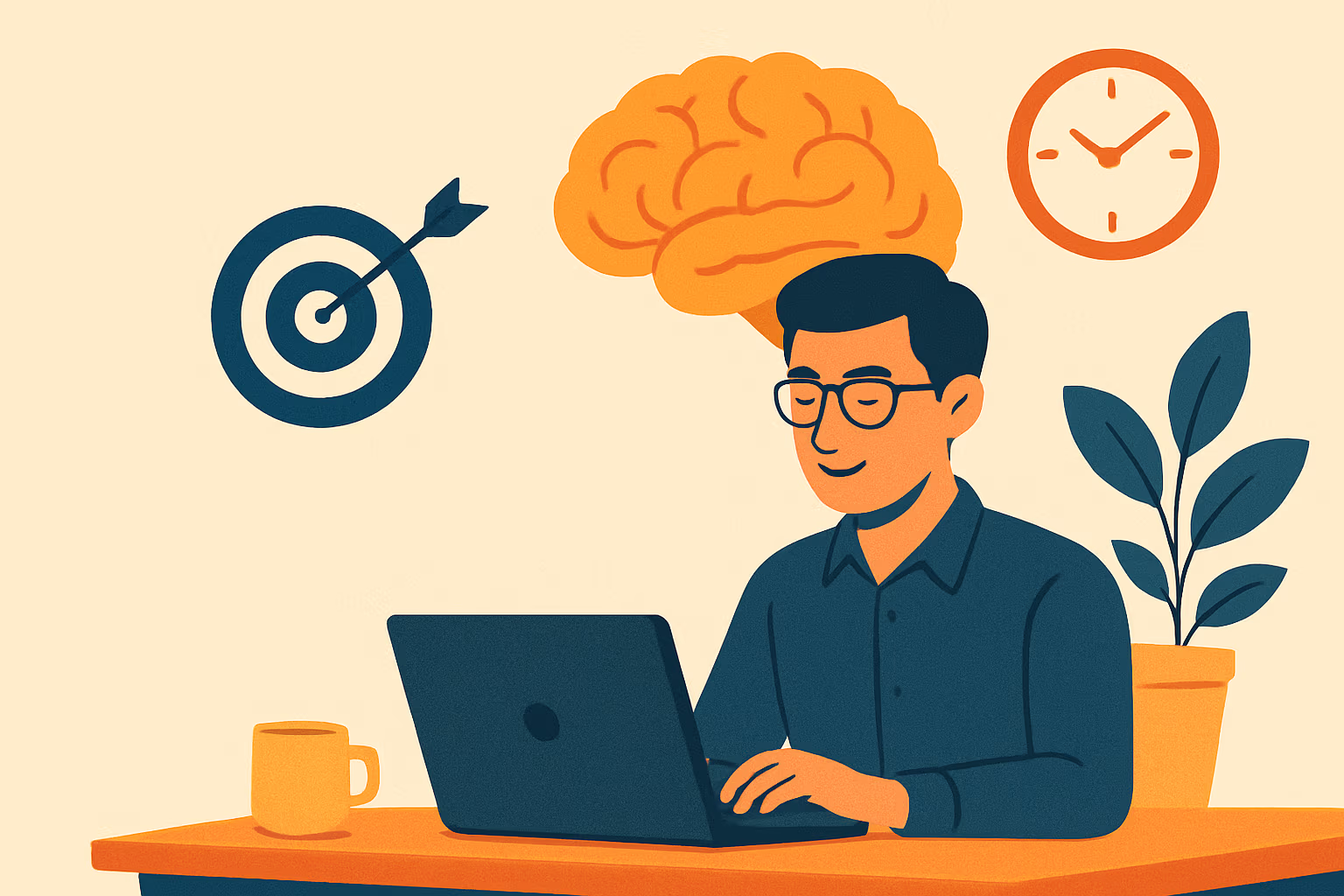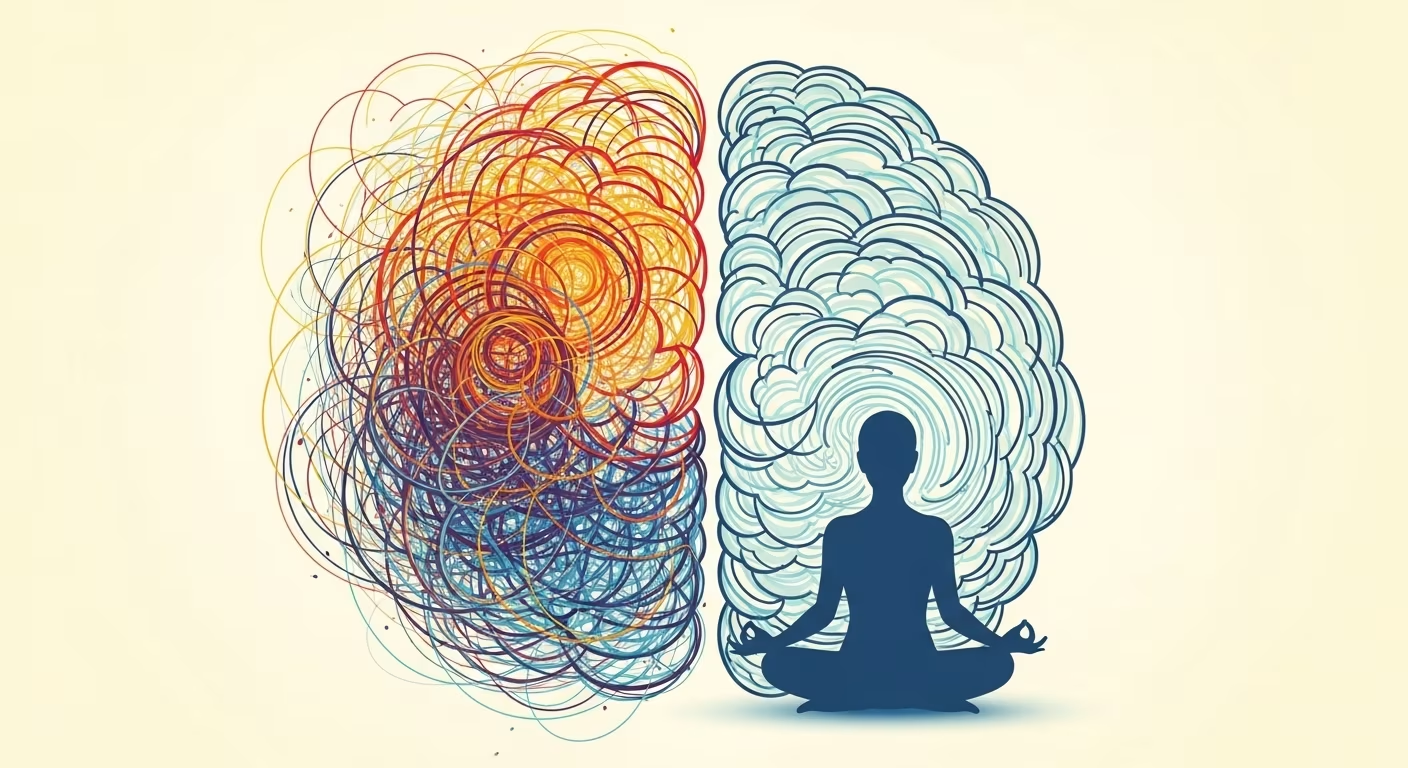
The pursuit of excellence is a universal human endeavor. Whether on the sports field, in an artist’s studio, or at a desk, individuals constantly seek ways to transcend their limitations and achieve peak performance. This quest often leads to the discovery of a unique state of consciousness where action and awareness merge, time seems to dissolve, and performance soars. This state, known as "flow," is not a mystical gift but a psychological phenomenon that can be understood, cultivated, and triggered. It represents the pinnacle of deep focus, where the brain operates with remarkable efficiency and creativity. For anyone looking to enhance their productivity, creativity, and overall sense of fulfillment, understanding the mechanics of flow is not just an academic exercise—it is a practical pathway to unlocking one's full potential.
What is flow state and how is it defined?
Flow state is a concept in psychology describing a mental state of complete immersion in an activity. It is characterized by energized focus, full involvement, and enjoyment in the process of the activity. Popularly known as "being in the zone," this state of optimal experience occurs when a person is so absorbed in a task that everything else seems to fade away. The individual's sense of self-consciousness diminishes, their perception of time becomes distorted, and the activity itself becomes intrinsically rewarding.
The formal definition, developed by psychologist Mihaly Csikszentmihalyi, describes flow as "a state in which people are so involved in an activity that nothing else seems to matter; the experience is so enjoyable that people will continue to do it even at great cost, for the sheer sake of doing it." To achieve this state, certain conditions must be met: the task must have clear goals, provide immediate feedback, and present a challenge that is perfectly balanced with the individual's skill level. This balance prevents anxiety (if the challenge is too high) and boredom (if it is too low), creating the ideal conditions for deep, effortless attention and peak performance.
Will meditation help me with flow state?
Yes, meditation can significantly help in achieving flow state, primarily because it trains the foundational cognitive skills required for it. Meditation is, at its core, a practice in attention regulation. It teaches individuals to sustain focus, notice when their mind has wandered, and gently guide their attention back to a single point, such as the breath. This practice directly strengthens the brain's executive functions, particularly the ability to inhibit distractions and maintain concentration.
Flow state requires an unwavering focus on the task at hand. The mental clutter of everyday anxieties, future plans, or self-critical thoughts are significant barriers to entering this state. Meditation helps by fostering a greater sense of present-moment awareness and providing the tools to manage these internal distractions. By regularly practicing mindfulness and other meditative techniques, people can improve their ability to achieve a calm, clear mental environment. This cultivated internal control makes it easier to direct one's full cognitive resources toward a challenging activity, thereby creating the ideal mental conditions for flow to emerge. Essentially, meditation builds the mental "muscle" for the sustained, deep focus that is the hallmark of the flow experience.
Introduction: Unlocking Your Zone of Deep Focus and Peak Performance
In a world saturated with digital distractions and competing demands for our attention, the ability to engage in deep, uninterrupted focus has become a modern superpower. We often equate busyness with productivity, yet the most groundbreaking work and profound moments of personal achievement arise not from frantic multitasking, but from a state of complete absorption. This is the state of flow, a concept that bridges the gap between high performance and deep satisfaction. It's the feeling an athlete experiences when the game slows down, the sensation a musician has when the notes flow effortlessly, and the focus a programmer finds when lines of code write themselves. This guide is designed to demystify this powerful state of mind, providing a comprehensive roadmap to understanding, triggering, and sustaining it.
The Promise of Flow: What This Guide Will Uncover for Optimal Performance and Deep Focus
This definitive guide will move beyond abstract descriptions to provide a scientific and practical framework for cultivating flow. We will explore the psychological origins of the concept, pioneered by Mihaly Csikszentmihalyi, and dissect the core characteristics that define this optimal experience. Delving into the neuroscience, we will uncover what happens inside the brain during flow, examining the unique patterns of brain activity and the neurochemical cocktail that fuels this state of effortless attention. Most importantly, this article will lay out the specific, actionable conditions and strategies necessary to set the stage for flow. You will learn how to balance skills with challenges, set clear goals, optimize your environments, and train your focus to make flow a more regular and reliable part of your professional and personal life, ultimately enhancing performance in all activities.
Beyond "Being Busy": Why True Deep Focus Matters for Individuals and Achievement
The modern workplace often rewards the appearance of productivity—constant emails, back-to-back meetings, and a perpetually full calendar. However, this culture of "busy" is often the enemy of true progress. Deep focus, the kind required to enter a flow state, involves dedicating your full cognitive bandwidth to a single, challenging task without distraction. This is where meaningful work happens: complex problems are solved, innovative ideas are born, and high-level skills are developed. For individuals, mastering deep focus is the key to producing work of exceptional quality and finding greater fulfillment in the process. A study published in Frontiers in Psychology found that individuals who engaged in focused work periods experienced a marked improvement in task performance and overall productivity, reinforcing the powerful link between dedicated attention and tangible achievement.
What is Flow State? The Psychology of Optimal Experiences
Flow state is more than just concentration; it's a harmonious convergence of challenge, skill, and focus that produces a state of peak human experience. At its heart, the psychology of flow is the study of what makes life worth living. It shifts the focus from pathology and disorder to the exploration of human potential and happiness. It investigates those moments when we feel our best and perform our best, providing a blueprint for how to replicate these "optimal experiences" intentionally. Understanding this psychological framework is the first step toward consciously cultivating a life richer in engagement, purpose, and high performance.
Defining Flow: A State of Complete Absorption, Enjoyment, and Deep Focus
Flow is a state of consciousness where a person becomes fully immersed in an activity, losing their sense of time and space. During flow, the boundary between self and activity blurs. This isn't just intense effort; it's a feeling of effortless engagement. The deep focus required is not forced but comes naturally as a result of being perfectly matched to the task. The enjoyment derived from flow is intrinsic, meaning the reward is the act of doing itself, not an external prize. People in flow report a profound sense of control over their actions and a feeling of serene mastery. This unique combination of absorption and enjoyment makes flow a highly sought-after state, driving people to pursue complex and challenging activities for no other reason than the experience itself.
The Origin Story: Mihaly Csikszentmihalyi's Groundbreaking Concept and Flow Theory
The concept of flow was pioneered by Hungarian-American psychologist Mihaly Csikszentmihalyi. In the 1970s, he became fascinated by what made people feel truly happy and fulfilled. He conducted extensive research, interviewing artists, athletes, scientists, and other people who reported deep enjoyment and peak performance in their work. Through this study, a common theme emerged. These individuals described a similar mental state when they were at their most creative and productive—a state Csikszentmihalyi named "flow," because many of his subjects described the feeling as being carried along by a current. His groundbreaking book, "Flow: The Psychology of Optimal Experience," synthesized this research, introducing the concept to the world and establishing a new field of inquiry within positive psychology. Csikszentmihalyi's theory proposed that happiness is not a fixed state but something that can be cultivated by actively seeking out these optimal experiences.
The 8 Core Characteristics of Flow Experiences
Mihaly Csikszentmihalyi identified eight major components that characterize the subjective feeling of a flow experience. While not all need to be present simultaneously, they form the constellation of sensations that define being "in the zone."
- Clear Goals: Every step of the activity has a clear objective. A rock climber knows which handhold to reach for next; a chess player knows the goal is to checkmate the opponent.
- Immediate Feedback: The activity provides constant, real-time information about performance. The musician hears the note as it's played; the writer sees the words appear on the screen. This feedback loop allows for immediate adjustment.
- Balance Between Challenge and Skills: The task is demanding but achievable. It pushes the individual's skills to their limit without being overwhelming, creating a perfect tension that holds attention.
- Merging of Action and Awareness: The person becomes one with the activity. There is no separation between "I" and "what I am doing." Concentration is so intense that there is no room for extraneous thought.
- Exclusion of Distractions: Deep focus naturally filters out irrelevant stimuli. Worries, concerns, and environmental noises fade into the background.
- Loss of Self-Consciousness: Concern for the self disappears. There is no room for ego, self-criticism, or social evaluation. This liberation from the self is often reported as a key reason for the enjoyment of flow.
- Transformation of Time: The sense of time becomes distorted. Hours can feel like minutes, or moments can seem to stretch out indefinitely.
- Intrinsically Rewarding Experience: The activity becomes an end in itself. The process is so enjoyable that the person is motivated to continue regardless of external rewards. This is the autotelic nature of flow.
The Profound Benefits: Why Cultivate Flow for a Better Life
Actively seeking and cultivating flow state is not merely a strategy for improving productivity; it is a pathway to a more engaged, meaningful, and satisfying life. The benefits of regularly entering this state of deep focus extend far beyond the immediate task, influencing our skills, creativity, emotional well-being, and overall happiness. By learning to trigger flow, we can transform mundane activities into rewarding challenges and elevate our performance in the pursuits that matter most. The compounding effect of these experiences can fundamentally alter our relationship with our work, our hobbies, and ourselves.
Amplified Performance and Productivity in All Activities
The most widely recognized benefit of flow is its dramatic impact on performance. When in a flow state, our attention is so completely focused that cognitive resources are applied with maximum efficiency. This leads to higher quality work, completed in less time. The effortless nature of this focus allows for sustained periods of high output without the mental strain of forced concentration. This effect is not limited to elite athletes or artists; it applies to any activity that requires skill and focus. Research has consistently demonstrated the powerful link between flow and output. For instance, one 10-year longitudinal study showed that people in flow states were up to 500% more productive, illustrating the extraordinary potential of this optimal state of consciousness.
Accelerated Learning and Skill Development
Flow state creates the ideal conditions for learning. The core requirement of balancing a high challenge with a high skill level means that to stay in flow, one must constantly push the boundaries of their current abilities. This "stretching" of skills is the very definition of deliberate practice. The immediate feedback loop inherent in flow activities allows for rapid error correction and adjustment, solidifying new neural pathways more effectively. Because the experience is intrinsically rewarding, learners are more motivated to persist through difficulties and spend more time practicing. This creates a virtuous cycle: engaging in challenging activities leads to flow, which accelerates skill development, which in turn allows the individual to take on even greater challenges, leading to further growth.
Boosted Creativity for Artists and Problem-Solvers
Flow state is strongly associated with enhanced creativity and insight. When the conscious, self-critical part of the brain quiets down, more novel and subconscious ideas can come to the forefront. This phenomenon, known as transient hypofrontality, allows for more lateral thinking and the connection of disparate concepts. For artists, this can mean an uninhibited creative expression. For scientists and engineers, it can lead to breakthrough solutions to complex problems. Research from Harvard professor Teresa Amabile shows that creativity rises sharply when people work in environments that support deep focus and intrinsic motivation—the very pillars of the flow state. By creating the conditions for flow, we create the conditions for innovation.
Greater Well-being, Happiness, and Life Satisfaction
Beyond performance and skill, flow is a significant contributor to overall well-being. Csikszentmihalyi's research found that people report their happiest and most fulfilling moments are those spent in flow. Because flow activities are intrinsically rewarding, they provide a deep sense of satisfaction and accomplishment that is independent of external validation. Regularly experiencing flow builds self-esteem and a sense of competence and control over one's life. This positive emotional feedback loop contributes to long-term happiness and a greater sense of purpose. Furthermore, according to reporting in The Guardian, people who regularly experience flow appear to be less susceptible to depression, highlighting its protective effect on mental health.
Reduced Stress and Anxiety
The intense focus required for flow effectively crowds out negative thoughts and worries. When the mind is fully occupied with a challenging and engaging task, there is simply no cognitive bandwidth left for rumination or anxiety. The loss of self-consciousness that occurs during flow also alleviates the stress associated with social evaluation and self-criticism. The activity itself provides a temporary escape from the pressures of daily life, acting as a form of active meditation. By providing a sense of order and control in a world that can often feel chaotic, engaging in flow activities can be a powerful antidote to stress and a method for restoring mental equilibrium.
The Neuroscience of Flow State: What Happens in Your Brain
When an individual enters a flow state, their brain undergoes a radical transformation in both its electrical activity and chemical environment. This isn't just a subjective feeling; it's a distinct neurological event that can be observed and measured. Neuroscientists have identified a specific signature of brainwave patterns and neurotransmitter releases that correspond with the deep focus, creativity, and altered sense of self that characterize flow. Understanding what happens inside the brain not only validates the experience but also provides clues on how to more reliably induce it. This shift from psychological theory to biological fact opens up new avenues for intentionally triggering and sustaining peak performance.
Brain Activity During Flow: Insights from Study and Scientific Disciplines
During normal waking consciousness, the brain is typically dominated by high-frequency Beta brainwaves, associated with active thinking, alertness, and analytical thought. As a person begins to enter a flow state, a notable shift occurs. Brainwave activity often downshifts to the slower Alpha and Theta waves.
- Alpha Waves: These are associated with a state of relaxed, wakeful awareness. The presence of Alpha waves indicates that the brain's analytical, self-critical regions—particularly the prefrontal cortex—are becoming less active. This neurological quieting is known as transient hypofrontality.
- Theta Waves: As focus deepens, Theta waves often appear. These are commonly seen during deep meditation, REM sleep, and moments of profound insight. Theta activity is linked to the subconscious mind, creativity, and the consolidation of memories, which helps explain the innovative thinking and accelerated learning that occur during flow.
Simultaneously, there can be bursts of high-frequency Gamma waves, which are associated with binding information from different parts of the brain and are linked to "aha!" moments and peak cognitive processing. This complex interplay—a quieting of the conscious mind alongside heightened subconscious and integrative processing—is the neurological hallmark of flow.
Key Neurocognitive Mechanisms and Neurotransmitters Involved
Flow is also driven by a precise cascade of performance-enhancing neurochemicals. As the brain enters this state, it releases a cocktail of neurotransmitters and endorphins that enhance focus, motivation, and enjoyment.
- Norepinephrine and Dopamine: These are released early in the flow cycle, sharpening attention, increasing focus, and driving information processing. They heighten pattern recognition and create a feeling of motivation.
- Endorphins: These natural opiates block pain and induce feelings of pleasure or euphoria. They contribute to the feeling of effortless action and help maintain focus through difficult tasks.
- Anandamide: Known as the "bliss molecule," this endocannabinoid is associated with feelings of well-being, reduced anxiety, and creative, lateral thinking.
- Serotonin: Released in the later stages of flow, serotonin contributes to a sense of calm, contentment, and post-flow glow, reinforcing the positive experience.
This neurochemical symphony works in concert with the changes in brainwave activity to create the unique cognitive and emotional experience of flow.
The Effortless Attention Phenomenon: Beyond Brute-Force Focus
One of the most remarkable aspects of flow is that the intense focus feels effortless. This is a direct result of the transient hypofrontality mentioned earlier. The prefrontal cortex, the part of the brain responsible for higher-order cognition like self-analysis, planning, and critical judgment, becomes less active. This is the brain's "inner critic" taking a nap. By deactivating this energy-intensive region, the brain frees up significant cognitive resources, which can then be redirected to the task-relevant sensory and motor areas. Attention is no longer a top-down, effortful process of fighting distractions. Instead, it becomes a bottom-up, automatic process where the task itself captures and holds focus. This is the difference between forcing yourself to concentrate and being completely captivated, and it is the key to sustained, high-level performance without burnout.
The Preconditions for Flow: Setting the Stage for Peak States
Flow does not happen by accident. It arises when specific internal and external conditions align to create a fertile ground for deep focus. While the experience itself feels spontaneous and effortless, the groundwork for it is often deliberate and strategic. Understanding these preconditions is crucial for anyone seeking to make flow a more regular occurrence rather than a rare and unpredictable event. By consciously engineering your tasks, goals, and environment, you can significantly increase the probability of entering this optimal state of performance. These conditions act as the essential ingredients; without them, achieving flow is nearly impossible.
Finding Your Optimal Challenge-Skill Balance
This is the cornerstone of flow theory. The activity must present a challenge that is significant enough to require your full attention, yet your skills must be sufficient to meet that challenge. This delicate equilibrium is often called the "flow channel."
- If the challenge is too high relative to your skills, you will experience anxiety, frustration, and stress. The task will feel overwhelming, and focus will be impossible to maintain.
- If your skills far exceed the challenge, you will experience boredom and apathy. Your mind will wander because the task doesn't demand enough of your cognitive resources.
To find the optimal balance, you must constantly seek activities that stretch your abilities just beyond their current limit. This requires self-awareness to accurately gauge both your skill level and the difficulty of the task, and a willingness to incrementally increase the challenge as your skills develop.
Clear Goals and Immediate Feedback Loops
To become fully absorbed in an activity, your brain needs to know exactly what it is supposed to be doing and how well it is doing it.
- Clear Goals: Vague objectives create mental ambiguity, which is the enemy of focus. The goal must be specific and unambiguous, both for the overall task and for each step along the way. A programmer doesn't just "write code"; they work to implement a specific function. A musician doesn't just "play music"; they aim to execute a specific passage flawlessly. This clarity eliminates the mental energy wasted on deciding what to do next.
- Immediate Feedback: The activity must provide a constant stream of information about your progress toward the goal. This feedback doesn't have to be external; it can be the internal sense of whether a sentence is well-written or a movement is correctly executed. This real-time information allows for continuous adjustments, keeping you engaged and locked into the process. The feedback loop must be tight; the longer the delay, the more likely attention will drift.
Minimizing Distractions and Optimizing Your Environments
Flow requires a state of undivided attention, which is impossible to achieve in a distracting environment. Optimizing your surroundings is a non-negotiable precondition. This involves controlling both external and internal interruptions.
- External Distractions: These are the notifications, noises, and interruptions from other people that pull your focus away from the task. Creating a sacred space for deep work is essential. This means silencing your phone, closing unnecessary browser tabs, using noise-canceling headphones, and signaling to others that you should not be disturbed.
- Internal Distractions: These are the mental interruptions—the stray thoughts, worries, and to-do lists that pop into your head. While harder to control, they can be managed. Techniques like mindfulness, pre-work meditation, or a "brain dump" (writing down all distracting thoughts before you begin) can help clear the mental space needed for deep focus to take root. Your physical environment—lighting, comfort, organization—also plays a crucial role in signaling to your brain that it is time to concentrate.
Triggering Flow: Actionable Strategies and Interventions
Knowing the theory and preconditions of flow is one thing; putting it into practice is another. Triggering flow is an active process that involves a sequence of deliberate steps designed to align your mind, body, and environment. It is about transforming the abstract concept into a reliable practice. The following steps provide a practical framework for moving from a state of distraction or boredom into one of deep, productive engagement. By treating the entry into flow as a ritual, you can train your brain to recognize the cues and shift into this high-performance state more readily.
Step 1: Prepare Your Mind and Body
Before you even begin a task, you must set the internal conditions for focus. Your mental and physical state is the foundation upon which flow is built.
- Clarify Your Intention: Start with a single, crystal-clear objective. What is the one thing you want to accomplish in this block of time? Write it down. This specific goal acts as a beacon for your attention.
- Manage Your Energy: Flow is cognitively demanding. Ensure you are not starting on an empty tank. This means being well-rested, hydrated, and properly nourished. A short walk or a few minutes of light exercise beforehand can boost blood flow to the brain and increase alertness.
- Clear Mental Clutter: Engage in a brief mindfulness or meditation exercise to calm your nervous system and release distracting thoughts. Spend two minutes focusing solely on your breath. This simple act can significantly improve your ability to concentrate.
Step 2: Choose the Right Activity and Challenge
The nature of the task itself is paramount. Select an activity that naturally lends itself to a flow state and ensure it is calibrated to the right level of difficulty.
- Select a High-Consequence, High-Skill Activity: Choose a task that demands your full attention and leverages your existing skills. It should be something you find intrinsically interesting or meaningful.
- Calibrate the Challenge: Actively adjust the difficulty of the task to meet your current skill level. If the task feels too easy, add a constraint (e.g., a time limit, a higher quality standard). If it feels too hard, break it down into smaller, more manageable sub-goals. The aim is to find that sweet spot where you are stretched but not overwhelmed.
Step 3: Eliminate Distractions and Create Sacred Focus Time
Your environment must be a fortress against interruption. This step is about ruthlessly eliminating anything that could pull your attention away from the task.
- Digital Detox: Turn off all notifications on your phone, computer, and smartwatch. Close all irrelevant tabs and applications. Use website blockers if necessary.
- Physical Isolation: Find a quiet space where you are unlikely to be interrupted. Inform colleagues or family members that you are entering a period of deep work and should not be disturbed except for genuine emergencies.
- Time Blocking: Dedicate a specific, uninterrupted block of time (e.g., 90 minutes) solely to this task. This commitment signals to your brain that this period is reserved for deep focus. As noted by productivity experts, workers who regularly take breaks have 13% higher productivity, so plan for recovery after your focus session.
Step 4: Engage Fully and Embrace the Process
With the stage set, the final step is to dive into the activity with complete commitment. This is where you let go and allow yourself to become absorbed.
- Focus on the Process, Not the Outcome: While you have a clear goal, shift your attention to the immediate next step. Immerse yourself in the sensations of the activity itself—the feel of the keyboard, the sound of the instrument, the movement of your body.
- Listen to Feedback: Pay close attention to the immediate feedback the task provides. Are your efforts moving you closer to the goal? Make micro-adjustments in real time. This active engagement is what keeps your attention tethered to the present moment.
- Be Patient: Flow doesn't always happen instantly. There is often a brief period of struggle or mild frustration as you ramp up your focus. Push through this initial resistance without judgment. Trust the process, and soon the feeling of effort will give way to effortless engagement.
Step 5: Reflect and Learn from Your Flow Experiences
Cultivating flow is a skill that improves with practice and reflection. After each deep work session, whether you fully achieved flow or not, take a few moments to learn from the experience.
- Journal Your Experience: What worked well? What conditions were in place? What distractions arose? What was the balance of challenge and skill like?
- Identify Patterns: Over time, you will start to notice patterns in what triggers flow for you specifically. It might be a certain time of day, a particular type of music (or silence), or a specific pre-work ritual.
- Refine Your Approach: Use these insights to refine your strategy for the next session. By consciously analyzing and adjusting your process, you transform the pursuit of flow from a game of chance into a trainable skill.
Conclusion
Flow state represents a remarkable synergy between human consciousness and action, offering a powerful blueprint for achieving peak performance, deep focus, and profound personal satisfaction. As we've explored, this optimal experience, first detailed by Mihaly Csikszentmihalyi, is not an elusive gift reserved for elite athletes or creative geniuses. It is an accessible state that arises from a specific set of psychological and neurological conditions—conditions that any individual can learn to cultivate.
The journey to making flow a regular part of life begins with understanding its core components: the perfect balance between challenge and skill, the necessity of clear goals and immediate feedback, and the creation of an environment free from distraction. By delving into the neuroscience, we see that flow is a tangible brain state characterized by transient hypofrontality and a potent neurochemical cocktail, which explains the feeling of effortless attention and heightened creativity.
The ultimate takeaway is that flow is a trainable skill. By implementing the actionable strategies outlined—preparing your mind and body, choosing and calibrating the right activities, ruthlessly eliminating distractions, engaging fully in the process, and reflecting on your experiences—you can systematically increase the frequency and depth of your flow states. This practice is not just about becoming more productive; it is about transforming your relationship with your work and your life. It is about finding enjoyment in challenge, meaning in effort, and a greater sense of control and purpose. By consciously setting the stage for flow,