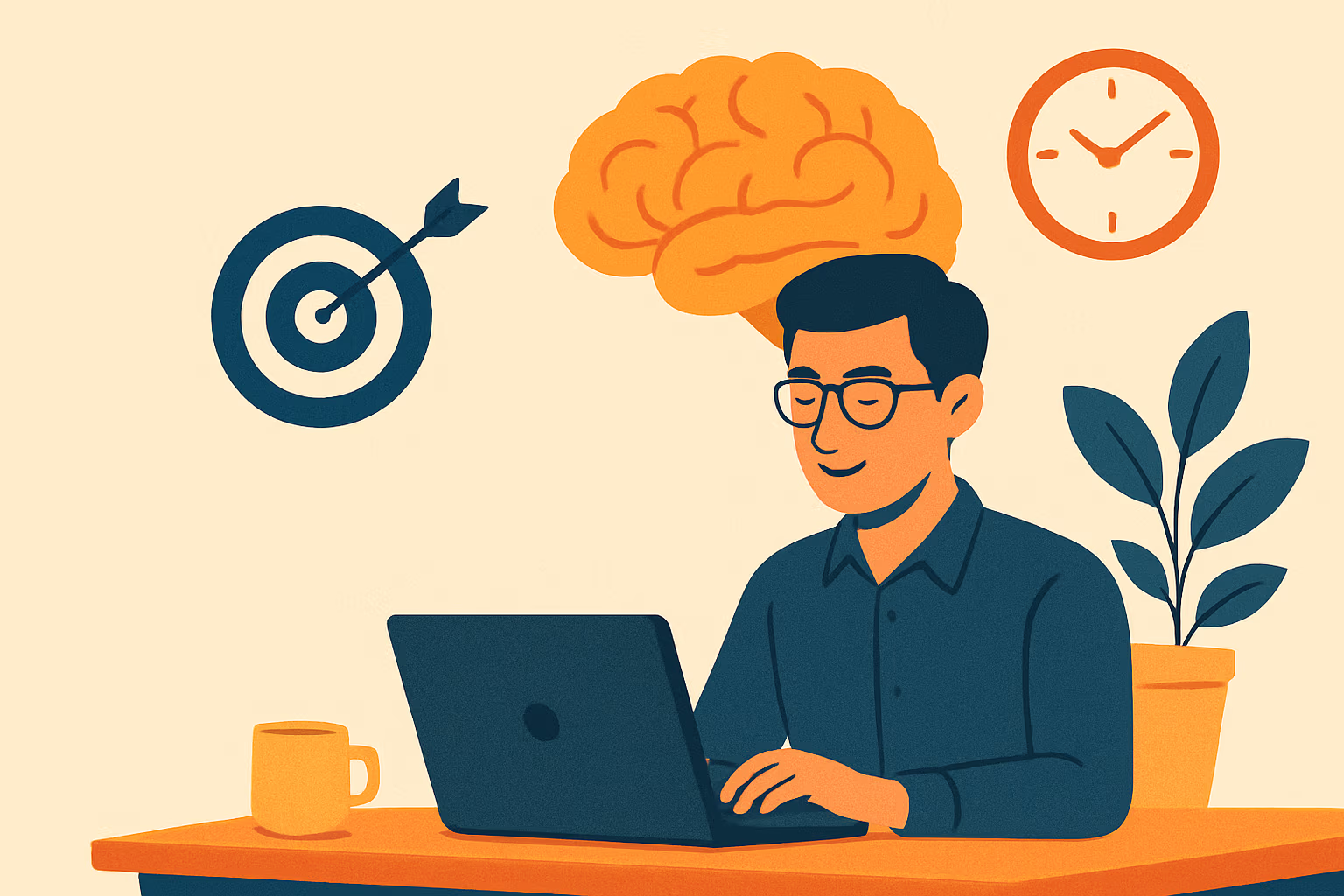
In an era defined by relentless connectivity and information overload, the pursuit of inner peace has transitioned from an esoteric ideal to a fundamental necessity for well-being. The constant barrage of notifications, deadlines, and societal pressures creates a state of chronic stress, leaving many feeling overwhelmed, anxious, and disconnected. This modern reality has fueled a renewed interest in ancient practices that offer an antidote to the chaos. Among these, meditation stands out not only for its historical roots but for the substantial body of scientific evidence that now validates its profound benefits for the mind and body. This article explores the research-backed advantages of meditation, providing a comprehensive guide to how this simple practice can help you unlock a state of inner calm and build resilience in a hectic world.
What is meditation and how is it practiced?
Meditation is a practice involving a set of techniques intended to encourage a heightened state of awareness and focused attention. At its core, it is a method for training the mind, much like exercise is a method for training the body. The goal is not to turn off thoughts or feelings but to observe them without judgment. By doing so, individuals can develop a deeper understanding of their mental patterns and learn to cultivate a more positive and peaceful state of being.
There are numerous forms of meditation, but most share common elements. A typical practice involves finding a quiet location, assuming a comfortable posture (sitting, lying down, or even walking), and focusing attention on a specific object, sensation, or concept. This focal point could be the breath (as in many forms of mindfulness meditation), a repeated word or phrase (a mantra), a visual image, or the physical sensations within the body. When the mind inevitably wanders, the practitioner gently guides their attention back to the chosen anchor. This process of returning focus, repeated over time, strengthens the neural pathways associated with concentration and emotional regulation.
Why is meditation practiced for stress relief?
Meditation is widely practiced for stress relief because it directly counteracts the body's physiological stress response. When faced with a perceived threat, the sympathetic nervous system activates the "fight-or-flight" response, flooding the body with stress hormones like adrenaline and cortisol. This increases heart rate, tenses muscles, and elevates blood pressure, preparing the body for immediate action. While essential for acute danger, chronic activation of this system due to modern-day stressors—work deadlines, financial worries, relationship conflicts—is detrimental to long-term health.
Meditation serves as a powerful tool for engaging the parasympathetic nervous system, which governs the "rest-and-digest" response. By focusing on the breath and cultivating a state of mindful awareness, the practice helps to slow the heart rate, relax the muscles, and lower blood pressure. It effectively signals to the brain and body that the perceived threat has passed, allowing a return to a state of equilibrium, or homeostasis. This repeated activation of the relaxation response through regular meditation helps to build resilience against stress, making individuals less reactive to life's challenges and more capable of maintaining a sense of calm and mental clarity.
Introduction: Finding Your Anchor in a Sea of Chaos
The question of how long it takes to see the benefits of meditation is common, and the answer is encouraging: tangible effects can be noticed relatively quickly. While profound, long-term changes in brain structure and disposition require consistent practice over months and years, many individuals report feeling calmer and more focused after just a few sessions. Studies on mindfulness programs often show significant reductions in stress and anxiety within an eight-week period.
Crucially, it is not necessary to meditate for extended periods to experience these benefits. Consistency is more important than duration. A daily practice of 10 to 20 minutes can be more effective than a single, hour-long session once a week. The key is to create a sustainable habit that integrates into your daily routine, allowing the cumulative effects of the practice to build over time.
The Modern Predicament: Why Inner Calm is a Necessity, Not a Luxury
We live in a world of unprecedented stimulation. Digital devices provide a constant stream of information, social media cultivates comparison and anxiety, and the lines between work and personal life have become increasingly blurred. This environment puts the human brain and nervous system under a unique and persistent strain. The result is a widespread experience of mental fatigue, emotional reactivity, and a pervasive sense of being overwhelmed. Inner calm is no longer a passive state of being but an active skill that must be cultivated to navigate this complex landscape. Without it, we risk burnout, diminished mental health, and a disconnect from ourselves and others. Developing a method to intentionally disengage from the external chaos and connect with an internal sense of stability is essential for sustainable well-being and effective functioning in the 21st century.
Meditation: A Scientifically Validated Path to Resilience in a Hectic World
For thousands of years, meditation has been a cornerstone of philosophical and spiritual traditions. Today, it has moved from monasteries into mainstream science, medicine, and corporate wellness programs. This shift is driven by a growing mountain of rigorous scientific research demonstrating its tangible, measurable effects on the brain and body. Neuroscientists using advanced imaging techniques have shown that meditation can physically change the brain's structure, while clinical studies have validated its effectiveness in managing a range of conditions from anxiety to chronic pain. This scientific validation provides a powerful rationale for adopting the practice, framing it not as a mystical pursuit but as a practical, evidence-based strategy for enhancing mental and physical health and building the psychological resilience needed to thrive in our hectic world.
The Foundation of Calm: Mental and Emotional Well-being
The most immediate and widely recognized benefits of meditation are found in its profound impact on mental and emotional health. By training the mind to be more present and less reactive, meditation provides a powerful toolkit for navigating the internal landscape of thoughts and feelings.
Drastically Reduces Stress Levels
The primary reason many people turn to meditation is for stress reduction. The practice is exceptionally effective at regulating the body's stress response. Chronic stress leads to elevated levels of the hormone cortisol, which can disrupt nearly all of your body's processes, increasing the risk of numerous health problems. Meditation, particularly mindfulness meditation, has been shown to lower cortisol levels. It helps shift the autonomic nervous system from a sympathetic-dominant (fight-or-flight) state to a parasympathetic-dominant (rest-and-digest) state. This physiological shift results in a decreased heart rate, lower blood pressure, and a deep sense of physical and mental relaxation. Programs like Mindfulness-Based Stress Reduction (MBSR) are built around this principle and have demonstrated significant success in helping individuals manage stress-related conditions.
Alleviates Anxiety and Worry
Anxiety is often characterized by a preoccupation with future events and a cycle of "what if" thinking. Meditation helps to break this pattern by anchoring the mind in the present moment. By focusing on the breath or bodily sensations, practitioners learn to observe anxious thoughts as they arise without getting entangled in them. This creates a psychological distance, allowing one to see that thoughts are just mental events, not necessarily reality. Research has shown that mindfulness practices can be remarkably effective; one study found that they reduced anxiety levels by 30% within just two months, proving to be as effective as conventional medication for some individuals. The practice calms the mind's tendency to ruminate on worries, fostering a greater sense of peace and control.
Combats Symptoms of Depression
While not a standalone cure, meditation is a valuable complementary therapy for managing depression. Depression is often associated with persistent rumination on negative thoughts and past events. Mindfulness meditation trains individuals to disengage from these ingrained thought patterns. By fostering non-judgmental awareness, it helps individuals recognize and let go of the cycle of negativity without self-criticism. Research has shown that Mindfulness-Based Cognitive Therapy (MBCT), which combines mindfulness practices with cognitive therapy techniques, is highly effective in preventing depressive relapse. In fact, studies suggest that for those with recurrent depression, meditation reduces depression relapse by 12%, offering a powerful tool for long-term mood management.
Enhances Emotional Regulation and Resilience
Emotional regulation is the ability to manage and respond to emotional experiences in a healthy and adaptive way. Meditation cultivates this skill by increasing awareness of one's emotional state in the moment it arises. Instead of reacting impulsively with anger, fear, or frustration, a regular meditator develops the capacity to pause, observe the emotion, and choose a more measured response. This "gap" between stimulus and response is a cornerstone of emotional intelligence. Over time, this practice builds emotional resilience, making individuals less susceptible to being overwhelmed by difficult feelings and better equipped to handle life's inevitable ups and downs with greater equanimity and grace.
Boosts Self-Awareness and Introspection
At its heart, meditation is a practice of introspection. By quieting the external noise, it creates the space necessary to turn one's attention inward and observe the workings of the mind. This process leads to a profound increase in self-awareness. Practitioners become more attuned to their habitual thought patterns, emotional triggers, and underlying beliefs. This clarity is the first step toward meaningful personal growth, as you cannot change what you are not aware of. This deepened self-knowledge allows for more conscious decision-making, helping individuals to live in greater alignment with their values and fostering a more authentic and fulfilling life.
Sharpening Your Mind: Cognitive Power and Clarity
Beyond its emotional benefits, meditation is a potent cognitive enhancer. Regular practice can lead to measurable improvements in focus, memory, and creative thinking, helping to clear the mental fog that so often accompanies a busy life.
Improves Focus and Attention Span
In a world filled with distractions, the ability to sustain attention is a superpower. Meditation is, in essence, attention training. Every time your mind wanders during practice and you gently guide it back to your point of focus (like the breath), you are performing a mental "rep" that strengthens the brain's attention circuits. This is analogous to lifting weights to build muscle. Over time, this training enhances the ability to concentrate for longer periods, resist distractions, and stay on task. The impact of this is tangible in professional settings, where a large majority of employees—86% in one report—reported that meditation has enhanced their focus and concentration during work-related tasks.
Enhances Cognitive Function and Memory
The benefits of improved attention extend to other cognitive domains, including memory. Focused attention is a prerequisite for encoding new information into memory. By strengthening the prefrontal cortex, the brain region responsible for executive functions, meditation supports both working memory (the ability to hold and manipulate information for short periods) and long-term memory consolidation. Studies involving older adults have shown that meditation can help to mitigate age-related cognitive decline and improve performance on memory tasks. The practice essentially helps to keep the brain nimble and efficient, supporting clearer thinking and better recall.
Fosters Creativity and Problem-Solving
Creativity often arises when the mind is allowed to move beyond rigid, linear thinking. Meditation can facilitate this by encouraging a state of open awareness and reducing cognitive rigidity. By quieting the "inner critic" and allowing thoughts to flow without judgment, meditation can lead to divergent thinking—the ability to generate novel ideas and see new connections between concepts. This mental flexibility is crucial for effective problem-solving. When faced with a complex challenge, a calm and focused mind is better able to assess the situation from multiple perspectives and devise innovative solutions that a stressed or cluttered mind might miss.
Reduces Mind-Wandering and Information Overload
The default state for many people's minds is to wander, jumping from past regrets to future worries. This constant mental chatter, often referred to as the "monkey mind," consumes significant cognitive resources and is a major source of stress and unhappiness. Meditation directly addresses this by training the brain's Default Mode Network (DMN), the system responsible for mind-wandering. With regular practice, the DMN becomes less active, leading to a quieter internal landscape. This allows for greater mental clarity and reduces the feeling of being overwhelmed by the constant influx of information, providing a much-needed sense of mental space and order.
Healing the Body: Physical Health Benefits
The connection between the mind and body is profound, and the mental calm cultivated through meditation translates into significant, measurable improvements in physical health. The practice's ability to regulate the stress response has a ripple effect throughout the body's systems.
Lowers Blood Pressure and Promotes Heart Health
One of the most well-documented physical benefits of meditation is its positive impact on cardiovascular health. The deep relaxation induced during meditation activates the parasympathetic nervous system, which helps to dilate blood vessels and slow the heart rate. This directly results in a reduction in blood pressure, both during the practice and, with consistency, throughout the day. Studies on practices like Transcendental Meditation have shown significant decreases in both systolic and diastolic blood pressure, particularly in individuals with hypertension. By mitigating the effects of chronic stress—a major risk factor for heart disease—meditation serves as a powerful adjunctive therapy for maintaining a healthy heart.
Strengthens the Immune System
Chronic stress can suppress the immune system, leaving the body more vulnerable to illness and infection. The stress hormone cortisol, when chronically elevated, can decrease the production of lymphocytes, the white blood cells that are key to fighting off invaders. By effectively reducing stress and lowering cortisol levels, meditation can help bolster the immune response. Research has indicated that regular mindfulness meditation can increase antibody production in response to vaccines and may increase the activity of natural killer cells, which play a role in fighting tumors and viral infections. This suggests that cultivating mental calm can directly contribute to a more robust and resilient physical defense system.
Alleviates Chronic Pain
For individuals living with chronic pain, meditation offers a powerful non-pharmacological approach to pain management. While it may not eliminate the source of the pain, it can fundamentally change one's relationship to it. Mindfulness meditation has been shown to reduce the subjective experience of pain by decoupling the physical sensation from the emotional reaction to it. Brain imaging studies reveal that meditation can reduce activity in the brain regions associated with pain processing while increasing activity in areas related to cognitive control. This allows individuals to observe the sensation of pain without the accompanying layers of fear, anxiety, and catastrophic thinking, thereby reducing overall suffering and improving quality of life.
Improves Sleep Quality and Fights Insomnia
A racing mind is one of the primary culprits behind insomnia and poor sleep quality. Meditation helps to address this by calming the nervous system and training the mind to let go of the day's worries and anxieties. Practices that focus on body scans or gentle breathing can help prepare the body for rest by releasing physical tension. Mindfulness-Based Therapy for Insomnia (MBTI) has emerged as an effective treatment, helping individuals to break the cycle of sleep-related anxiety. By fostering a state of deep relaxation and reducing the mental chatter that often keeps people awake, meditation can lead to falling asleep more quickly, experiencing fewer nighttime awakenings, and enjoying more restorative sleep.
Cultivating Connection: Relational and Behavioral Shifts
The benefits of meditation extend beyond the individual, influencing how we interact with others and navigate challenging behaviors. By fostering inner awareness and emotional balance, the practice can lead to more compassionate and skillful engagement with the world.
Supports Recovery from Substance Use Disorders
Meditation and mindfulness are increasingly being integrated into treatment programs for substance use disorders. Practices like Mindfulness-Based Relapse Prevention (MBRP) help individuals develop a greater awareness of their triggers, cravings, and habitual reactions. By learning to observe these urges without immediately acting on them, individuals can create the mental space needed to make a different choice. This "urge surfing" technique empowers them to ride the wave of a craving until it subsides. Mindfulness also helps in managing the stress, anxiety, and depression that often co-occur with addiction, providing a healthier coping mechanism and supporting long-term abstinence.
Increases Compassion and Prosocial Behavior
Specific forms of meditation, such as Loving-Kindness Meditation (LKM) and compassion meditation, are explicitly designed to cultivate feelings of warmth, kindness, and goodwill toward oneself and others. These practices involve silently repeating phrases that express benevolent wishes. Research has shown that engaging in these practices can genuinely increase positive emotions, reduce implicit bias against others, and foster a greater sense of social connection. Brain imaging studies indicate that compassion meditation strengthens neural circuits associated with empathy. This internal shift often translates into tangible prosocial behaviors, such as increased altruism, helpfulness, and a greater capacity for forgiveness.
The Science Behind the Stillness: How Meditation Rewires Your Brain and Body
The transformative effects of meditation are not merely subjective experiences; they are rooted in observable, physiological changes in the brain and endocrine system. Modern neuroscience has provided a window into how this ancient practice actively reshapes our biology for the better.
Brain Changes: Gray Matter Growth and Amygdala Shrinkage
One of the most striking findings from neuroscientific research is that meditation can induce neuroplasticity—the brain's ability to reorganize itself by forming new neural connections. MRI studies have revealed that long-term meditators have increased gray matter density in specific brain regions. These include the hippocampus, which is crucial for learning and memory, and the prefrontal cortex, the command center for executive functions like decision-making, attention, and emotional regulation. Simultaneously, research has shown a reduction in the gray matter volume of the amygdala, the brain's fear and anxiety center. This structural shift corresponds to a decrease in stress reactivity, demonstrating that meditation physically reshapes the brain to be less fearful and more thoughtful.
Hormonal Harmony: Regulating Cortisol and Stress Hormones
The body's hormonal system is a primary pathway through which stress impacts health. The hypothalamic-pituitary-adrenal (HPA) axis is the central stress response system, culminating in the release of cortisol. While essential in short bursts, chronic cortisol elevation is damaging. Meditation directly intervenes in this process. By calming the amygdala and strengthening the prefrontal cortex's regulatory control over the stress response, meditation helps to down-regulate the HPA axis. This leads to lower baseline levels of cortisol and a more balanced hormonal environment. This hormonal harmony is a key mechanism behind meditation's wide-ranging benefits, from improved immune function to better sleep and cardiovascular health.
Neurotransmitters and Neural Pathways: Boosting Well-being
Meditation also influences the delicate balance of neurotransmitters, the chemical messengers that govern mood and cognitive function. The practice has been linked to increased levels of serotonin, which is associated with feelings of well-being and happiness, and GABA (gamma-aminobutyric acid), an inhibitory neurotransmitter that helps to calm nerve activity and reduce anxiety. Furthermore, by repeatedly engaging in focused attention and emotional regulation, meditation strengthens the neural pathways associated with these skills. It forges a more robust connection between the prefrontal cortex and the limbic system, enhancing top-down control over emotional impulses and making a calm, focused state of mind more accessible and habitual.
Integrating Meditation into Your Hectic Life: Practical Steps
Understanding the benefits of meditation is the first step; incorporating it into a busy schedule is the next. The key is to start small and find a style that resonates with you. Begin with just five or ten minutes a day. Consistency is far more impactful than duration. Choose a specific time, such as first thing in the morning or during your lunch break, to create a routine. Explore different techniques:
- Mindfulness Meditation: Focus on your breath, observing it without trying to change it.
- Mantra Meditation: Silently repeat a calming word or phrase.
- Walking Meditation: Pay close attention to the physical sensation of your feet on the ground.
- Body Scan Meditation: Bring awareness to different parts of your body, noticing any sensations.
- Yoga: Combines physical postures, breathing exercises, and meditation.
Guided meditation apps like Calm or Headspace can be invaluable for beginners, providing structure and instruction. The growing popularity of such tools is reflected in market trends, with the global meditation management apps market size valued at USD 1.6 billion in 2024 and projected to grow significantly. Remember that the goal is not to eliminate thoughts but to foster a new relationship with them.
Conclusion
In a world that constantly pulls our attention outward, meditation offers a powerful and accessible path back to ourselves. The practice is not about escaping reality but about engaging with it more fully, with greater clarity, compassion, and resilience. The 15 research-backed benefits outlined here—from drastic stress reduction and enhanced cognitive function to improved physical health and stronger relationships—paint a clear picture of a holistic tool for profound well-being. The scientific evidence is compelling, demonstrating that this ancient practice actively rewires the brain and rebalances the body for a state of calm and optimal functioning.
The journey to inner calm begins with a single, intentional breath. By integrating even a few minutes of meditation into your daily routine, you can begin to counteract the chronic stress of modern life and cultivate an anchor of stability within. Start small, be consistent, and approach the practice with curiosity rather than expectation. The path of meditation is a personal one, but its rewards—a quieter mind, a healthier body, and a more peaceful existence—are universally beneficial and more necessary now than ever before.