In a world of constant notifications, deadlines, and digital noise, the pursuit of quiet and calm can feel like an insurmountable challenge. Stress has become a default state for many, a persistent background hum that impacts our work, relationships, and overall health. Yet, within this modern landscape of perpetual motion, an ancient practice has re-emerged as a powerful, accessible tool for reclaiming inner peace: guided meditation. It offers a structured pathway not just to momentary relaxation, but to a profound and lasting sense of calm. This article serves as your comprehensive guide to establishing a daily guided meditation practice, moving from understanding its scientific foundations to integrating its benefits seamlessly into your life. We will explore the mechanisms that make it effective, the techniques you can use, and the steps to build a sustainable habit that can transform your relationship with stress, anxiety, and your own mind.
When should you move on from guided meditation?
The question of when to transition away from guided meditation is a common one for practitioners who have developed a consistent routine. There is no single correct answer, as the journey is deeply personal. The primary indicator for considering a shift towards unguided practice, often involving silence or self-direction, is a developed sense of inner stability and focus. When you find that you can consistently bring your attention back to your breath or body without external prompting, and the guide's voice begins to feel more like a distraction than a support, it may be time to experiment. This transition often occurs naturally after months or even years of dedicated practice. An intermediate step can be using lightly guided meditations with long periods of silence. It is important to view this not as an abandonment of a useful tool, but as a progression. Guided meditation remains a valuable resource to return to, especially during periods of high stress or when exploring new techniques. The goal is not to "graduate" from guidance, but to cultivate a flexible and self-aware practice that adapts to your evolving needs.
What is guided meditation and how does it work?
At its core, guided meditation is a process where an individual meditates by following the verbal instructions of a guide, either in person, through an audio recording, or via a video. This guide leads the practitioner through specific techniques designed to quiet the mind and relax the body. The process works by providing an external anchor for one's attention. For beginners, the mind's tendency to wander can be a significant hurdle. A guide's voice helps to gently redirect focus back to a chosen object—such as the breath, bodily sensations, or a visualized image—thereby training the "muscle" of attention. It simplifies the practice by removing the pressure of knowing what to do next. The guide structures the session, offers encouragement, and provides a framework for exploring mindfulness, visualization, or body scan techniques. This structured support makes the profound benefits of meditation more accessible, helping individuals bypass initial feelings of frustration and build a foundation of calm and presence.
Introduction: Discovering Your Path to Inner Peace
The journey toward inner peace begins with the recognition that our mental environment is just as important as our physical one. In an era defined by information overload and relentless demands on our attention, cultivating a space for mental clarity is no longer a luxury but a necessity for sustainable well-being. Guided meditation emerges as a practical and powerful method to navigate this internal landscape. It acts as a compass, pointing the way toward stillness and providing a structured framework to explore the self. Reliable guided meditation resources are more accessible than ever. Reputable apps often offer extensive libraries with sessions tailored to specific needs, many available through a subscription model. University health centers, such as UCLA's Mindful Awareness Research Center, provide free, high-quality guided sessions. Established teachers and mindfulness experts also share their work through personal websites and popular podcast platforms, ensuring that anyone with a desire to start can find a credible and effective guide.
Navigating the Modern World: The Epidemic of Stress and Anxiety
Modern life exerts a unique and pervasive pressure on our nervous systems. The constant connectivity, economic uncertainty, and fast-paced nature of society contribute to a chronic state of activation for many. This isn't just a subjective feeling; it's a measurable public health issue. Approximately 284 million people worldwide have an anxiety disorder, making it one of the most common mental health challenges globally. In the professional sphere, the impact is stark, with work being a primary source of stress for a majority of adults. In the U.S., for instance, approximately 65% of workers surveyed have characterized work as a very significant or somewhat significant source of stress. This epidemic of stress and anxiety is not without consequence; these conditions contribute to a wide range of physical health problems and carry a significant economic burden, with depression and anxiety alone costing the global economy an estimated US$ 1 trillion each year.
The Promise of Guided Meditation: Immediate Relief & Lasting Calm
In the face of these challenges, guided meditation offers a dual promise: it provides immediate, in-the-moment relief while simultaneously building a foundation for long-term resilience. During a session, the focus on breath and body helps to interrupt the cycle of anxious thoughts, activating the body's natural relaxation response. This can lead to a rapid reduction in heart rate, blood pressure, and feelings of overwhelm. However, the true power of the practice lies in its cumulative effect. With consistent engagement, meditation doesn't just offer temporary respite; it begins to fundamentally reshape our neurological and psychological responses to stress. It cultivates a state of "lasting calm"—an underlying sense of stability and peace that persists even amidst life's inevitable challenges. This is the transition from a reactive coping mechanism to a proactive state of well-being.
What This Article Will Uncover: Your Blueprint for a Daily Practice
This article is designed to be your blueprint for establishing and sustaining a daily guided meditation practice. We will move beyond a surface-level overview to provide a comprehensive understanding of how and why this practice works. We will delve into the science of serenity, exploring how meditation rewires the brain and calms the nervous system. We will then break down the core components of a guided session, from the role of the guide to the key techniques like breathwork and visualization. Following that, we will provide a practical roadmap for crafting your daily habit, addressing common obstacles and offering strategies for consistency. Finally, we will navigate the diverse landscape of available meditations, helping you find the practices that best suit your individual needs. By the end, you will have the knowledge and tools to not only begin your journey but to cultivate a practice that brings lasting calm into your daily life.
The Science of Serenity: How Guided Meditation Transforms Your Mind
The calming effects of guided meditation are not merely subjective experiences; they are rooted in profound and measurable changes within the brain and nervous system. Decades of research have illuminated the ways in which this practice systematically alters neural pathways, physiological responses, and cognitive functions. By engaging in focused attention and mindfulness, practitioners are actively participating in a form of mental training that enhances their capacity for emotional regulation, stress management, and overall well-being. This transformation occurs on multiple levels, from the immediate quieting of the body's stress response to the long-term structural changes in the brain that support a more peaceful and resilient state of being.
Beyond Relaxation: Rewiring Your Brain for Lasting Peace
The concept of neuroplasticity—the brain's ability to reorganize itself by forming new neural connections throughout life—is central to understanding the long-term benefits of meditation. Consistent practice is a direct application of this principle. Research has shown that regular mindfulness meditation can lead to structural changes in key brain regions. For example, studies have observed increased gray matter density in the hippocampus, an area important for learning and memory, and in structures associated with self-awareness and compassion. Conversely, a reduction in gray matter density has been noted in the amygdala, the brain's "fear center," which is responsible for initiating the fight-or-flight response. This structural rewiring suggests that meditation doesn't just make you feel calmer in the moment; it gradually reshapes your brain to be less reactive to stress and more inclined toward emotional stability.
Activating the Parasympathetic Nervous System: Your Body's Natural Calm Response
Our bodies have two primary operating systems within the autonomic nervous system: the sympathetic ("fight-or-flight") and the parasympathetic ("rest-and-digest"). Chronic stress keeps the sympathetic system in overdrive. Guided meditation, particularly techniques focusing on slow, deep breath, serves as a powerful trigger for the parasympathetic nervous system. Deliberate, diaphragmatic breathing stimulates the vagus nerve, a major component of this system that runs from the brainstem to the abdomen. This activation sends signals to the body to slow the heart rate, lower blood pressure, and decrease the production of stress hormones like cortisol. Each guided session is, in effect, a training exercise for this calming response, making it easier and quicker for the body to shift out of a state of stress and into a state of rest and recovery, not just during meditation but throughout the day.
Cultivating Presence and Attention: The Core of Mindfulness
At its core, mindfulness meditation is the practice of paying attention to the present moment without judgment. This is a cognitive skill, and like any skill, it improves with practice. Guided meditation provides the structured environment to develop this capacity. The guide repeatedly prompts you to bring your awareness to an anchor, such as the sensation of your breath or the feeling of your feet on the floor. Each time your mind wanders and you gently guide it back, you are strengthening the neural circuits associated with attention and executive control, primarily located in the prefrontal cortex. This enhanced attentional control has far-reaching benefits. It improves focus and concentration in daily tasks and, more importantly, gives you the ability to observe your thoughts and emotions without being automatically swept away by them, creating a crucial space between stimulus and response.
The Impact on Mental Health: Reducing Anxiety, Improving Focus, and Fostering Inner Peace
The neurological and physiological changes fostered by guided meditation translate directly into significant improvements in mental health. By calming the amygdala and strengthening the prefrontal cortex, the practice directly counteracts the neural patterns of anxiety. It helps individuals detach from ruminative thought loops and develop a more objective relationship with their anxious feelings. The training of attention naturally leads to improved focus and a reduction in distractibility. Over time, this combination of reduced reactivity, enhanced focus, and a greater sense of presence culminates in a deeper, more abiding sense of inner peace. This isn't an absence of challenges, but a newfound capacity to meet those challenges with a stable and clear mind. The growing popularity of these practices, with the percentage of U.S. adults who practiced meditation more than doubling between 2002 and 2022, reflects a broader recognition of these tangible mental health benefits.
Benefits Beyond Stress Relief: Enhanced Health, Sleep Quality, and Emotional Regulation
While stress reduction is often the primary motivator for starting a meditation practice, the benefits extend far beyond it. The consistent activation of the parasympathetic nervous system contributes to better overall physical health, including improved immune function and reduced inflammation. Many practitioners report significant improvements in sleep quality, as the practice helps quiet the racing mind that often interferes with rest. Furthermore, the skill of mindfulness fosters enhanced emotional regulation. By learning to observe emotions as they arise without immediate reaction, individuals can respond to situations more thoughtfully and with greater compassion for themselves and others. This emotional intelligence strengthens relationships and improves overall life satisfaction, demonstrating that the daily practice of sitting in stillness can create positive ripples across every area of one's life.
What is Guided Meditation? Your Personal Guide to Stillness
Guided meditation is a form of mindfulness training where a narrator's voice directs the practitioner's attention and provides instructions for a specific meditative exercise. It acts as a supportive framework, making the often-intimidating world of meditation accessible to everyone, regardless of prior experience. Think of it as having a personal trainer for your mind. Instead of being left alone with your thoughts, you are gently led through a structured process designed to achieve a particular outcome, whether it's reducing stress, cultivating gratitude, or simply becoming more present. This guidance provides structure, encouragement, and a focal point, helping to anchor the wandering mind and facilitate a deeper state of relaxation and awareness.
Decoding the Practice: How Expert-Led Exercises Work
Expert-led guided meditations are carefully crafted to leverage psychological and physiological principles. An effective session typically follows a predictable arc. It begins with an invitation to find a comfortable posture and bring awareness to the present moment, often by focusing on the breath. The guide then introduces a central technique, such as a body scan, a loving-kindness practice, or a visualization. The instructions are paced deliberately, with ample pauses and silence to allow the practitioner to fully engage with the experience. The language used is often invitational and non-judgmental, encouraging an attitude of gentle curiosity. The exercise works by systematically shifting attention away from distracting or stressful thoughts and grounding it in the direct, sensory experience of the present, calming the nervous system and fostering a state of mindful presence.
Key Elements of a Guided Session: Voice, Breath, Sound, and Visualization
A successful guided meditation is a symphony of several key elements working in concert. The voice of the guide is paramount; its tone, pace, and timbre create the atmosphere of the session. A calm, steady voice fosters trust and safety, allowing the listener to relax. Breath is almost always the foundational anchor. Instructions to notice, deepen, or follow the breath serve to ground the practitioner in their body and activate the parasympathetic nervous system. Sound often plays a crucial role, whether it's the gentle cadence of the guide's voice, a background of calming music, nature sounds, or the strategic use of silence to allow for deeper self-reflection. Finally, visualization is a powerful technique where the guide invites the practitioner to create vivid mental images—such as a peaceful forest or a warm light filling the body—to evoke corresponding feelings of peace, safety, and well-being.
The Role of Your Guide: Directing Attention and Cultivating Presence
The guide in a meditation session serves as both an instructor and an anchor. Their primary role is to direct the practitioner's attention in a skillful and intentional way. By providing a constant, gentle stream of instructions—"notice the sensation of air entering your nostrils," "feel the weight of your body on the chair," "now bring your awareness to your hands"—the guide helps to keep the mind from being carried away by its habitual patterns of thought. They also model and encourage the core attitudes of mindfulness: non-judgment, patience, and acceptance. When thoughts inevitably arise, the guide offers a compassionate reminder to simply notice them and return to the anchor. This repeated process of redirection and gentle acceptance is the fundamental training that cultivates presence and strengthens the mind's ability to remain focused and stable.
Why "Guided" is Your Gateway: Overcoming Self-Doubt and Distraction
For many people attempting to meditate on their own for the first time, the experience can be frustrating. The mind seems louder than ever, self-doubt creeps in ("Am I doing this right?"), and the urge to simply stop can be overwhelming. The "guided" aspect provides a crucial gateway that helps overcome these initial hurdles. The structure of the session eliminates the uncertainty of what to do next. The presence of the guide's voice provides a sense of companionship and reassurance, mitigating feelings of isolation or failure. Most importantly, it gives the wandering mind a consistent point of focus to return to, making the inevitable distractions feel less like a failure and more like a normal part of the process. This supportive scaffolding is often the key that allows a beginner to stick with the practice long enough to experience its profound benefits.
Crafting Your Daily Practice: Making Meditation a Sustainable Habit
The transformative potential of guided meditation is unlocked not through sporadic, intense sessions but through the quiet power of consistency. Establishing a daily practice integrates the benefits of mindfulness into the very fabric of your life, creating a reliable inner resource for calm and clarity. Making meditation a sustainable habit involves more than just willpower; it requires a strategic and compassionate approach. It's about finding a rhythm that fits your unique lifestyle, creating a supportive environment, starting small, and learning to navigate the inevitable internal and external obstacles with patience. This section provides a practical guide to building a practice that endures.
The Power of Consistency: Why "Daily" Matters for Lasting Calm
Engaging in meditation daily, even for just a few minutes, is more impactful than a single long session once a week. Consistency is what drives neuroplasticity—the brain's ability to rewire itself. Each time you meditate, you are reinforcing the neural pathways associated with focus, emotional regulation, and calm. A daily practice acts like compound interest for your well-being. It maintains the momentum of your progress, making it easier to drop into a meditative state and access a sense of peace more quickly, both on and off the cushion. This regular training gradually shifts your baseline state from one of chronic stress to one of underlying calm, ensuring that you are not just reacting to stress but proactively building resilience against it.
Finding Your Moment: Integrating Meditation into Any Lifestyle, Anytime, Anywhere
One of the most common misconceptions about meditation is that it requires a large, uninterrupted block of quiet time, which can feel impossible in a busy schedule. The key to sustainability is integration, not addition. Look for moments that already exist in your day. This could be the five minutes in your car after you park at work but before you go inside. It could be while your coffee is brewing in the morning, or just before you go to sleep at night. This practice of "habit stacking"—linking your meditation to an existing daily routine—dramatically increases the likelihood of consistency. Mobile apps make it possible to access guided sessions anywhere, turning a commute on public transit or a lunch break into an opportunity for renewal. The focus should be on finding a realistic and repeatable slot, no matter how short.
Setting the Stage: Creating Your Sanctuary for Stillness
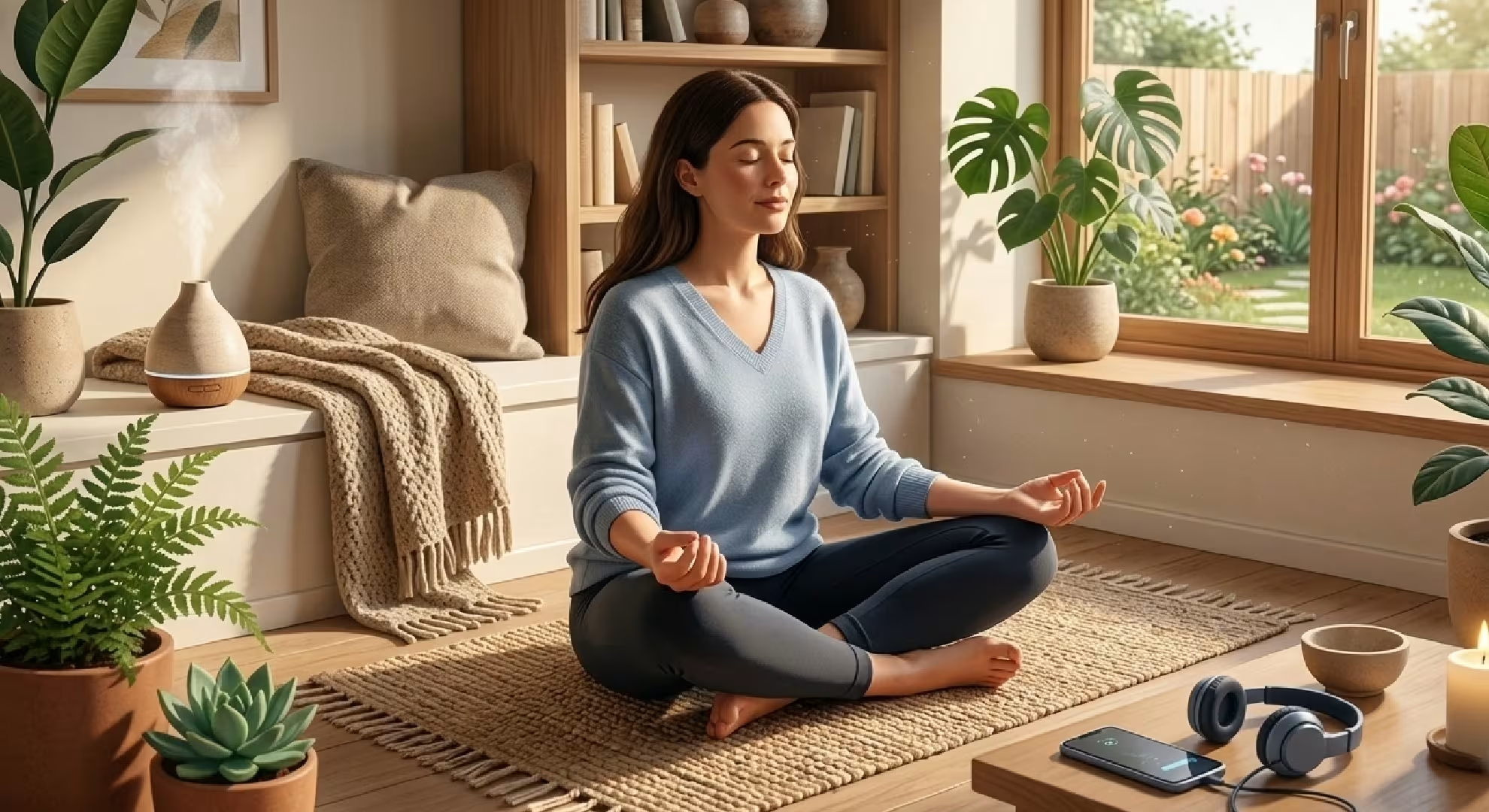
While you can meditate anywhere, creating a designated space can significantly enhance your practice. This doesn't need to be an entire room; a specific chair in a quiet corner is sufficient. The goal is to create a physical cue that signals to your brain that it's time to shift gears. Keep the space clean and uncluttered. You might include items that you find calming, such as a cushion, a blanket, or a plant. Minimize potential distractions by putting your phone on silent and letting family members or roommates know that you need a few minutes of uninterrupted time. This simple ritual of going to your "sanctuary" helps to formalize the practice and treat it with the importance it deserves, reinforcing your commitment to yourself.
Starting Small: Building Momentum with Short, Accessible Sessions
The ambition to start with a 30-minute daily session is a common reason why many new practitioners fail. The initial goal should be to build the habit itself, not to achieve a certain duration. Start with a commitment that feels almost too easy to fail—three to five minutes a day. There are countless high-quality guided meditations available in this short format. By succeeding daily at a small, manageable goal, you build a sense of accomplishment and momentum. This positive reinforcement makes you more likely to continue. Once the habit of sitting down to meditate for five minutes is firmly established, you can gradually and naturally increase the duration as your capacity and desire for stillness grow.
Overcoming Common Obstacles: Busyness, Neurotic Thoughts, and the Inner Dialogue
Every practitioner, from novice to expert, faces obstacles. The feeling of being "too busy" is often a primary barrier. The solution is to reframe meditation not as another task on your to-do list, but as a tool that enhances your ability to handle everything else with greater efficiency and less stress. Another common challenge is the seemingly endless stream of thoughts. It is a fundamental misunderstanding that meditation is about stopping thoughts. The practice is about changing your relationship with them—learning to observe them without getting entangled. A guided meditation helps by constantly reminding you to return your attention to your anchor. The "inner critic" that tells you you're failing is also a common thought pattern. The key is to meet this inner dialogue with non-judgmental awareness, recognizing it as just another thought and gently returning to the practice.
Navigating the Meditation Landscape: Finding Your Perfect Guided Journey
The world of guided meditation is vast and varied, with an ever-expanding library of styles, teachers, and platforms available. This abundance of choice is a great advantage, as it allows you to find a practice that resonates deeply with your personality and specific needs. However, it can also feel overwhelming for someone just starting out. Navigating this landscape effectively involves understanding the different types of meditations available, exploring various sensory inputs, and recognizing that your practice can and should evolve over time. The goal is to move from a generic approach to a more personalized journey that provides targeted support for your well-being. The growth in this area is significant, with the global meditation and mindfulness market expected to grow by 18.7% CAGR from 2024 to 2028.
Tailoring Your Practice: Guided Meditations for Specific Needs
Guided meditations are not one-size-fits-all. Many are designed to address specific challenges or cultivate particular qualities. If you struggle with anxiety, you might seek out sessions that focus on grounding techniques and calming the nervous system. For issues with sleep, there are guided practices specifically designed to be done in bed to help you drift off. Other meditations are tailored for managing pain, cultivating compassion (Loving-Kindness or Metta meditation), improving focus, or boosting creative energy. As you become more familiar with your own inner landscape, you can selectively choose practices that provide the most relevant help. Many subscription-based apps categorize their content by need, making it easy to find targeted support for whatever you are experiencing in the moment.
Leveraging Visualization: Harnessing the Power of Your Mind (e.g., Waterfalls, Forest Area)
Visualization is a potent technique used in many guided meditations that harnesses the mind's powerful connection to the body. The brain often does not distinguish vividly imagined sensory input from actual experience. When a guide invites you to picture a serene waterfall, a quiet forest area, or a warm, healing light, your body can respond as if you were actually there, releasing tension and promoting relaxation. These practices are particularly helpful for individuals who are more visually oriented. They provide a rich, engaging focus for the mind, making it easier to disengage from stressful thoughts. Visualization can be used to create a "mental sanctuary," a safe and peaceful inner place you can return to anytime you need to find calm and restore your energy.
Exploring Sensory Experiences: The Role of Relaxing Audio Tracks and Virtual Nature Environments
The experience of guided meditation can be greatly enhanced by engaging multiple senses, particularly hearing. Many guided sessions are layered with carefully designed audio tracks. This can include calming ambient music, binaural beats designed to encourage specific brainwave states, or high-fidelity recordings of nature sounds like rain, ocean waves, or birdsong. These soundscapes help to mask distracting environmental noises and deepen the state of relaxation. For a more immersive experience, some platforms offer virtual reality meditations that place you within a visually stunning and peaceful digital environment, such as a tranquil beach or a mountaintop at sunrise. These sensory-rich experiences can make the practice more engaging and can be especially effective for quieting a busy mind.
Levels of Practice: Progressing from Beginner to Deeper States
Your meditation practice will naturally evolve over time. Most platforms and teachers offer content structured for different experience levels. Beginner sessions typically provide more frequent guidance and focus on foundational techniques like breath awareness and the body scan. They emphasize building the core skills of attention and mindfulness. As you become more comfortable, you can progress to intermediate practices that may include longer periods of silence, more nuanced instructions, and the exploration of deeper concepts like impermanence or the nature of the self. Advanced sessions might be very lightly guided or focus on open awareness practices, where you simply rest in a state of choiceless observation. This progression allows your practice to grow with you, continually offering new depths to explore.
Beyond the Cushion: Integrating Lasting Calm into Your Daily Life
The ultimate goal of a daily meditation practice is not to become an expert at sitting still, but to carry the qualities cultivated on the cushion—calm, clarity, and compassion—into the rest of your life. The formal practice is the training ground; daily life is the main event. Integrating these skills means transforming mindfulness from a discrete activity into a continuous way of being. It's about bridging the gap between your formal sessions and your interactions, tasks, and challenges. This integration is where the practice moves beyond simple stress relief and becomes a source of profound and lasting inner peace, fundamentally changing how you experience the world. It involves applying mindful awareness to everyday activities, using micro-practices to punctuate your day, and developing a more compassionate relationship with yourself and those around you.
Conclusion
The journey toward lasting calm in a world filled with stress and anxiety is not about eliminating challenges, but about cultivating the inner resources to meet them with grace and stability. Guided meditation offers a proven, accessible, and scientifically-backed path to developing these resources. As we have explored, this practice is far more than a simple relaxation technique; it is a form of mental training that actively rewires the brain for greater resilience, focus, and emotional balance. By engaging the principles of neuroplasticity and activating the body's natural relaxation response, a consistent practice builds a foundation of well-being that permeates every aspect of life.
The key takeaway is the power of a consistent, daily commitment. Starting small with just a few minutes a day, finding a moment that integrates into your existing routine, and creating a supportive space are the foundational steps to building a sustainable habit. By tailoring your practice to your specific needs—whether through targeted sessions for anxiety, sleep, or focus, or by leveraging powerful techniques like visualization and the body scan—you can create a personalized journey toward inner peace. Remember that the goal is not to achieve a perfectly silent mind, but to foster a more compassionate and aware relationship with your own thoughts and feelings.
Your next step is simple: begin. Choose a short, beginner-friendly guided meditation from a reputable source today. Commit to just five minutes. Notice the sensations in your body, the rhythm of your breath, and the gentle guidance of the voice. This small, intentional act is the first step in a transformative process. By investing in this daily practice, you are not just managing stress; you are actively cultivating a life of greater calm, clarity, and profound well-being.