
ADHD Symptoms: The Complete Guide to Recognizing Signs in Children and Adults
Introduction
Attention-Deficit/Hyperactivity Disorder (ADHD) is a condition often associated with childhood, yet its symptoms persist and evolve across the entire lifespan, affecting millions of adults. The journey of understanding ADHD is frequently marked by questions and self-reflection. An adult, recently diagnosed, might wonder, "Why have my ADHD symptoms gotten worse since I was diagnosed? Or am I just noticing my symptoms more?" This heightened awareness can bring a wave of frustration: "I'm getting mad at myself so much right now because I feel like I've become more disorganized." This experience underscores a critical need for clear, comprehensive information about what the symptoms of ADHD truly look like in different people and at different stages of life.
What This Guide Will Cover
This article offers a complete guide to recognizing the signs of attention deficit hyperactivity disorder in both children and adults. We will delve into the core characteristics of the disorder, explore its three distinct presentations, and detail how symptoms manifest differently across various age groups—from preschoolers to teenagers to working adults. Furthermore, we will look beyond the primary symptoms to uncover the more nuanced signs related to executive functions, emotional regulation, and social interactions, providing the knowledge needed to identify potential signs of ADHD accurately.
Why Recognizing ADHD Symptoms Matters
Accurate recognition of ADHD symptoms is crucial. For a child, early identification can lead to support that prevents years of academic struggle and damage to self-esteem. For adults, a diagnosis can be life-changing, providing an explanation for lifelong challenges with organization, focus, and emotional intensity. This understanding is the gateway to effective treatment and management strategies, including therapy, medications, and skill-building, which can significantly improve quality of life. Overlooking these signs can lead to chronic difficulties, including relationship problems and challenges at work.
Understanding Attention-Deficit/Hyperactivity Disorder (ADHD)
To accurately recognize the symptoms of ADHD, it is essential to first understand the nature of the disorder itself. Far more than just a behavioral issue, ADHD is a complex condition with a biological basis that affects how the brain's central nervous system develops and functions.
What is ADHD? A Neurodevelopmental Disorder
Attention-Deficit/Hyperactivity Disorder (ADHD) is a neurodevelopmental disorder, meaning it originates from differences in brain development and activity that begin in childhood. According to the Centers for Disease Control and Prevention (CDC), these differences impact various cognitive processes, most notably attention, impulse control, and the regulation of activity levels. Research overwhelmingly indicates that genetics play a significant role; having close blood relatives with the condition significantly increases the risk. It is not a result of poor parenting or a lack of discipline. The condition is persistent, and while symptoms may change over time, the underlying neurological differences remain throughout a person's life.
The Core Characteristics: Inattention, Hyperactivity, and Impulsivity
ADHD is defined by a persistent pattern of behaviors that fall into two main categories:
- Inattention: This refers to difficulties with sustaining directed attention, staying organized, and following through on tasks. It's a challenge in regulating focus, not a total inability to pay attention. Individuals may be easily distracted, forgetful, and struggle with tasks requiring prolonged mental effort.
- Hyperactivity-Impulsivity: Hyperactivity involves excessive motor activity and restlessness. Impulsive behavior is the tendency to act on sudden urges without forethought, leading to hasty decisions, interrupting others, and difficulty waiting. These two characteristics are often grouped because they stem from similar challenges in self-regulation.
ADHD as a Spectrum: More Than Just a "Deficit"
The term "attention deficit" can be misleading. Many individuals with ADHD can concentrate intensely on activities they find highly engaging, a phenomenon known as hyperfocus. The core challenge is an inconsistent ability to regulate attention—to direct and sustain it on necessary but less stimulating tasks. ADHD exists on a spectrum, with symptoms varying in severity and presentation from person to person. Understanding this variability is key to recognizing the disorder in its many forms.
How ADHD Manifests Across a Lifespan
ADHD is not solely a childhood disorder. Research from institutions like the Cleveland Clinic indicates that a majority of children with ADHD continue to experience significant symptoms in adulthood. However, the way these symptoms manifest evolves. The overt hyperactivity in a young child may transform into a feeling of internal restlessness in an adult. The academic difficulties of a school-aged child can become career instability and poor time management in adulthood. Recognizing ADHD requires understanding this developmental trajectory.
The Three Presentations of ADHD
The Diagnostic and Statistical Manual of Mental Disorders, 5th Edition (DSM-5), outlines three distinct ways ADHD can present. These "presentations" are based on which core symptoms are most prominent.
Predominantly Inattentive Presentation (ADHD-PI)
Individuals with this presentation experience significant challenges with attention and organization but do not exhibit prominent hyperactive and impulsive behaviors. This form is often overlooked, particularly in girls and adults, because the symptoms are less disruptive.
Key symptoms include:
- Making careless mistakes and overlooking details.
- Difficulty sustaining attention during lectures, conversations, or lengthy reading.
- Appearing not to listen when spoken to directly.
- Failing to follow through on instructions, chores, or duties in the workplace.
- Struggling with organization, keeping materials in order, and managing time.
- Losing necessary items like keys, wallets, and paperwork.
- Being easily distracted by external stimuli or unrelated thoughts.
Predominantly Hyperactive-Impulsive Presentation (ADHD-HI)
This presentation is characterized by prominent hyperactive and impulsive behaviors. While some difficulties with attention may be present, they are less pronounced. This is the presentation most stereotypically associated with ADHD.
Key symptoms include:
- Fidgeting with or tapping hands or feet, or squirming in a seat.
- Leaving one's seat in situations where remaining seated is expected.
- Feeling restless or, in children, running or climbing in inappropriate situations.
- Being unable to engage in leisure activities quietly.
- Acting as if "driven by a motor."
- Talking excessively and interrupting others.
- Having difficulty waiting for one's turn.
Combined Presentation (ADHD-C)
The Combined presentation is diagnosed when an individual meets the criteria for both the inattentive and the hyperactive-impulsive presentations. This is the most common presentation of ADHD. A person with this type will exhibit a sufficient number of symptoms from each of the two core categories, leading to broad challenges in regulating attention, controlling impulses, and managing activity levels simultaneously.
Recognizing ADHD Symptoms in Children: Age-Specific Manifestations
Identifying ADHD in children can be challenging, as many of its symptoms can overlap with typical childhood behaviors. However, for a child with ADHD, these behaviors are more severe, occur more often, and negatively impact their functioning at home, in schools, and with peers.
Distinguishing Typical Child Behaviors from ADHD Symptoms
The key difference lies in persistence, pervasiveness, and impairment. A typical child might be forgetful at times, but a child with ADHD exhibits these behaviors consistently across settings. According to the American Academy of Pediatrics, a formal diagnosis requires that these symptoms cause significant problems in the child’s life. For instance, while most young children are active, a child with hyperactive ADHD is in almost constant, disruptive motion inappropriate for their age.
ADHD Symptoms in Preschoolers and Young Children (Ages 3-5)
In this age group, diagnosis can be difficult, as high energy and impulsivity are developmentally normal. However, signs of ADHD are often more extreme.
- Hyperactivity: Extreme restlessness, constant motion, climbing on furniture, and an inability to sit still during meals or story time.
- Impulsivity: Difficulty following simple directions, grabbing toys from others, and having more frequent and intense temper tantrums due to poor emotional control.
- Inattention: Appears as an inability to stick with one activity for more than a few minutes, flitting from one unfinished game to the next.
ADHD Symptoms in School-Aged Children (Ages 6-12)
As children enter formal schooling, the demands for attention and self-control increase, making ADHD symptoms more apparent.
- Inattention in the Classroom: Making careless mistakes, having a messy desk, failing to turn in homework, and frequent daydreaming.
- Hyperactivity at School and Home: Constantly fidgeting, wandering around the classroom, or talking excessively.
- Impulsivity and Social Challenges: Interrupting others, blurting out answers, and struggling with patience, which can make it hard to maintain friendships. This is where interventions like social skills training can be beneficial.
ADHD Symptoms in Teenagers (Ages 13-18)
During adolescence, overt hyperactivity often diminishes and is replaced by other challenges.
- Evolving Inattention: Procrastination becomes common, alongside profound difficulty with time management and planning for long-term projects.
- Internalized Hyperactivity: Teenagers often report feelings of inner restlessness or edginess. They may fidget constantly or choose highly stimulating activities.
- Increased Impulsivity and Risks: Impulsive behavior in teenagers can lead to more serious consequences, such as reckless driving, unsafe sexual practices, or experimentation with drugs and alcohol, highlighting the link between untreated ADHD and substance abuse.
Recognizing ADHD Symptoms in Adults: Often Missed and Misunderstood
For decades, ADHD was considered a condition children outgrew. It is now understood that ADHD persists into adulthood, though its presentation often changes. Adult ADHD is frequently missed because its symptoms can be more subtle and are often mistaken for anxiety, depression, or character flaws.
How ADHD Symptoms Evolve from Childhood to Adulthood
The transition to adulthood brings less external structure, which can unmask or worsen ADHD symptoms. The overt physical hyperactivity of a child often transforms into an internal sense of restlessness. A child’s difficulty with homework evolves into an adult’s struggle to meet work deadlines, manage finances, or maintain an organized home. The core deficit in executive functions—the brain's self-management system—becomes more prominent as life's demands increase.
Common Inattentive Symptoms in Adults
Inattention is often the most impairing aspect of adult ADHD, manifesting as a pervasive difficulty in managing daily life.
- Chronic Disorganization: A constantly messy home or workspace and a feeling of being overwhelmed by clutter.
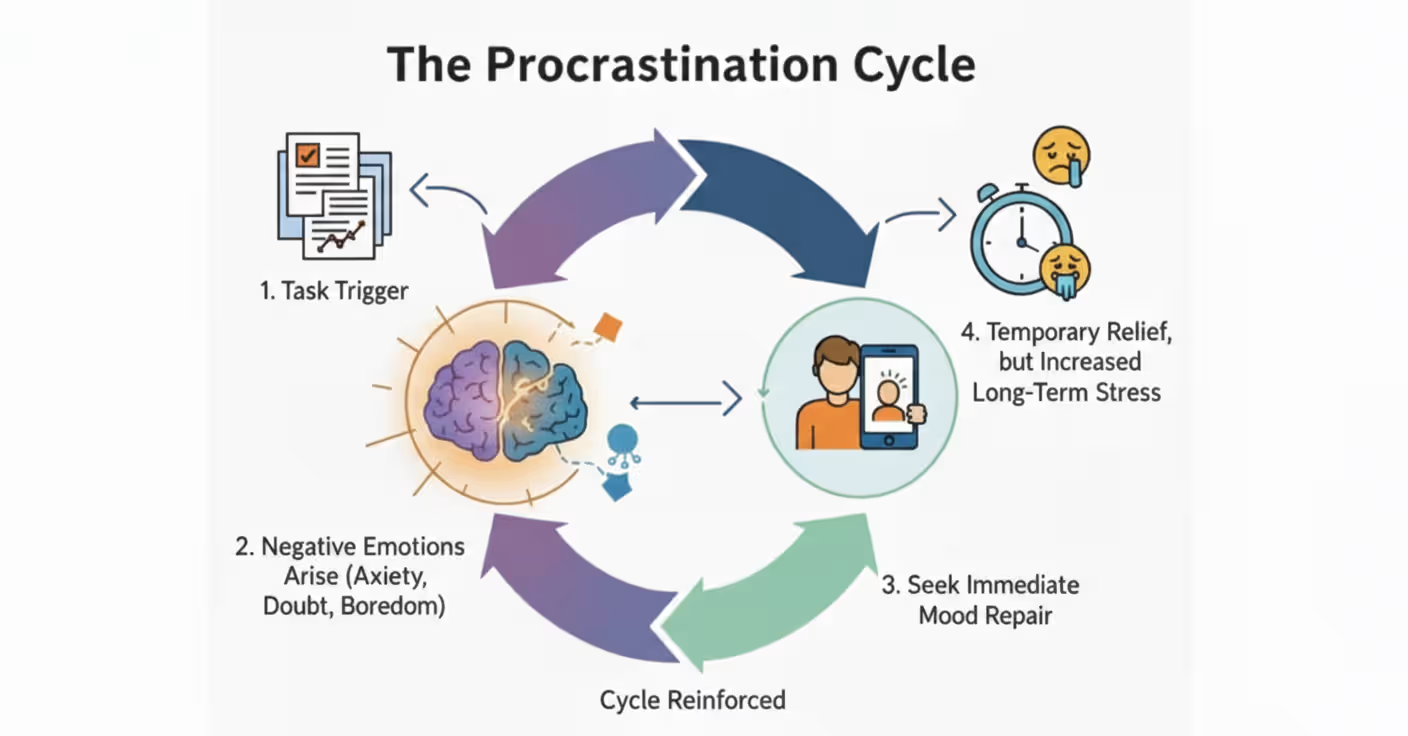
- Poor Time Management and Procrastination: Frequently late for appointments, missing deadlines, and underestimating how long tasks will take.
- Difficulty Starting and Finishing Projects: A history of unfinished projects at work and home due to problems with follow-through.
- Forgetfulness in Daily Life: Forgetting appointments, misplacing items like keys and phones, and failing to pay bills on time.
Common Hyperactive-Impulsive Symptoms in Adults
While less obvious than in children, hyperactivity and impulsivity remain significant challenges for many adults.
- Internal Restlessness: A constant feeling of being "on edge" or unable to relax, often leading to a need to always be doing something.
- Excessive Activity: Talking excessively, dominating conversations, or filling every moment with activities to avoid being still.
- Impulsive Decision-Making: This can have serious consequences, leading to impulsive spending, frequent job changes, or abruptly ending relationships.
- Poor Self-Control: Difficulty resisting temptation and a tendency to be impatient in traffic or long lines.
The "Masked" Adult ADHD: Coping Mechanisms and Delayed Diagnosis
Many adults develop elaborate coping mechanisms to "mask" their symptoms. They may rely heavily on reminders, work extra hours to compensate for inefficiency, or develop perfectionistic tendencies. While these strategies can be effective, they often come at a great cost, leading to chronic stress and burnout. Because they appear successful, their underlying struggles are invisible, making it difficult for a healthcare provider to make an accurate diagnosis.
Beyond the Core: Deeper Nuances and Hidden Signs of ADHD
The official diagnostic criteria provide the foundation for diagnosing ADHD, but they don't capture the full experience. Many significant challenges stem from difficulties with executive functions and emotional regulation.
Understanding Executive Functions and Executive Dysfunction
Executive functions are the high-level mental processes that act as the "management system" of the brain. ADHD is fundamentally a disorder of these functions. This "executive dysfunction" explains many common struggles.
- Working Memory: The ability to hold information in mind while using it. Difficulties with working memory can lead to forgetting multi-step instructions or losing your train of thought.
- Inhibition: The ability to control impulses and resist distractions.
- Task Initiation: The ability to begin tasks without procrastination, a major hurdle for many with ADHD.
- Planning and Prioritization: The capacity to set goals and create steps to achieve them.
Emotional Dysregulation: Intense Emotions and Rejection Sensitivity Dysphoria (RSD)
Although not a formal diagnostic criterion, emotional dysregulation is a central feature of ADHD. This involves having emotional reactions that are quicker, more intense, and last longer than is typical. A particularly potent aspect of this is Rejection Sensitivity Dysphoria (RSD), an extreme emotional sensitivity and pain triggered by the perception of being rejected or criticized. According to experts at Penn Medicine, this can lead to people-pleasing behaviors or social avoidance.
Hyperfocus: A Double-Edged Sword
Hyperfocus is the intense, sustained concentration on a task of high interest. While it can be a "superpower" allowing for incredible productivity, it is also a form of attentional dysregulation. It can be difficult to shift focus away from the hyperfocused activity, leading to neglect of other important responsibilities.
The Connection Between ADHD and Sleep Disturbances
A significant number of individuals with ADHD experience sleep problems. The "racing mind" associated with the condition can make it difficult to fall asleep. A delayed circadian rhythm is also common, leading many to be "night owls." Conversely, poor sleep quality can worsen ADHD symptoms, creating a vicious cycle where fatigue exacerbates difficulties with attention and emotional control.
The Impact of ADHD on Social Interactions and Relationships
The combined effects of inattention, impulsivity, and emotional dysregulation can create significant challenges in social settings. An individual with ADHD may miss social cues, interrupt conversations, or make impulsive comments. For a child, these difficulties can lead to social isolation. For an adult, they can contribute to a pattern of unstable relationship problems.
Conclusion
Recognizing the symptoms of Attention-Deficit/Hyperactivity Disorder is a complex but critical endeavor. The journey begins with moving past outdated stereotypes and understanding ADHD as a multifaceted neurodevelopmental disorder that presents differently across a lifespan. In children, the signs often manifest as observable behaviors that cause impairment in schools and social settings. As individuals transition into adulthood, these symptoms evolve, with overt hyperactivity often morphing into inner restlessness and challenges with executive functions becoming more prominent.
The impact of unrecognized and untreated ADHD is profound, affecting academic achievement, career stability, relationships, and self-esteem. However, a proper diagnosis opens the door to effective management. This process involves a comprehensive clinical assessment by a qualified professional, which includes reviewing medical history, using symptom checklists, and ruling out other conditions. Fortunately, a combination of behavioral therapies, medication, and lifestyle adjustments can empower individuals to manage their symptoms and lead successful, fulfilling lives.
Why have my ADHD symptoms gotten worse since I was diagnosed? Or am I just noticing my symptoms more? I'm getting mad at myself so much right now because I feel like I've become more disorganized.
This is an incredibly common and often distressing experience for newly diagnosed individuals. It’s crucial to understand that your ADHD symptoms have not suddenly become biologically worse. Instead, your awareness has been fundamentally altered. Before diagnosis, you likely attributed your challenges with organization, focus, or emotional regulation to personal failings—laziness, lack of willpower, or character flaws. These were just "who you were."
Receiving a diagnosis provides a new lens through which to view your entire life. Suddenly, behaviors you once ignored or accepted have a name: executive dysfunction, emotional dysregulation, rejection sensitivity dysphoria. You are now hyper-aware of every instance of forgetfulness, every moment of distraction, and every impulsive decision. This process can be overwhelming and lead to the perception that things are worsening, when in reality, you are simply seeing the full scope of the challenge for the first time. It is a difficult but necessary step toward self-compassion and finding effective strategies.
Can ADHD symptoms get worse after diagnosis?
While the underlying neurobiology of ADHD doesn't typically "worsen" after a diagnosis is made, the subjective experience of the symptoms can certainly intensify for several reasons. As mentioned, the primary driver is heightened awareness. You are no longer "masking" or subconsciously compensating for your symptoms without realizing it. Every symptom is now under a microscope, which can be exhausting and make them feel more pronounced.
Furthermore, the diagnostic process itself can be a catalyst. Some individuals, upon learning about ADHD, may subconsciously relax the intense, lifelong coping mechanisms they had built to appear "normal." This can feel like a step backward in functioning but is often a necessary part of understanding one's authentic baseline before building healthier, more sustainable strategies. It’s also possible for other life stressors or co-occurring conditions like anxiety to exacerbate ADHD symptoms, making them feel more severe.
What strategies have you found helpful in managing ADHD symptoms?
Effective ADHD management is multifaceted, combining professional treatment with personalized strategies. It is not a one-size-fits-all approach, but a collection of evidence-based tools. A comprehensive plan, often guided by a healthcare provider, typically involves:
- Medication Options: Stimulant medications are often the first-line treatment and can be highly effective in improving focus and reducing impulsivity. Non-stimulant options are also available. Finding the right medication and dosage requires collaboration with a doctor and understanding Formulary drug information.
- Behavioral Therapies: Cognitive behavioral therapy (CBT), also written as cognitive behavioural therapy, helps individuals develop practical coping skills. Behavior therapy and other behavioral interventions are crucial.
- Coaching and Counseling: ADHD coaching focuses on practical skills like organization and time management. Psychological counseling can address the emotional impact, such as low self-esteem or anxiety.
- Support Systems: Connecting with others is vital. This can include joining support groups, either in person or online. Organizations like Children and Adults with Attention-Deficit/Hyperactivity Disorder (CHADD) provide excellent resources.
- Environmental & Lifestyle Adjustments: This includes creating structured routines, using tools like planners and apps, ensuring adequate sleep, regular exercise, and a balanced diet. For children, this involves parent training and implementing individualized education programs (IEPs) at school. For adults, it may involve seeking workplace accommodations.
What are the symptoms of ADHD in adult women?
ADHD in adult women is frequently underdiagnosed because its presentation often clashes with the hyperactive male stereotype. Women are more likely to have the Predominately inattentive presentation, with symptoms that are more internalized.
Key signs include:
- Chronic Overwhelm: A persistent feeling of being unable to keep up with life's demands, leading to anxiety and burnout.
- Internalized Hyperactivity: While not physically running around, they may have a mind that never stops, experience racing thoughts, talk excessively, or have difficulty relaxing.
- Emotional Dysregulation: Heightened emotional sensitivity, frequent mood shifts, and intense reactions to stress or criticism, which can be a sign of rejection sensitivity dysphoria.
- Extreme Disorganization or Perfectionism: Their environment may be chaotic, or they may overcompensate by becoming rigidly perfectionistic, spending excessive energy to appear organized.
- Social Anxiety and People-Pleasing: Due to a lifetime of masking difficulties and feeling "different," many women with ADHD develop social anxiety or try to compensate by becoming chronic people-pleasers.
How do ADHD symptoms differ between adults and children?
While the core deficits remain, the expression of ADHD symptoms changes significantly with age and developmental demands.
- Hyperactivity: In children, it's overt and physical—running, climbing, and an inability to sit still. In adults, it morphs into an internal restlessness, fidgeting, a need to stay constantly busy, or feeling "on the go."
- Impulsivity: In children, it appears as blurting out answers, interrupting, and physical risk-taking. In adults, it manifests in more life-altering ways: impulsive spending, quitting jobs, ending relationships abruptly, or engaging in substance abuse.
- Inattention: In children, this leads to trouble with homework, losing belongings, and daydreaming in class. In adults, it causes chronic difficulty with time management, meeting deadlines, organizing complex projects, and managing household responsibilities. The impact of executive dysfunction becomes more severe as the external structure of school is removed.
Introduction: Unpacking the Realities of ADHD Symptoms
Attention-Deficit/Hyperactivity Disorder (ADHD) is one of the most common neurodevelopmental disorders, yet it remains widely misunderstood. Far more than simple distractibility or excess energy, ADHD is a complex mental health disorder rooted in the brain's executive functioning systems, impacting how individuals regulate attention, emotions, and impulses. Its common symptoms can create significant challenges in nearly every aspect of life, from academic and professional performance to interpersonal relationships and self-esteem. As we've seen, the journey of recognizing and understanding these symptoms, particularly after a diagnosis, can be complex and emotionally charged. To navigate this landscape effectively, a foundational understanding of the disorder is essential.
What This Guide Will Cover
This guide is designed to serve as a comprehensive resource for identifying the signs of ADHD across different ages and presentations. We will move from the fundamental definition of ADHD and its core characteristics to a detailed breakdown of the three main presentations. We will then provide an in-depth exploration of how symptoms manifest specifically in children—from preschoolers to teenagers—and how they evolve and often become masked in adulthood. Finally, we will look beyond the core symptoms to discuss the profound impact of executive dysfunction, a central element of the ADHD experience.
Why Recognizing ADHD Symptoms Matters
Accurate recognition is the first and most critical step toward effective management and support. For a child, early identification can lead to academic accommodations and behavioral interventions that prevent years of struggle and damage to their self-worth. For an adult, finally understanding that their lifelong challenges with organization, emotional intensity, or focus are not character flaws but symptoms of a neurological condition can be life-changing. It opens

.avif?alt=media&token=ea0595b3-79aa-4e53-b3aa-d9bf81c639eb)