Why do people experience rumination and what triggers it?
Rumination is a complex cognitive pattern that stems from a combination of biological predispositions, personality traits, and life experiences. At its core, it is often a maladaptive attempt to solve a problem or understand distressing emotions. People with a tendency towards perfectionism, neuroticism, or a high focus on their relationships with others may be more susceptible to this type of thinking. Stress is a primary catalyst; significant life events such as the loss of a job, the end of a relationship, or experiencing a traumatic event can trigger ruminative cycles. The brain, in an effort to make sense of the situation and prevent future pain, can get stuck replaying the events and associated feelings. This behavior can also be a learned pattern; for individuals who grew up in environments where worry and over-analysis were common, rumination might feel like a normal, albeit uncomfortable, way of processing the world. The fundamental trigger is often a discrepancy between a person's current reality and their desired reality, leading the mind to endlessly chew on the problem without ever reaching a satisfying solution.
Is rumination like overthinking?
While the terms are often used interchangeably, rumination is a specific and often more destructive form of overthinking. Overthinking is a broad term that can encompass worry (focusing on future threats), analysis paralysis (being unable to make a decision), and rumination. Rumination is distinct in its focus and its nature. It is typically past-oriented, repetitively replaying events, conversations, and mistakes. Unlike productive problem-solving, which moves towards a solution, rumination is passive and cyclical. It fixates on the "what ifs," "if onlys," and the negative feelings associated with the past event. The thinking pattern is sticky and intrusive, pulling focus away from the present moment and offering no new insights or resolutions. While all rumination is a form of overthinking, not all overthinking is rumination. The key difference lies in its repetitive, past-focused, and unproductive nature, which serves to amplify negative emotions rather than alleviate them.
Introduction: Trapped in the Loop of Endless Thinking
The human mind is a powerful tool for problem-solving and reflection, but what happens when this tool turns against itself? For millions of people, the mind becomes a feedback loop of persistent, negative thoughts—a phenomenon known as rumination. This is not simply thinking a lot; it's being mentally trapped, replaying distressing events, dissecting past mistakes, and analyzing negative feelings without end. This circular thought pattern can feel inescapable, consuming valuable time and energy, and casting a shadow over daily life. The central question for anyone caught in this cycle is clear: How do you deal with rumination? This article provides a comprehensive guide to understanding this mental overdrive, identifying its costs, and most importantly, implementing practical, evidence-based strategies to interrupt the cycle, silence the noise, and reclaim your mental peace.
The Invisible Cage: What Rumination Feels Like
Experiencing rumination is like having a song stuck in your head, but instead of a melody, it's a loop of your own worries, regrets, and self-criticism. It’s the mental equivalent of picking at a scab, preventing emotional wounds from healing. People caught in this pattern often describe feeling mentally exhausted yet unable to switch off their thinking. The same themes and scenarios play out on a relentless loop, each repetition deepening feelings of sadness, anxiety, or anger. This internal monologue can be so loud it drowns out the present moment, making it difficult to concentrate on work, engage in conversations, or enjoy simple activities. It creates an invisible cage built from one's own thoughts, isolating the individual from their own life and fostering a sense of helplessness against the relentless churn of their mind.
Why Breaking Free Matters: Reclaiming Your Life and Peace of Mind
Breaking free from rumination is not just about feeling less stressed; it's about reclaiming fundamental aspects of your life. When the mind is no longer consumed by replaying the past, mental resources are liberated. This allows for improved focus, clearer decision-making, and the cognitive space to engage with the present. Escaping the cycle means more than just quieting a noisy mind; it translates to better sleep, increased energy, and a more stable mood. It allows for genuine connection with others, as you are present in conversations rather than lost in thought. Ultimately, breaking the pattern of rumination is an act of empowerment. It is a declaration that your mind is a tool for you to use, not a cage to be trapped in, paving the way for a more intentional, peaceful, and fulfilling existence.
Understanding Rumination: The Mechanics of Mental Overdrive
To effectively combat rumination, it is essential to first understand its underlying mechanics. This pattern of thinking is more than just a bad habit; it is a self-perpetuating cycle with distinct cognitive and neurological roots. Recognizing how it differs from healthy self-reflection, how it sustains negative moods, and its deep connection to common mental health conditions is the first step toward dismantling its power. By examining the "how" and "why" of rumination, we can better target our strategies to disrupt its hold and foster a more adaptive mindset.
What is Rumination? Distinguishing It from Healthy Reflection
Rumination is a cognitive process characterized by repetitive, passive, and often negative thinking about one's own feelings and problems. The key distinction between rumination and healthy reflection lies in its outcome. Healthy reflection is active, purposeful, and solution-oriented. It involves analyzing a past situation to gain insight, learn a lesson, or develop a plan for the future. For example, after a failed project, reflection might involve identifying what went wrong and how to improve next time. In contrast, rumination is stuck. It fixates on the distress itself—"Why do I always fail?" "I feel so embarrassed"—without moving toward a resolution. It is an abstract, judgmental process that amplishes negative emotions, whereas reflection is a concrete, non-judgmental process that leads to growth and closure.
The Sticky Cycle: How Rumination Perpetuates Negative Thoughts and Moods
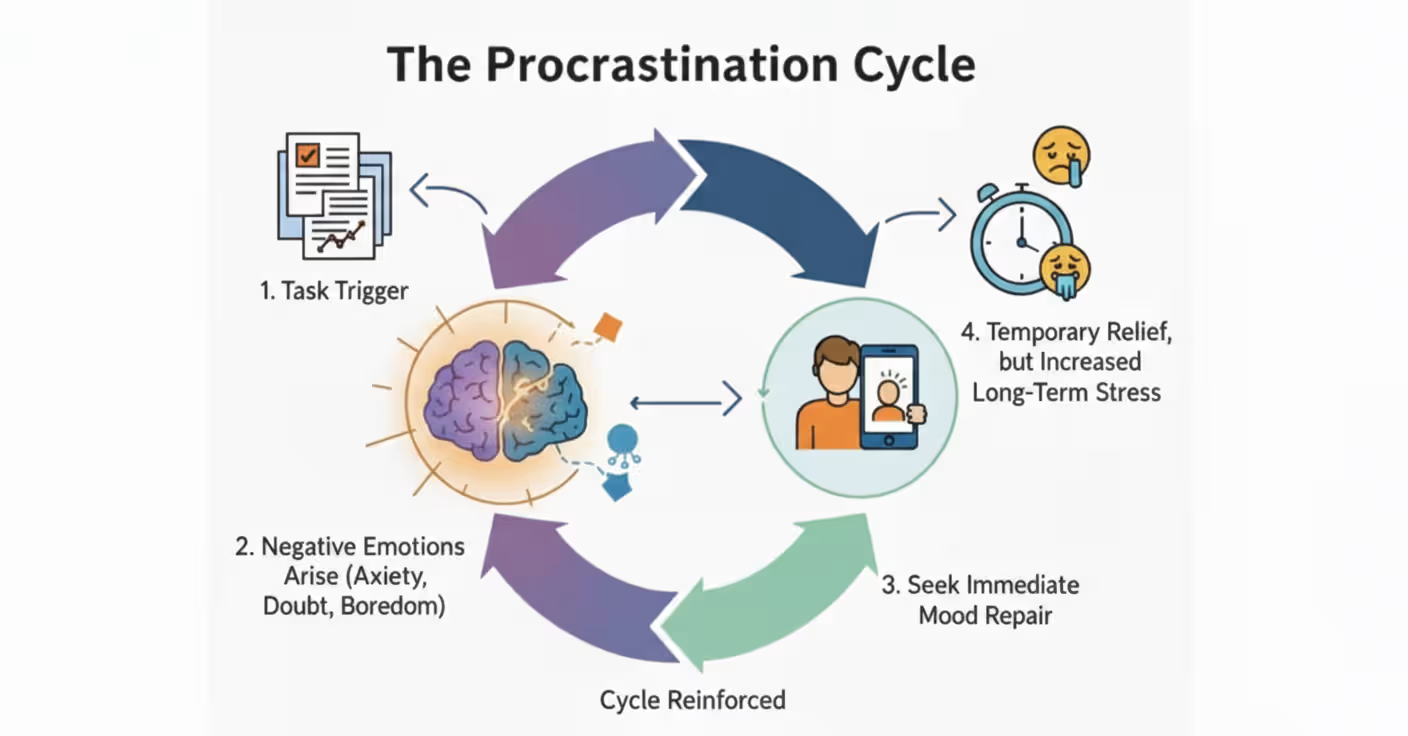
Rumination operates on a vicious cycle that strengthens itself over time. It begins with a trigger—a negative event or feeling. The mind then latches onto this trigger, replaying it endlessly. This constant focus on negative content naturally brings more negative memories and associations to the surface, which in turn deepens the negative mood. A person ruminating about a social rejection might start recalling other times they felt left out, creating a cascade of negative evidence that reinforces beliefs like "Nobody likes me." This lowered mood then impairs problem-solving abilities, making it even harder to find a way out of the negative thinking pattern. The behavior becomes a feedback loop: negative thoughts fuel negative emotions, which make it more difficult to think clearly, leading to more rumination.
The Brain's Role: A Simplified Look at Why We Get Stuck (mentioning default mode network and brain mechanisms simply)
Neuroscience offers insights into why some people get stuck in ruminative loops. A key player is the "Default Mode Network" (DMN), a collection of brain regions that becomes active when we are not focused on an external task—when our minds are wandering or thinking about ourselves. In individuals who ruminate, the DMN is often hyperactive and exhibits overly strong connections between areas associated with self-focus and emotional processing. This can make it difficult to disengage from self-critical thoughts once they begin. Essentially, the brain’s “idle” state defaults to a pattern of negative self-reflection. Furthermore, the prefrontal cortex, the brain's "executive control" center responsible for regulating emotions and shifting attention, may struggle to override the powerful emotional signals coming from areas like the amygdala, trapping the brain in a loop of distress.
The Deep Connection: Rumination, Anxiety, and Depression
Rumination is not a standalone issue; it is a significant transdiagnostic factor, meaning it is a core component across multiple mental health conditions, most notably anxiety and depression. In depression, rumination often takes the form of brooding over past failures, losses, and perceived inadequacies, which intensifies feelings of sadness and hopelessness. It can prolong and deepen depressive episodes. In anxiety disorders, rumination often overlaps with worry, focusing on the potential causes and consequences of anxious feelings. For example, someone with social anxiety might ruminate for hours about a conversation, dissecting every word for signs of disapproval. This thinking pattern acts as a cognitive vulnerability, increasing the risk of developing these conditions and making recovery more challenging by maintaining the negative emotional state.
The Hidden Costs: How Overthinking Drains Your Mind and Body
The consequences of chronic rumination extend far beyond a negative mood. This relentless mental activity is a significant drain on cognitive, emotional, and physical resources. It functions like a background application that consumes all the processing power of a computer, leaving little capacity for anything else. The persistent stress state it induces can lead to a cascade of negative effects that impact every facet of a person's life, from their ability to think clearly and make decisions to their physical health and social connections. Understanding these hidden costs highlights the urgency of addressing this debilitating thinking pattern.
The Mental Toll: Amplified Negative Emotions (sadness, anger), Decision Paralysis, and Lost Clarity
On a mental level, rumination acts as an amplifier for negative emotions. By constantly replaying distressing events, it keeps feelings of sadness, anger, guilt, and regret fresh and potent. This emotional preoccupation consumes cognitive bandwidth, leading to significant impairments in executive function. Concentration becomes difficult, as the mind is constantly pulled back into its negative loop. This leads to decision paralysis; even simple choices can feel overwhelming because the mind is too cluttered and exhausted to weigh options effectively. The result is a loss of mental clarity. Thoughts feel foggy, problem-solving skills diminish, and the ability to see a situation from a broader, more objective perspective is lost, leaving the individual feeling trapped and mentally exhausted.
The Physical Burden: Sleep Disturbances, Energy Depletion, and Other Somatic Symptoms
The mind and body are intricately connected, and the mental stress of rumination inevitably takes a physical toll. One of the most common physical symptoms is sleep disturbance. It is incredibly difficult to fall asleep or stay asleep when the mind is racing with repetitive, negative thoughts. This lack of restorative sleep leads to chronic fatigue and energy depletion, making it harder to cope with daily stressors and further fueling the cycle of rumination. The constant state of mental alert can also trigger the body's stress response, leading to increased levels of cortisol. Over time, this can contribute to a host of somatic symptoms, including headaches, digestive issues, muscle tension, and a weakened immune system, demonstrating that overthinking is a full-body condition.
Impact on Relationships and Life: Missed Opportunities and Disconnection
Rumination erects a wall between an individual and their life. When a person is lost in their own head, they are not present for the world around them. This can lead to disconnection in relationships; friends and family may feel that the person is distant, irritable, or uninterested. The individual may also withdraw socially to avoid potential triggers or because they simply lack the mental energy to engage. This behavior can further strain relationships and increase feelings of isolation. Beyond personal connections, rumination leads to missed opportunities. The fear of repeating past mistakes can cause procrastination and avoidance of new challenges. Life becomes something that is thought about rather than lived, as time and energy are spent analyzing the past instead of building a future.
Identifying Your Ruminative Patterns: The First Step to Freedom
Before you can effectively intervene, you must become an expert on your own rumination. This requires a shift from being a passive participant in your thought loops to becoming a curious observer. Gaining awareness of the specific content of your thoughts, the triggers that set them off, and the underlying reasons you engage in this pattern is the foundational step toward change. This process of self-discovery illuminates the predictable nature of your rumination, transforming it from a mysterious and overwhelming force into a recognizable pattern that can be systematically dismantled.
Recognizing the Signs: What Does Your Rumination Look Like? (common themes, loops, thoughts, feelings)
Start by paying attention to the content and character of your thoughts. What are the recurring themes? Common ruminative themes often revolve around self-worth ("I'm not good enough"), social interactions ("Why did I say that?"), past mistakes ("I should have done things differently"), or unresolved anger ("I can't believe they did that to me"). Notice the specific thought loops. Does your mind replay a particular conversation or a specific moment of failure? Identify the feelings that accompany these thoughts. Do they trigger sadness, anxiety, shame, or frustration? Keeping a simple journal for a few days can be revealing. Note when you catch yourself ruminating and write down the specific thoughts and associated emotions. This practice helps to objectify the process and see it as a distinct mental event.
Pinpointing Your Triggers: Situations, People, and Internal States that Start the Cycle
Rumination doesn't happen in a vacuum; it is almost always triggered by something specific. Identifying these triggers is crucial for developing proactive strategies. Triggers can be external or internal. External triggers might include specific situations (like a performance review at work), places (driving past an ex-partner's house), or interactions with certain people who make you feel insecure. Internal triggers are your own mental and emotional states. For example, feeling tired, lonely, or stressed can make you more vulnerable to falling into a ruminative cycle. A seemingly minor setback during a low-energy day can be a powerful trigger. By recognizing these cues, you can anticipate when you are most at risk and prepare to use your interruption strategies before the loop gains momentum.
The False Promise: Why We Ruminate (seeking an elusive answer or resolution, sense of control)
People don't ruminate because they enjoy it; they do it because, on some level, the brain believes it is being productive. Rumination often operates under a false promise that if you just think about the problem long enough, you will finally uncover a hidden insight, a definitive answer, or a way to undo a past mistake. This creates an illusion of control over an uncontrollable situation. By endlessly analyzing a past event, you might feel like you are "doing something" about your distress. The mind mistakenly equates intense thinking with problem-solving. Acknowledging this false promise is a critical cognitive shift. You must recognize that rumination is not a path to a solution; it is the problem itself. It is the mental quicksand that keeps you stuck in the very distress you are trying to escape.
Practical Strategies to Silence Overthinking: Your Toolbox for Reclaiming Your Mind
Understanding rumination is the first half of the battle; the second is taking decisive action. Breaking free requires a multi-faceted approach that combines in-the-moment interventions, long-term cognitive restructuring, and lifestyle changes that build mental resilience. The following strategies provide a comprehensive toolbox to not only interrupt the cycle when it occurs but also to change the underlying mental habits that allow it to flourish. These are not quick fixes but learnable skills that, with consistent practice, can fundamentally reshape your relationship with your thoughts and empower you to reclaim control over your mind.
Strategy 1: Interrupting the Loop in the Moment
When you're caught in a ruminative spiral, the immediate goal is to break the momentum. This requires actively disengaging from the thought pattern.
- Mindful Distraction: Engage in an activity that requires your full attention. This is not about avoidance but about intentionally redirecting your focus. Choose something that occupies your senses or cognitive resources. Examples include solving a puzzle, listening to a complex piece of music, calling a friend to talk about a completely different topic, or engaging in a physically demanding exercise. The key is that the activity must be engaging enough to pull your focus away from the internal loop.
- The "Stop!" Technique: This is a simple but effective pattern interrupt. When you notice yourself ruminating, mentally (or even out loud, if you are alone) say "Stop!" or "No, we're not doing this right now." This can be paired with a physical action, like snapping a rubber band on your wrist or standing up and stretching. This sharp interruption can create a brief mental gap, giving you a chance to redirect your thinking.
- Scheduled "Worry Time": Instead of letting rumination dominate your day, allocate a specific, limited time for it (e.g., 15 minutes at 5 PM). When ruminative thoughts arise outside this window, acknowledge them and tell yourself, "I will think about this during my scheduled time." This technique helps contain the behavior and often, when the time comes, the urge to ruminate has diminished.
Strategy 2: Shifting Your Cognitive Landscape
Interrupting the loop is crucial, but long-term change requires altering the thought patterns themselves. This involves challenging your thoughts and adopting new perspectives.
- Cognitive Reframing: Ruminative thoughts are often based on cognitive distortions, such as catastrophizing or black-and-white thinking. Practice identifying and challenging these thoughts. Ask yourself: "Is there another way to look at this situation?" "What evidence do I have that this thought is 100% true?" "What would I tell a friend who had this thought?" The goal is not to force positive thinking but to cultivate a more balanced, realistic, and less judgmental perspective.
- Mindful Self-Compassion: Rumination is often fueled by harsh self-criticism. Counteract this with self-compassion. Instead of berating yourself for a mistake, treat yourself with the same kindness you would offer a friend. Acknowledge your pain ("This is really hard right now") and remind yourself that imperfection is part of the human experience ("Everyone makes mistakes"). This approach soothes the emotional distress that drives rumination.
- Broaden Your Perspective: When you're stuck in a loop, it feels like the problem is enormous. Practice zooming out. Ask yourself: "Will this matter in five years? In one year? In one month?" Consider the issue from a wider life context. This technique, known as temporal distancing, can reduce the emotional intensity of the thought and highlight its relative insignificance in the grand scheme of your life.
Strategy 3: Building Long-Term Resilience and a Rumination-Proof Mindset
Lasting freedom from rumination involves building a lifestyle and mindset that are inherently resistant to it. These strategies focus on proactive mental health maintenance.
- Cultivate a Regular Mindfulness Practice: Mindfulness meditation is a powerful antidote to rumination. It trains your brain to pay attention to the present moment without judgment. Through regular practice, you develop the skill of observing your thoughts without getting entangled in them. You learn to see thoughts as transient mental events rather than absolute truths. Even 10 minutes a day can strengthen your brain's "attention muscle," making it easier to disengage from ruminative loops.
- Engage in Behavioral Activation: Rumination thrives in inactivity. Behavioral activation involves scheduling positive and meaningful activities into your life, especially when you don't feel like it. Engaging in hobbies, exercise, socializing, or working towards a goal provides positive reinforcement and shifts your focus from internal distress to external engagement. This behavior directly counters the withdrawal and passivity that accompany rumination, improving mood and reducing the time available for overthinking.
- Prioritize Physical Well-being: Your mental state is deeply influenced by your physical health. Ensure you are getting adequate sleep, eating a balanced diet, and engaging in regular physical activity. Exercise, in particular, is a potent tool against rumination, as it releases endorphins, reduces stress hormones, and can serve as a form of mindful distraction. A healthy body provides a stronger foundation for a resilient mind.
When to Seek Professional Support: Getting Help to Break Free
While self-help strategies can be incredibly effective, there are times when the grip of rumination is too strong to break alone. This persistent thinking pattern is often a core symptom of underlying mental health conditions that require professional diagnosis and treatment. Recognizing when to seek help is not a sign of weakness but a proactive and courageous step toward lasting well-being. A mental health professional can provide structured support, evidence-based treatments, and personalized guidance to help you navigate the path to a quieter mind.
Recognizing the Red Flags: When Rumination Becomes a Debilitating Condition
It's important to discern between a temporary bout of overthinking and a chronic, debilitating pattern. Seek professional support if rumination is significantly impacting your daily functioning. Red flags include: interfering with your ability to work, study, or maintain your home; causing serious problems in your relationships; disrupting your sleep consistently; being accompanied by persistent low mood, hopelessness, or intense anxiety; or if you find it impossible to disengage from the thoughts no matter what strategies you try. If your rumination is linked to thoughts of self-harm or suicide, it is critical to seek immediate help from a crisis line or mental health professional.
Therapeutic Pathways: How Professionals Can Help (RFCBT, exposure response therapy, behavioral treatment)
Therapy offers structured treatments specifically designed to target rumination. One of the most effective approaches is Rumination-Focused Cognitive Behavioral Therapy (RFCBT). This specialized form of CBT helps individuals identify the triggers and consequences of their ruminative thinking, become more concrete and specific in their problem-solving, and learn to shift from abstract analysis to active, goal-oriented behavior. Other effective treatments include traditional Cognitive Behavioral Therapy (CBT), which teaches skills to identify and challenge negative thought patterns, and Acceptance and Commitment Therapy (ACT), which focuses on accepting thoughts without judgment and committing to value-driven actions. For some, elements of Exposure and Response Prevention (ERP), typically used for OCD, can also be adapted to help individuals face ruminative thoughts without engaging in compulsive analysis.
The Role of a Doctor or Therapist: Guiding You Towards Lasting Change
A qualified doctor or therapist serves as a crucial guide and partner in your recovery. They begin by conducting a thorough assessment to understand the severity of the rumination and to determine if it is part of a broader condition like depression or an anxiety disorder. This accurate diagnosis informs a tailored treatment plan. In therapy, you will learn and practice new cognitive and behavioral skills in a supportive, non-judgmental environment. A therapist can help you uncover the deeper roots of your rumination, provide accountability as you implement new strategies, and help you navigate setbacks. They equip you not just with tools to stop rumination, but with a deeper understanding of your own mind, fostering lasting emotional regulation and resilience.
Reclaiming Your Mind: A Life Beyond Endless Overthinking
The journey out of rumination is a process of reclaiming your most valuable resources: your attention, your energy, and your time. It represents a fundamental shift from a life lived internally, trapped in the past, to one that is engaged, present, and forward-looking. This transformation is not about eradicating negative thoughts entirely—an impossible task—but about changing your relationship with them. It is about learning to let thoughts come and go without allowing them to dictate your emotional state and life's direction.
The Benefits of Breaking Free: Increased Energy, Clarity, and Emotional Freedom
The rewards for breaking the cycle of rumination are profound and life-altering. The first and most noticeable benefit is a significant increase in mental and physical energy. When you are no longer spending countless hours in a draining mental loop, that energy becomes available for productive work, hobbies, and relationships. With this comes mental clarity; decisions become easier, focus sharpens, and creativity can flourish in the newfound mental space. Perhaps most importantly, you gain emotional freedom. You are no longer held captive by past events or negative feelings. You develop the capacity to experience emotions without being consumed by them, leading to greater emotional stability and a more profound sense of inner peace.
Embracing a Present and Intentional Life: Living Rather Than Just Thinking
Ultimately, overcoming rumination allows you to move from a state of constant thinking to a state of active living. It is the difference between analyzing a memory of a sunset and actually watching the colors change in the sky. By quieting the internal noise, you can fully engage with the present moment—the taste of your food, the warmth of the sun, the sound of a loved one's laugh. Life becomes more vibrant and meaningful. You can act with intention, making choices based on your values and goals rather than being paralyzed by fear and regret. This is the ultimate goal: to harness the power of your mind to create the life you want to live, rather than allowing it to endlessly deconstruct the life you've already lived.
Conclusion
Rumination is a powerful and destructive mental pattern that can trap individuals in a cycle of negativity, draining their energy and disconnecting them from their lives. It is more than simple overthinking; it is a repetitive, unproductive focus on past distress that fuels conditions like anxiety and depression. However, this pattern is not an unchangeable aspect of one's personality. As we have explored, rumination is a cognitive behavior that can be understood, identified, and actively changed.
The path to freedom involves a strategic, multi-layered approach. It begins with awareness—recognizing your specific thought loops, identifying their triggers, and understanding the false promise of control they offer. From there, you can build a robust toolbox of practical strategies. This includes in-the-moment techniques to interrupt the cycle, cognitive skills to reframe distorted thinking, and long-term resilience-building habits like mindfulness and behavioral activation. For those whose rumination is severe and debilitating, professional treatments like Rumination-Focused Cognitive Behavioral Therapy offer a structured and effective pathway to recovery.
The journey to reclaim your mind requires patience, practice, and self-compassion. The key takeaway is that you have the agency to change your thinking. By consistently applying these strategies, you can dismantle the invisible cage of rumination, liberating yourself from the weight of the past. The result is a life marked by increased clarity, emotional freedom, and the profound ability to live intentionally in the present moment.