In a world that constantly demands our time, energy, and attention, the ability to communicate our needs and protect our space is not a luxury—it is a necessity. Many individuals find themselves caught between the extremes of passive avoidance and aggressive confrontation, struggling to find a middle ground that feels both effective and authentic. This guide is designed to illuminate that middle path: the path of unshakeable assertiveness. It is a practical framework for developing the confidence to speak your truth, the clarity to set firm boundaries, and the skill to foster healthier, more respectful relationships in every facet of your life. The journey to assertiveness is a journey back to self-respect, empowering you to navigate life's challenges with composure and conviction.
What is assertiveness and why is it important?
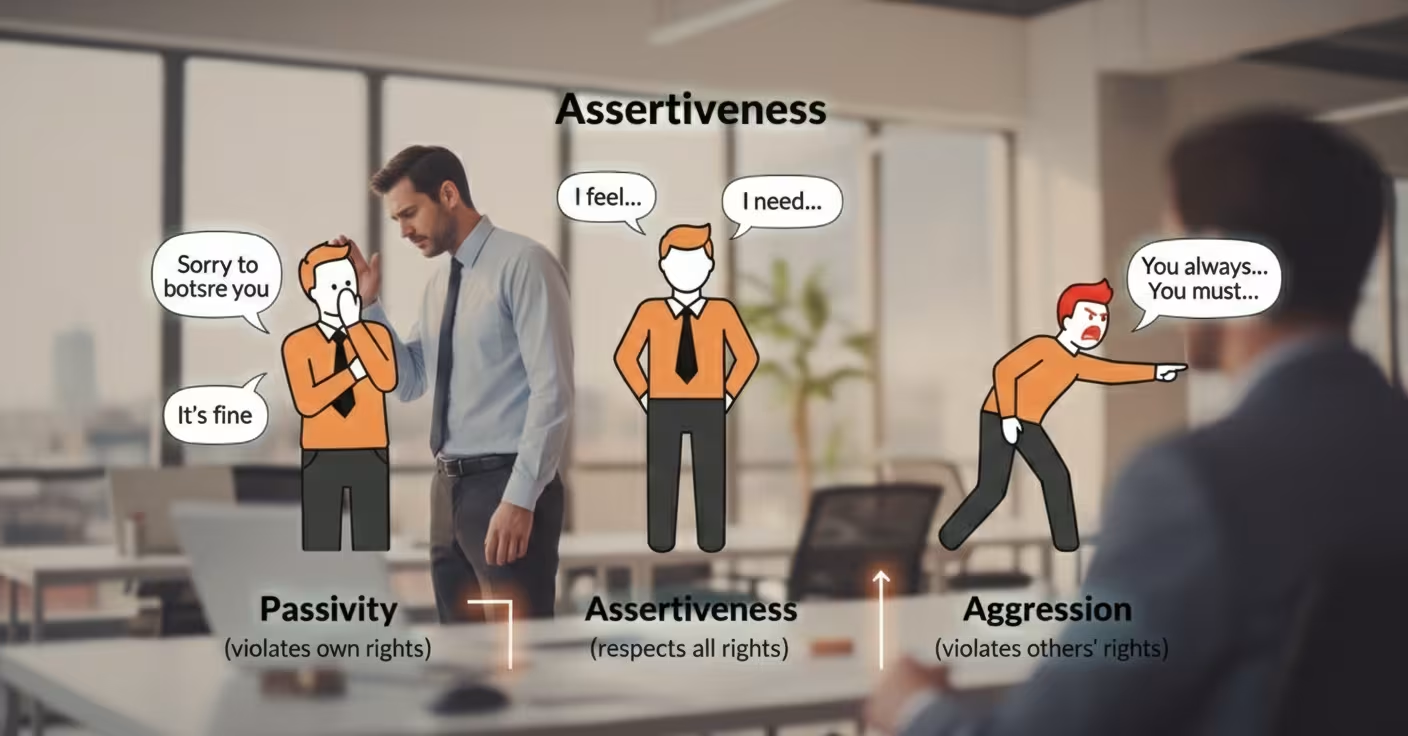
 Assertiveness is the balanced midpoint between passivity and aggression, focusing on mutual respect.
Assertiveness is a core communication skill and behavior characterized by the confident and direct expression of one's thoughts, feelings, and needs in a manner that is both honest and respectful of others. It stands as the balanced midpoint between passivity, where one's own needs are neglected, and aggression, where the needs of others are dismissed or violated. At its heart, assertiveness is about self-advocacy combined with mutual respect.
Its importance cannot be overstated. Assertiveness is fundamental to building and maintaining high self-esteem, as it reinforces the belief that your needs and opinions are valid. It is crucial for managing stress; by clearly communicating boundaries and saying "no" when necessary, individuals can prevent the overwhelm and resentment that often stems from overcommitment. This skill directly contributes to healthier, more authentic relationships by fostering open communication and reducing misunderstandings. In professional settings, it is a key driver of career progression, enabling effective negotiation, conflict resolution, and leadership. Essentially, assertiveness empowers individuals to navigate their social world with confidence and integrity.
How does assertiveness affect personal and professional relationships?
 Assertive communication builds strong, trusting relationships, while passivity can lead to resentment and misunderstanding.
Assertiveness fundamentally reshapes the dynamics of both personal and professional relationships, moving them toward a foundation of mutual respect and clarity. In personal connections, such as with family, partners, or friends, assertive behavior replaces assumptions and unexpressed frustrations with open dialogue. This prevents the slow build-up of resentment that often poisons relationships where one party is consistently passive. By clearly stating needs and boundaries, individuals teach others how to treat them, fostering a more balanced and reciprocal connection. While it can initially create friction in relationships accustomed to passivity, it ultimately leads to greater intimacy and trust based on honesty.
In the professional sphere, assertiveness is a catalyst for efficiency and positive collaboration. An assertive individual can provide constructive feedback, delegate tasks clearly, and negotiate for resources without resorting to manipulation or aggression. According to one survey, 100% of respondents agree that assertive communication positively impacts the productivity of their tasks. It is also vital for career growth; a study from Acuity Training found that 55% of people feel they've missed work opportunities by not being assertive enough. Effective, assertive communication reduces conflict, clarifies expectations, and contributes to a workplace culture where problems are solved directly rather than allowed to fester. It's a cornerstone of effective leadership and a key factor in building high-performing, psychologically safe teams.
Which personality types tend to struggle with assertiveness the most?
While anyone can struggle with assertiveness depending on their upbringing and experiences, certain personality traits and types are more predisposed to this challenge. Individuals high in the trait of agreeableness, for instance, often find assertiveness difficult. Their natural inclination is to maintain harmony, avoid conflict, and prioritize the needs of the group over their own. This can lead to a pattern of passivity and people-pleasing, as asserting a contrary opinion or setting a boundary feels like a direct threat to relational accord.
Similarly, those with introverted tendencies may struggle, not because they lack opinions, but because the act of verbalizing them, especially in high-stakes or group settings, can be draining and feel unnatural. They may prefer to process thoughts internally and can be hesitant to interrupt or vie for attention. Another group includes individuals with a history of anxiety or low self-esteem. The fear of rejection, criticism, or negative judgment can be a powerful inhibitor. For them, the perceived risk of speaking up—being disliked, seen as difficult, or making a mistake—often outweighs the potential benefit of having their needs met. This fear can create a self-perpetuating cycle where a lack of assertive behavior reinforces feelings of powerlessness and low self-worth.
How can I develop assertiveness skills?
Developing assertiveness is an active process that involves changing mindsets, learning new communication techniques, and consistent practice. It is a learnable skill, not an innate trait. The journey begins with an internal shift: recognizing and accepting that you have the right to express your needs, hold your own opinions, and set boundaries. This involves challenging deep-seated beliefs that may equate assertiveness with selfishness or aggression.
Practically, development involves several key areas. First is mastering assertive communication techniques, such as using "I" statements to express feelings without blaming others (e.g., "I feel concerned when..." instead of "You always..."). Second is learning to say "no" gracefully but firmly, without excessive apologies or justifications. Third is focusing on non-verbal communication; practicing confident body language, such as maintaining eye contact and an upright posture, reinforces the verbal message. Finally, it requires starting small. Practice asserting yourself in low-risk situations, like correcting a minor error in a coffee order, before tackling more challenging conversations. As studies have shown, formal assertiveness training can significantly reduce stress, anxiety, and depression, underscoring that structured practice yields tangible results in both skill and well-being.
Introduction: Unleash Your Confident Voice and Reclaim Your Space
What is Unshakeable Assertiveness? Beyond Passive and Aggressive
Unshakeable assertiveness is the consistent, confident practice of honoring your own needs and values while simultaneously respecting the rights and values of others. It moves beyond a simple definition of communication to become a core aspect of your behavior and mindset. It is the ability to navigate life's interactions from a place of centered self-respect, rather than from a place of fear or a need for dominance.
This form of assertiveness is best understood by contrasting it with its common counterparts. Passivity is the behavior of yielding to others' preferences and demands, often at the expense of your own. It is driven by a desire to avoid conflict and be liked, but it leads to unmet needs, resentment, and diminished self-esteem. Aggression, conversely, is about achieving one's goals by dominating, blaming, or intimidating others. It disregards others' feelings and rights, often damaging relationships and creating a hostile environment.
Unshakeable assertiveness is the skillful middle ground. It is not about winning every argument; it is about representing yourself authentically. It's the firm, calm "no" to an unreasonable request, the clear expression of a differing opinion in a meeting, and the direct communication of how another's actions have affected you. It is unshakeable because it is rooted not in the outcome of a single interaction, but in the unwavering principle of self-respect.
Why Assertiveness Matters for Your Well-being and Relationships (Stress, self-protection, effective communication, relational benefits)
Developing assertiveness is one of the most impactful investments you can make in your overall well-being. Its benefits permeate every area of life, creating a positive feedback loop of confidence and mental health.
- Stress Reduction: A primary source of chronic stress is feeling a lack of control and being overwhelmed by obligations. Assertiveness directly counters this. By setting clear boundaries and saying "no" to non-essential commitments, you protect your time and energy, preventing burnout. This act of self-regulation significantly lowers stress levels and reduces feelings of resentment.
- Self-Protection: Assertiveness is a fundamental tool for self-protection. It allows you to establish and defend personal, emotional, and physical boundaries. This protects you from being taken advantage of, manipulated, or mistreated. It is your primary defense against unhealthy relationship dynamics and exploitative professional situations.
- Effective Communication: It is the most effective form of communication for achieving desired outcomes without collateral damage. While passivity leads to misunderstandings and aggression creates resistance, assertiveness fosters clear, direct dialogue that leads to problem-solving and mutual understanding. A workplace report from Simon & Simon International indicates that 64% of business leaders and 55% of knowledge workers believe that effective communication increases team productivity.
- Relational Benefits: Contrary to the fear that it will push people away, genuine assertiveness strengthens relationships. It builds trust because people know where they stand with you. It fosters respect because you demonstrate self-respect. By eliminating guesswork and passive-aggressive behavior, it creates healthier, more honest, and more resilient connections with partners, friends, family, and colleagues.
The Promise: Building Lasting Confidence and Clear Boundaries
Embarking on the path to unshakeable assertiveness is a commitment to profound personal growth. The promise is not a quick fix or a guarantee that every interaction will go your way. Instead, it is the promise of building a deep, abiding sense of self-worth and confidence that is not dependent on external validation. It is the promise of replacing anxiety-driven compliance with calm, principled action.
This journey empowers you to construct and maintain clear, healthy boundaries. Boundaries are not walls to keep people out; they are the guidelines that teach people how to lovingly and respectfully be in a relationship with you. By learning to define and defend them, you reclaim control over your life, your time, and your emotional well-being.
Ultimately, the promise is one of authenticity. It is the freedom to show up in the world as your true self, to voice your unique perspective, and to pursue your goals with integrity. Building lasting confidence and clear boundaries allows you to move from a defensive or apologetic posture to one of quiet strength, ready to engage with the world on your own terms.
Part 1: The Inner Game – Cultivating Your Unshakeable Assertive Mindset
Unpacking the Roots: Identifying Barriers to Assertiveness
Before building new skills, it is essential to understand the internal barriers that prevent assertive behavior. These roots often run deep, stemming from past experiences, cultural conditioning, and ingrained belief systems. A primary barrier is fear: fear of rejection, fear of conflict, fear of being disliked, or fear of negative consequences like losing a job. This fear can be so potent that the discomfort of remaining silent seems preferable to the perceived risk of speaking up.
Another significant barrier is low self-esteem or a lack of self-worth. If you do not fundamentally believe that your needs, thoughts, and feelings are as valid as anyone else's, you will struggle to advocate for them. This often manifests as guilt when you consider prioritizing your own needs. Many people hold limiting core beliefs, such as "It is selfish to put my needs first," "I must always be helpful," or "If I disagree, I will cause a scene." These internal rules, often learned in childhood, dictate passive behavior in adulthood. Identifying these specific fears and beliefs is the first critical step toward dismantling them and creating space for a more assertive mindset to grow.
Building a Foundation of Self-Confidence and Self-Esteem
Assertiveness and self-esteem share a powerful, reciprocal relationship. Acting assertively builds self-esteem by demonstrating to yourself that you are worthy of respect, and higher self-esteem makes it easier to act assertively. Building this foundation is an intentional process. It begins with self-awareness and celebrating small wins. Acknowledge and give yourself credit for every step you take, no matter how minor. Each time you state a preference or hold a small boundary, you provide evidence to yourself of your own capability and worth.
Developing self-compassion is equally crucial. You will make mistakes, feel awkward, or over-correct into aggression at times. Instead of self-criticism, treat these moments as learning opportunities. Challenge your negative self-talk and cognitive distortions. When you catch yourself thinking, "They'll think I'm so difficult," reframe it to, "I am clearly and respectfully communicating my needs." As research consistently shows, individuals who are more assertive tend to have higher self-esteem and better mental health overall. This is because assertiveness is, at its core, an act of valuing yourself in real-time.
Emotion Regulation for Assertiveness
Assertive communication is impossible when you are overwhelmed by your emotions. Uncontrolled anger can tip assertiveness into aggression, while unmanaged fear can paralyze you into passivity. Therefore, developing the ability to regulate your emotions is a non-negotiable prerequisite for effective self-advocacy.
Emotion regulation starts with mindfulness—the practice of observing your emotions without immediate judgment or reaction. When you feel a strong emotion like anger or anxiety rising, take a moment to pause. Breathe deeply. Name the emotion to yourself: "I am feeling anger right now." This simple act creates a small space between the feeling and your potential reaction, giving you a chance to choose a considered, assertive response instead of an impulsive one.
Techniques from therapeutic modalities like Dialectical Behavior Therapy (DBT) are highly effective here. Learning distress tolerance skills helps you manage the discomfort that can come with setting a boundary or entering a conflict. By understanding your emotional triggers and having a plan to manage them, you can approach difficult conversations from a place of calm strength. This emotional equilibrium ensures your message is delivered with clarity and respect, making it far more likely to be heard and received positively.
Part 2: Your Assertive Communication Toolkit – Speaking with Confidence and Clarity
Mastering Assertive Language and Verbal Cues
The foundation of assertive communication lies in the words you choose and how you structure your statements. The goal is to be clear, direct, and respectful, taking ownership of your perspective without attacking the other person.
- Use "I" Statements: This is the cornerstone of assertive language. "I" statements focus on your experience, feelings, and needs, rather than placing blame. Instead of "You never listen to me," an assertive alternative is, "I feel unheard when I'm interrupted." This structure reduces defensiveness and opens the door for constructive dialogue.
- Be Direct and Specific: Avoid vague language, hints, or passive-aggressive remarks. Clearly state what you need or what the issue is. For example, instead of sighing loudly while your colleague misses a deadline, say directly, "I need your part of the report by 3 PM tomorrow to meet our project deadline."
- Eliminate Minimizing Language: Words like "just," "sorry to bother you," "maybe," or "kind of" weaken your message. These qualifiers signal a lack of confidence in your own statement. Practice removing them. Replace "I just wanted to maybe ask if..." with "I have a question."
- The "Broken Record" Technique: When faced with resistance, calmly and firmly repeat your point without getting drawn into arguments or justifications. This is particularly effective for saying "no" to a persistent request. "I cannot take on that project." "As I said, my schedule is full and I cannot take that on."
Projecting Confidence Through Non-Verbal Communication
What you say is often less impactful than how you say it. Your body language and voice can either reinforce or completely undermine your assertive words. Projecting confidence non-verbally is a critical component of being heard and taken seriously.
- Maintain Steady Eye Contact: Looking someone in the eye communicates sincerity and confidence. Avoid staring aggressively, but aim for a steady, relaxed gaze that shows you are engaged and standing by your message.
- Adopt an Open, Upright Posture: Stand or sit tall with your shoulders back. Avoid crossing your arms, hunching over, or fidgeting, as these postures can signal defensiveness, nervousness, or submission. An open posture communicates that you are confident and receptive.
- Use a Calm, Modulated Voice: Your tone of voice should be firm and even. Speak clearly and at a moderate pace and volume. A voice that is too soft may be ignored, while a voice that is too loud can be perceived as aggressive. Practice speaking from your diaphragm to give your voice more resonance and authority.
- Use Gestures Purposefully: Natural, deliberate hand gestures can help emphasize your points. Avoid nervous gestures like tapping your fingers or playing with your hair. A calm physical presence signals that you are in control of yourself and the situation.
Effective Communication Strategies for Varied Contexts
Assertiveness is not one-size-fits-all; it requires adapting your approach to the specific situation and relationship. While the core principles remain the same, the application varies.
- In Professional Settings: Assertiveness is about being clear, concise, and solution-oriented. When disagreeing in a meeting, frame your point constructively: "I see the value in that approach. I'd like to suggest an alternative that might address the budget constraint more directly." When receiving feedback, listen openly and ask clarifying questions rather than becoming defensive.
- With Close Relationships (Family/Partners): This context allows for more emotional expression, but the "I" statement framework is still key. It's about expressing vulnerability and needs without blame: "I feel lonely when we spend evenings in separate rooms. I would love it if we could set aside some time together."
- When Saying No: The strategy is to be polite but firm. You do not owe anyone a lengthy explanation. A simple, "Thank you for thinking of me, but I'm unable to commit to that right now," is sufficient. Offering an alternative, if you wish, can soften the "no" without compromising your boundary (e.g., "I can't help this weekend, but I could lend a hand next week.").
- During Conflict: The goal is de-escalation and collaborative problem-solving. Acknowledge the other person's perspective ("I hear that you are frustrated about...") before stating your own. Focus on the problem, not the person, and work toward a mutually acceptable solution.
Part 3: The Art of Clear Boundaries – Defining and Defending Your Personal Space
Understanding the Landscape of Boundaries
Boundaries are the invisible lines we draw around ourselves to protect our physical, emotional, mental, and spiritual well-being. They are the limits and rules we set within relationships that define what is acceptable and what is not. Understanding that boundaries are not selfish—but are, in fact, essential for self-respect and healthy relationships—is the first step. The desire to establish these limits is widespread, with one report noting that 78% of people planned to work on setting healthy boundaries in 2023.
Boundaries exist across various domains:
- Physical Boundaries: Pertain to your personal space, privacy, and body. This includes who can touch you, how close people can stand, and your need for solitude.
- Emotional Boundaries: Involve separating your feelings from another's. It's the right not to take responsibility for their emotions or to have your own feelings invalidated.
- Mental Boundaries: Relate to your thoughts, beliefs, and opinions. You have the right to your own perspective without being belittled or forced to conform.
- Time and Energy Boundaries: Concern how you allocate your time and energy, protecting yourself from overcommitment and burnout. This is the foundation of a healthy work-life balance.
Practical Steps for Setting Boundaries Proactively
Setting boundaries is a proactive skill, not just a reactive defense. It involves self-reflection and clear communication before a limit is crossed.
- Identify Your Limits: The first step is internal. Pay attention to feelings of resentment, discomfort, or burnout. These are often signals that a boundary is needed or has been crossed. Ask yourself: What makes me feel uncomfortable? What am I willing to tolerate? What is a non-negotiable for me? Be specific. Instead of a vague "I need more respect," define what respect looks like: "I need you to not raise your voice at me during disagreements."
- Communicate Clearly and Simply: Once you know your boundary, communicate it directly and calmly. Use "I" statements to express your need without blaming. For example, "I need to have my evenings free to recharge. I won't be able to check work emails after 7 PM." There is no need for a long, apologetic explanation.
- Start Small: If setting boundaries is new to you, begin in low-stakes situations. Practice saying "no" to a small social invitation you don't want to attend or stating your preference at a restaurant. Each small success builds confidence for more significant conversations.
- Be Proactive, Not Reactive: Whenever possible, state your boundaries in advance. For example, before a family visit, you might say, "I'm looking forward to seeing everyone. I just want to let you know that I'll be needing an hour to myself each afternoon to decompress."
Navigating Pushback and Defending Your Boundaries
It is inevitable that some people, especially those accustomed to your previous lack of boundaries, will test or push back against your new limits. Your response in these moments is critical for reinforcing the boundary.
- Expect Resistance: Understand that pushback is not necessarily a sign you've done something wrong. It's often a reflection of the other person's discomfort with a change in the relationship dynamic. They may try to argue, guilt-trip, or ignore the boundary.
- Stay Calm and Firm: Do not get drawn into a lengthy debate about the validity of your boundary. Your boundary is not up for negotiation. Reiterate it calmly and concisely. Use the broken record technique if necessary: "As I said, I am not available to discuss this after work hours."
- Enforce Consequences: A boundary without a consequence is merely a suggestion. The consequence is not a punishment, but a natural outcome you control to protect yourself. If you've stated you will leave a conversation if someone yells, and they yell, you must calmly end the conversation and walk away. This action teaches others that you are serious about your limits. Setting these professional boundaries has tangible benefits, as 57% of "quiet quitters" reported their work-life balance improved as a result.
Boundaries in Specific Relationship Contexts
The expression of boundaries must be tailored to the specific relationship, balancing directness with the nature of the connection.
- In the Workplace: Professional boundaries are crucial for productivity and preventing burnout. This includes defining work hours, managing workload expectations, and addressing unprofessional communication. An example is telling a manager, "I can complete Project A or Project B by the deadline, but I don't have the capacity for both. Which one is the priority?" This is assertive, solution-focused, and protects your time.
- With Family: Family dynamics are often deeply ingrained, making boundaries challenging but essential. This might involve limiting unsolicited advice ("Mom, I appreciate your concern, but I need to make my own decisions about my career"), defining topics that are off-limits at gatherings, or specifying how and when you are available to help.
- **In