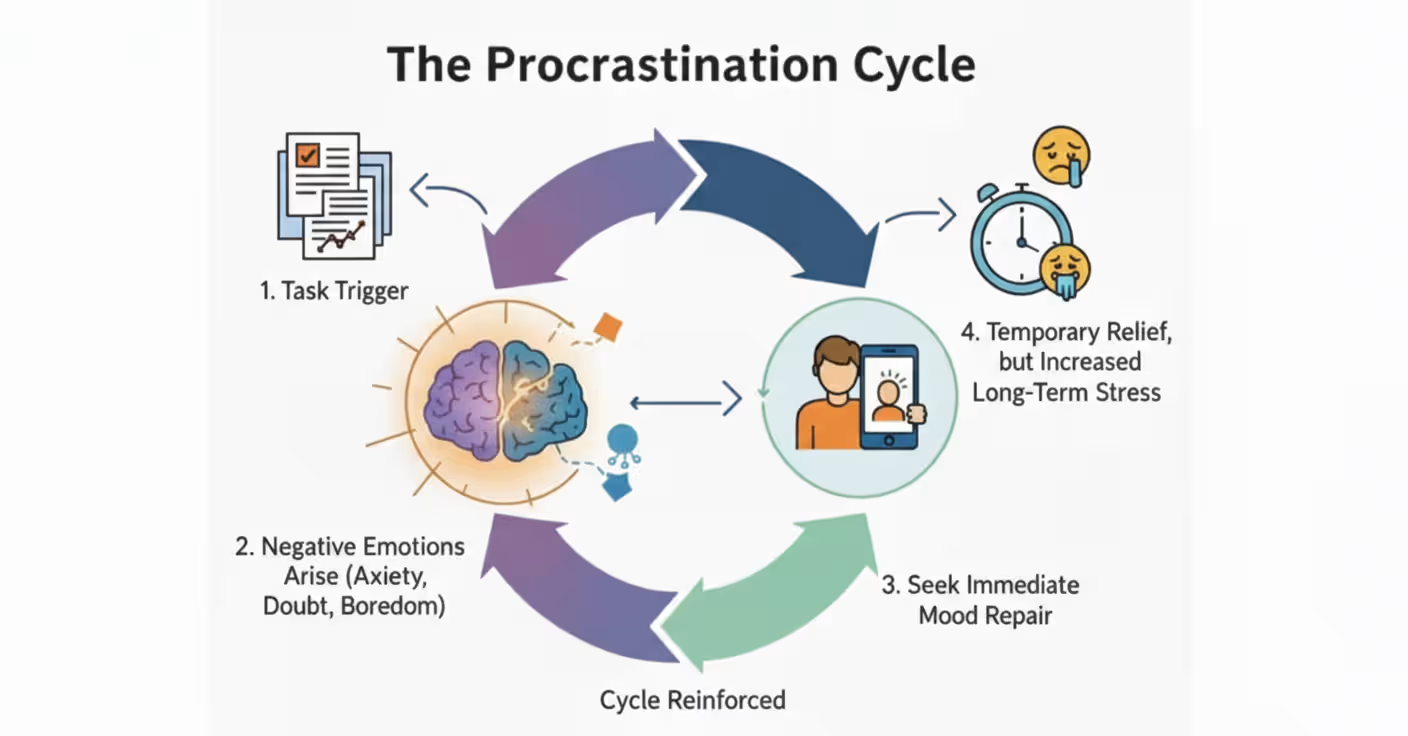
In the landscape of mental health, where challenges can often feel abstract and overwhelming, Cognitive Behavioral Therapy (CBT) stands as a beacon of clarity, structure, and empowerment. It is more than just a therapeutic modality; it is a practical framework for understanding and re-engineering the intricate relationship between our thoughts, emotions, and actions. For millions, CBT has provided a tangible pathway to not only alleviate distress but to fundamentally transform their relationship with their own minds, building resilience and fostering a more fulfilling life.
This article serves as a comprehensive guide to the world of CBT. We will demystify its core principles, explore its powerful techniques, and illuminate the science behind its effectiveness. Whether you are grappling with a specific mental health condition, facing everyday stressors, or simply seeking personal growth, understanding CBT offers a profound opportunity. It is a journey into the mechanics of your mind, providing the tools not just to cope, but to thrive. By learning to identify, question, and reshape your thought patterns, you can unlock a new level of emotional well-being and purposeful action, truly transforming your thoughts to improve your life.
Introduction: Unlocking the Power of Your Mind
At its heart, Cognitive Behavioral Therapy operates on a simple yet revolutionary premise: our emotional experience of the world is not dictated by events themselves, but by our interpretation of those events. Two people can face the exact same situation—a failed project, a critical remark, a social rejection—and have vastly different emotional and behavioral responses. The difference lies in the cognitive filter through which they process the experience. CBT provides the skills to consciously examine and adjust this filter. It is a collaborative, goal-oriented process that empowers individuals to become their own therapists, equipping them with a durable toolkit for navigating life's complexities long after therapy has concluded. This approach moves beyond simply talking about problems and delves into the active work of changing the underlying patterns that perpetuate them, unlocking the inherent power of the mind to heal and grow.
What is cognitive behavioral therapy (CBT) and how does it work?
Cognitive Behavioral Therapy (CBT) is a structured, short-term form of psychotherapy that focuses on the interconnectedness of thoughts (cognitions), feelings (emotions), and behaviors. It is a practical, hands-on approach designed to help individuals identify and change destructive or unhelpful thinking patterns and behaviors. The fundamental principle of CBT is that psychological problems are often based on faulty or unhelpful ways of thinking and learned patterns of unhelpful behavior.
CBT works by breaking down overwhelming problems into smaller, more manageable parts. By examining these parts—our thoughts, emotions, physical feelings, and actions—we can begin to see how they are interconnected and how they create negative cycles. For instance, a negative thought ("I'm going to fail this presentation") can lead to a feeling of anxiety, which might cause physical sensations like a racing heart, and result in avoidant behavior (like calling in sick). CBT teaches individuals to intervene in this cycle. A therapist helps the client identify these patterns, challenge the validity of the negative thoughts, and develop alternative, more balanced perspectives. Simultaneously, it involves developing new behavioral skills and coping strategies to respond to challenging situations more effectively. The process is collaborative, with the therapist acting as a guide, teaching skills the client can apply to present and future challenges.
What is Cognitive Behavioral Therapy (CBT)? The Foundation of Change
To truly grasp CBT is to understand it as a foundational approach to mental self-management. It is less about excavating the past and more about equipping individuals with the tools to manage the present and build a more resilient future. Its structure and evidence-based nature provide a clear roadmap for change.
Defining CBT: A Practical, Goal-Oriented Approach to Mental Health
CBT is defined by its practical and goal-oriented nature. Unlike more traditional, exploratory forms of therapy, CBT sessions are structured and focused on specific problems. At the outset, the client and therapist work together to identify clear, measurable goals—such as reducing panic attacks, overcoming procrastination, or improving social interactions. Each session is then geared toward making progress on these goals. A key component of this approach is "homework" or action plans, where clients practice the skills learned in therapy in their daily lives. This emphasis on practical application ensures that the learning is not just theoretical but becomes an integrated part of a person's coping mechanisms, accelerating progress and fostering a sense of agency.
The Core Principle: Connecting Thoughts, Feelings, and Behaviors
The cornerstone of CBT is the "cognitive model," often visualized as the CBT Triangle. This model posits that our thoughts, feelings, and behaviors are not isolated events but are deeply intertwined and mutually influential. A thought directly impacts how we feel and what we do. A behavior can change our thoughts and feelings. Our emotions can color our perceptions and drive our actions. For example, the thought "No one at this party likes me" (cognition) leads to feelings of sadness and anxiety (emotion), which in turn leads to standing alone in a corner and avoiding eye contact (behavior). This behavior then reinforces the initial thought, creating a self-perpetuating negative loop. CBT works by teaching individuals to identify these cycles and intervene at any point in the triangle—most often by examining and changing the initiating thought.
Why CBT is Evidence-Based: A Proven Path to Recovery
CBT is not based on abstract theory; it is one of the most extensively researched forms of psychotherapy. Its status as an "evidence-based" treatment means that hundreds of clinical trials have demonstrated its effectiveness for a wide range of psychological issues. Research consistently shows that CBT is as effective, and in some cases more effective, than medication for conditions like depression, anxiety disorders, and insomnia. This robust scientific backing is a primary reason why it is widely recommended by healthcare professionals and organizations worldwide. The evidence demonstrates that the skills learned in CBT lead to significant and lasting changes in brain activity and, most importantly, in people's quality of life.
How CBT Works: The Engine of Thought Transformation
The true power of CBT lies in its systematic process for deconstructing and rebuilding thought patterns. It provides a clear methodology for moving from automatic, often negative, reactions to conscious, balanced responses. This process is the engine that drives profound personal transformation.
Identifying Automatic Thoughts and Cognitive Distortions
The first step in the cognitive component of CBT is learning to identify "automatic negative thoughts" (ANTs). These are the fleeting, habitual, and often unquestioned thoughts that pop into our minds in response to events. They are reflexes rather than reasoned conclusions. Often, these ANTs are characterized by cognitive distortions—predictable errors in thinking that cause us to perceive reality inaccurately. Common distortions include "all-or-nothing thinking" (seeing things in black-and-white categories), "catastrophizing" (expecting the worst-case scenario), and "personalization" (blaming yourself for events you aren't entirely responsible for). Learning to recognize these thoughts and label the distortions they contain is a crucial act of self-awareness that separates the individual from their thoughts, creating the space needed for change.
Challenging and Restructuring Thoughts: The Art of Cognitive Restructuring
Once an automatic thought is identified, the core work of "cognitive restructuring" begins. This is not about forced positive thinking, but about developing a more balanced, realistic, and helpful perspective. The therapist guides the client in becoming a detective of their own thoughts, using Socratic questioning to examine the evidence. Key questions might include: "What is the evidence that supports this thought? What is the evidence against it?", "Is there an alternative explanation?", and "What is the worst that could happen, and could I cope with it?". This process, often facilitated through tools like a thought record, helps to systematically dismantle the unhelpful thought and replace it with a more rational alternative. It is the art of developing a flexible and curious mindset toward one's own internal dialogue.
Uncovering and Addressing Core Beliefs
While CBT focuses heavily on automatic thoughts, it also recognizes that these thoughts often stem from deeper, more fundamental assumptions about ourselves, others, and the world. These are known as "core beliefs." Formed in childhood and reinforced over years, these beliefs (e.g., "I am unlovable," "I am incompetent," "The world is a dangerous place") act as a lens through which we interpret all our experiences. A deeper level of CBT work involves identifying these core beliefs and examining how they contribute to current difficulties. By challenging and modifying these foundational beliefs, individuals can achieve more profound and lasting change, addressing the root of many recurring negative thought patterns.
The Behavioral Side of CBT: Taking Action to Improve Your Life
While changing thoughts is a central component, CBT is equally focused on action. The "behavioral" part of the therapy acknowledges that our actions profoundly influence our thoughts and feelings. Engaging in new behaviors is often the most direct way to break negative cycles and gather evidence against unhelpful beliefs.
Behavioral Experiments: Testing Your Assumptions
Behavioral experiments are one of the most powerful techniques in CBT. They are planned activities designed to test the validity of a specific negative thought or belief in the real world. For example, a person with social anxiety who believes "If I speak up in a meeting, everyone will think my idea is stupid" might design an experiment to share a small, well-prepared point in a low-stakes meeting. The goal is to gather real-world data. Did the catastrophic outcome occur? What actually happened? More often than not, the outcome is far less negative than predicted, providing powerful, tangible evidence that directly refutes the anxious thought and builds confidence for future action.
Developing New Coping Skills and Behavioral Strategies
CBT is fundamentally a skills-based therapy. It goes beyond insight to actively teach new, constructive behaviors. This can include a wide range of skills tailored to the individual's needs. For someone struggling with anger, it might involve learning communication and conflict resolution techniques. For a person with depression, it might focus on "behavioral activation"—the process of scheduling and engaging in positive, rewarding, or meaningful activities, even when motivation is low. This strategy directly combats the withdrawal and lethargy associated with depression, creating positive feedback loops that improve mood and energy. Other skills might include problem-solving, time management, and assertiveness training.
Facing Fears: The Power of Exposure Therapy
For anxiety disorders, phobias, and OCD, a key behavioral strategy is exposure therapy. This technique is based on the principle that avoidance maintains fear. By gradually and systematically confronting feared objects, situations, or thoughts in a safe and controlled manner, individuals learn that their feared outcomes do not occur and that their anxiety naturally subsides over time—a process called habituation. For example, someone with a fear of flying might start by looking at pictures of planes, then watching videos, visiting an airport, and eventually taking a short flight. This structured approach helps to systematically dismantle the fear response, empowering individuals to reclaim parts of their life that anxiety had restricted.
What are the 5 steps of CBT?
While CBT is a flexible framework adapted to the individual, the process can often be simplified into five core steps that guide the therapeutic journey. These steps create a structured path from identifying a problem to developing lasting solutions.
- Identify Troubling Situations: The process begins by pinpointing the specific situations or problems in your life that are causing distress. This could be a recurring conflict, a source of anxiety, or a pattern of low mood.
- Become Aware of Your Thoughts, Emotions, and Beliefs: In this step, you learn to pay close attention to your internal experience related to these situations. What specific thoughts run through your mind? What emotions do you feel? What physical sensations do you notice? What is the underlying belief driving these reactions?
- Identify Negative or Inaccurate Thinking: With heightened awareness, you begin to identify the cognitive distortions and unhelpful patterns within your thoughts. This involves recognizing tendencies like catastrophizing, black-and-white thinking, or jumping to conclusions.
- Challenge Unhelpful Thoughts: This is the active cognitive restructuring phase. You learn to question and evaluate your negative thoughts. You look for evidence, consider alternative perspectives, and work to develop a more balanced and realistic viewpoint.
- Reshape Behavior and Develop New Skills: The final step involves putting insight into action. Based on your new, more balanced thoughts, you practice new behaviors. This could involve trying behavioral experiments, using new coping skills, or gradually facing feared situations. This action-oriented step is crucial for solidifying change and building lasting confidence.
What are some cognitive behavioral therapy techniques? Do therapists believe that these techniques are effective?
CBT encompasses a wide array of specific techniques, each designed to target different aspects of the thought-feeling-behavior cycle. Therapists do not just believe these techniques are effective; they rely on them precisely because decades of rigorous scientific research have demonstrated their efficacy. The effectiveness is not a matter of opinion but of evidence.
Key techniques include:
- Thought Records: A structured worksheet used to identify a situation, the automatic thoughts and emotions it triggers, the cognitive distortions present, and then to develop a more adaptive response.
- Cognitive Restructuring/Reframing: The process of identifying, challenging, and changing unhelpful thought patterns, as described previously.
- Behavioral Activation: A technique primarily for depression that involves scheduling and participating in activities that bring a sense of pleasure, mastery, or connection, thereby combating withdrawal and improving mood.
- Exposure and Response Prevention (ERP): Considered the gold standard for OCD, this involves gradual exposure to feared obsessions while refraining from performing compulsive rituals.
- Skills Training: This can include assertiveness training, social skills training, communication skills, and problem-solving techniques to help individuals navigate challenging situations more effectively.
- Relaxation and Mindfulness Techniques: Techniques such as deep breathing, progressive muscle relaxation, and mindfulness meditation are often integrated into CBT to help manage physiological symptoms of anxiety and increase awareness of the present moment.
Therapists value these techniques because they are teachable, practical, and empowering. They provide clients with concrete tools they can use independently, which aligns with the ultimate goal of CBT: to help clients become their own therapists.
Your CBT Toolkit: Practical Strategies for Daily Life
One of the greatest strengths of CBT is its focus on equipping you with a practical toolkit for self-management. These are not abstract concepts but tangible strategies you can integrate into your daily routine to build resilience and well-being.
Self-Monitoring and Thought Diaries
The foundation of any change is awareness. Self-monitoring, often done through a thought diary or journal, is the practice of systematically observing and recording your thoughts, feelings, and behaviors. This simple act can reveal powerful insights into the patterns that drive your emotional responses. By writing down the situation, your automatic thought, and your subsequent feeling, you create the objective distance needed to analyze your experience rather than just being swept away by it. This is often the first and most illuminating homework assignment in CBT.
Goal Setting and Problem Solving
CBT encourages a proactive and structured approach to life's challenges. Instead of feeling overwhelmed by a large problem, you learn to break it down into smaller, manageable steps. This involves setting specific, measurable, achievable, relevant, and time-bound (SMART) goals. Once a goal is set, you can use structured problem-solving techniques: clearly define the problem, brainstorm potential solutions without judgment, weigh the pros and cons of each, choose one to implement, and then review the outcome. This systematic process builds confidence and reduces the sense of helplessness that often accompanies anxiety and depression.
Incorporating Mindfulness and Relaxation Techniques
Modern CBT frequently incorporates mindfulness and relaxation techniques to complement its core cognitive and behavioral strategies. Mindfulness involves paying attention to the present moment without judgment, which can help you observe your thoughts without getting entangled in them. Relaxation techniques, such as diaphragmatic (deep) breathing or progressive muscle relaxation, directly counteract the body's stress response. These practices help to calm the nervous system, providing immediate relief from acute anxiety and creating a state of mind more conducive to rational thinking and problem-solving.
Who Benefits from CBT? A Broad Spectrum of Positive Impact
The principles and techniques of CBT have a remarkably broad range of applications, extending from the treatment of severe mental health disorders to the enhancement of everyday life for those without a clinical diagnosis.
Addressing Common Mental Health Conditions
CBT is a first-line, evidence-based treatment for an extensive list of mental health conditions. Its effectiveness has been rigorously validated for:
- Anxiety Disorders: Including Generalized Anxiety Disorder (GAD), social anxiety, panic disorder, and specific phobias.
- Depression and Mood Disorders: Proven to be highly effective in treating major depressive disorder and preventing relapse.
- Post-Traumatic Stress Disorder (PTSD): Specific forms of CBT, like Trauma-Focused CBT (TF-CBT), are a gold standard treatment.
- Obsessive-Compulsive Disorder (OCD): Particularly using the technique of Exposure and Response Prevention (ERP).
- Eating Disorders: Such as bulimia nervosa and binge-eating disorder.
- Insomnia: CBT for Insomnia (CBT-I) is considered the most effective long-term treatment.
- Substance Use Disorders: Helps individuals identify triggers and develop new coping skills.
Improving Life's Challenges Beyond Diagnosis
The skills taught in CBT are life skills. They are immensely valuable for managing universal human challenges that do not require a clinical diagnosis. People use CBT principles to manage workplace stress, navigate difficult relationships, improve self-esteem and confidence, overcome procrastination, and manage chronic pain or health conditions. It provides a framework for building resilience, improving emotional regulation, and fostering a more optimistic and proactive approach to life's inevitable setbacks and stressors.
What is the CBT treatment plan for anxiety?
A CBT treatment plan for anxiety is a highly structured and collaborative process, tailored to the specific type of anxiety the person is experiencing (e.g., social anxiety vs. panic disorder). However, most plans share common core components.
The initial phase, Psychoeducation, involves educating the client about the nature of anxiety, the fight-or-flight response, and the CBT model, explaining how their thoughts, feelings, and behaviors are creating an anxious cycle. Next, the focus shifts to Cognitive Restructuring. The client learns to identify their specific anxious thoughts and the cognitive distortions at play (often catastrophizing and probability overestimation). They use thought records to challenge these thoughts, examining the actual evidence for their fears and developing more realistic and balanced perspectives.
The behavioral component is critical. It typically involves Relaxation Training, teaching techniques like deep breathing to manage the physical symptoms of anxiety. The cornerstone of the behavioral work is Exposure Therapy. The therapist and client create a "fear hierarchy," a list of feared situations ranked from least to most anxiety-provoking. The client then systematically and gradually confronts these situations, starting with the easiest, and stays in the situation until their anxiety naturally decreases. This process, repeated over time, retrains the brain to recognize that these situations are not dangerous, effectively neutralizing the fear response. Throughout the process, the client is also taught various coping skills and strategies, with a final focus on Relapse Prevention to ensure they can manage their anxiety independently in the future.
How does cognitive behavioral therapy CBT compare to other treatment methods for mental health disorders?
CBT distinguishes itself from other therapeutic methods primarily through its focus, structure, and duration.
Compared to Psychodynamic Therapy, which originates from psychoanalysis, CBT is far less focused on exploring the unconscious mind or early childhood experiences as the root of current problems. While CBT acknowledges the past's role in shaping core beliefs, its primary focus is on the "here and now"—addressing current thoughts and behaviors that are maintaining the problem. Psychodynamic therapy is typically longer-term and less structured, while CBT is short-term (often 12-20 sessions) and highly structured.
When compared to Humanistic Therapies (like person-centered therapy), which emphasize self-actualization and the therapist's unconditional positive regard, CBT is more directive and skills-based. A humanistic therapist provides a supportive environment for self-discovery, whereas a CBT therapist takes on a more active, teaching role, guiding the client through specific exercises and strategies.
CBT also has "third-wave" descendants like Dialectical Behavior Therapy (DBT) and Acceptance and Commitment Therapy (ACT). These approaches build upon CBT but incorporate a greater emphasis on mindfulness, acceptance, and values. DBT, for example, integrates validation and acceptance strategies with change-oriented strategies, while ACT focuses on accepting difficult thoughts and feelings rather than challenging them directly