Life is an intricate tapestry of triumphs and trials. While we celebrate the highs, it is our ability to navigate the lows that truly defines our resilience and shapes our emotional health. At the heart of the human experience lies the universal encounter with stress. From minor daily hassles to major life events, stressors are an unavoidable part of our existence, testing our limits and demanding a response. This response—the collection of thoughts and behaviors we use to manage these demands—is the essence of coping. Without effective Coping mechanisms, the cumulative weight of psychological stress can erode our mental health, strain our relationships, and diminish our overall quality of life.
This definitive guide is designed to unpack the complex world of coping, moving beyond simplistic definitions to provide a comprehensive roadmap for enhancing your emotional well-being. We will deconstruct stress, exploring its neurobiological response and why effective stress management is critical. We will lay the foundational knowledge of coping, distinguishing between Coping skills, strategies, and styles. Our journey will delve into the core approaches, from directly confronting problems to managing the emotions they evoke, with a crucial focus on differentiating adaptive strategies that foster growth from maladaptive ones that cause long-term harm. Finally, we will transition from theory to practice, offering actionable guidance to help you build a personalized coping toolkit for a more resilient and balanced life.
What are the four types of coping mechanisms?
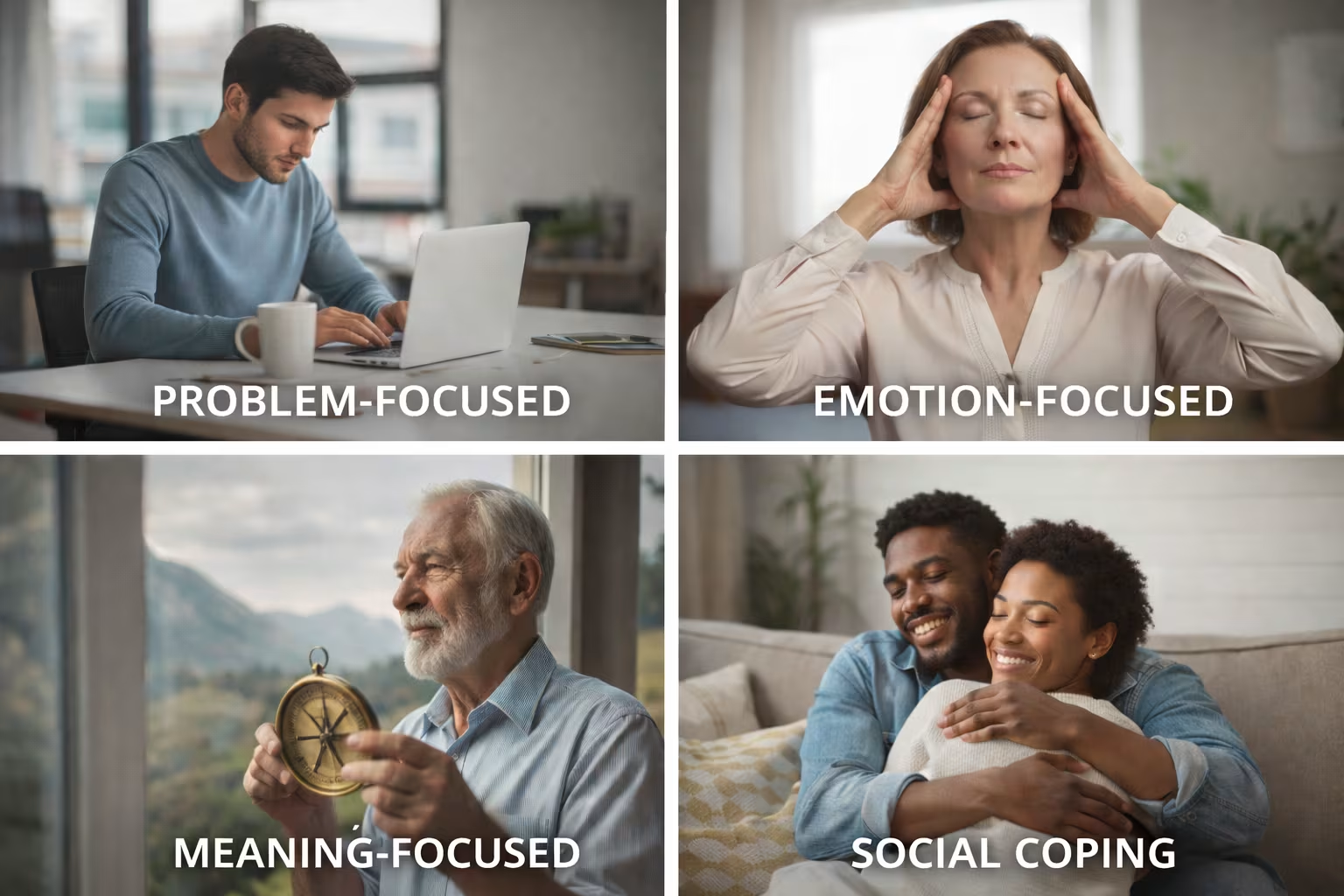
 The four primary types of coping mechanisms offer different strategies for managing stress, from tackling the source to regulating your emotional response.
While psychologists categorize coping in various ways, a widely recognized model synthesizes different approaches into four primary types. Understanding these coping styles provides a foundational framework for recognizing how we respond to stress and strategically choosing the most effective approach for a given situation. These four types are not mutually exclusive; a robust approach to stress management often involves a blend of all four.
- Problem-Focused Coping: This approach involves taking direct action to address, modify, or eliminate the source of stress. It is a proactive and tangible style centered on changing the circumstances causing distress.
- Emotion-Focused Coping: This style centers on managing the internal emotional experience caused by the stressor. It's about changing your reaction to the situation rather than changing the situation itself.
- Meaning-Focused Coping: This approach involves drawing on beliefs, values, and existential goals to find meaning in and manage a stressful situation. It is particularly crucial for navigating highly challenging, traumatic, or tragic circumstances where control is limited.
- Social Coping (or Support-Seeking): This involves turning to others for support. This support can be instrumental (tangible help, a form of problem-focused coping) or emotional (empathy and understanding, a form of emotion-focused coping), but its focus on social connection makes it a distinct and powerful category.
How can I develop effective coping mechanisms for anxiety?
Developing effective coping strategies for anxiety is a proactive process that involves building a toolkit to manage both the physical and psychological symptoms. The goal is to reduce immediate feelings of panic or worry while building long-term resilience. This often involves a combination of emotion-focused strategies to calm the nervous system and problem-focused strategies to address the source of the anxiety.
First, cultivate awareness by identifying the specific stressors—people, situations, or thought patterns—that trigger your anxiety. Once identified, you can implement a range of Coping skills:
- Grounding Techniques (Emotion-Focused): When anxiety spikes, grounding can bring you back to the present. The 5-4-3-2-1 method is effective: identify 5 things you can see, 4 things you can feel, 3 things you can hear, 2 things you can smell, and 1 thing you can taste.
- Diaphragmatic Breathing (Emotion-Focused): Anxiety often leads to shallow, rapid breathing. Slow, deep breathing from the diaphragm activates the parasympathetic nervous system, promoting a state of calm and lowering stress hormone levels.
- Cognitive Reframing (Emotion-Focused): Challenge your anxious thoughts. Ask yourself: Is this worry realistic? What is a more balanced perspective? This technique, central to Cognitive Behavioral Therapy (CBT), helps restructure the thought patterns that fuel anxiety.
- Structured Problem-Solving (Problem-Focused): If your anxiety stems from a solvable problem (e.g., a heavy workload), break it down. Create to-do lists, prioritize tasks, and set realistic goals. Taking small, concrete steps can restore a sense of control and reduce feelings of being overwhelmed.
Can coping mechanisms be learned or improved through therapy or training?
Absolutely. The idea that coping is an innate, unchangeable trait is a misconception. Coping mechanisms are, in fact, a set of learned behaviors and cognitive skills that can be intentionally developed, practiced, and refined over time. Therapy and structured training programs are highly effective environments for this process.
A qualified mental health professional can play a pivotal role in this development. First, a therapist can help you identify your current coping styles, particularly maladaptive coping mechanisms that may be operating outside your full awareness. These are often deeply ingrained habits that provide short-term relief but cause long-term harm, such as avoidance, substance use, or emotional suppression.
Once these patterns are identified, a therapist can introduce and teach a range of adaptive coping mechanisms tailored to your specific needs. Therapeutic modalities are designed to build these skills:
- Cognitive Behavioral Therapy (CBT) is highly effective for learning how to identify and change negative thought patterns.
- Dialectical Behavior Therapy (DBT) provides concrete skills in mindfulness, distress tolerance, and emotional regulation.
- Acceptance and Commitment Therapy (ACT) helps individuals accept difficult feelings while committing to value-driven actions.
Through this guided process, you can consciously replace ineffective strategies with healthy ones, fundamentally improving your mental health and ability to navigate life’s challenges.
The Universal Experience of Stress and the Need for Coping
Life is an intricate tapestry woven with threads of joy, achievement, sorrow, and challenge. At the heart of the human experience lies the universal encounter with stress. From the minor daily hassles of traffic jams and deadlines to major life changes like illness, loss, or significant transitions, stressors are an unavoidable part of our existence. They test our limits, challenge our perspectives, and demand a response. This response—the collection of thoughts and behaviors we use to manage these demands—is the essence of coping. Without effective coping mechanisms, the cumulative weight of stress can erode our mental health, strain our relationships, and diminish our overall quality of life. Understanding and cultivating these skills is not a sign of weakness; it is a fundamental component of a resilient life.
What This Guide Will Cover: Your Path to Emotional Well-being
This definitive guide is designed to unpack the complex world of coping. We will move beyond simplistic definitions to provide a comprehensive roadmap for enhancing your emotional well-being. Our journey will begin by deconstructing stress itself, exploring what it is, how it affects our bodies, and why managing it is critical. From there, we will lay the foundational knowledge of coping, distinguishing between coping skills, strategies, and styles.
We will then delve into the core approaches to coping, from directly confronting problems to managing the emotions they evoke. A critical section will be dedicated to differentiating between adaptive strategies that foster growth and maladaptive mechanisms that create long-term harm. Finally, we will transition from theory to practice, offering actionable guidance to help you build a personalized coping toolkit for navigating life’s challenges with greater confidence and calm.
What is Stress? Defining Psychological Stress and Stressors
At its core, psychological stress is the feeling of being overwhelmed or unable to manage demands. It arises when we perceive a discrepancy between the pressures placed upon us and our resources to handle them. The sources of these pressures are known as stressors. Stressors are not inherently negative; even positive events like a promotion or a new home can be significant stressors because they require adaptation.
Stressors can be categorized in several ways. Acute stressors are short-term challenges, like giving a presentation. They trigger an immediate response but have a clear endpoint. Chronic stressors, on the other hand, are persistent situations, such as managing chronic pain or facing long-term financial instability. It is our appraisal of these stressors that initiates the body’s response.
The Body's Response: From Fight-or-Flight to Neurobiological Reactions
Our response to stress is not purely psychological; it is a deeply ingrained biological process. When the brain perceives a threat, it triggers the renowned fight-or-flight response, flooding the body with stress-related hormones like adrenaline and cortisol. This neurobiological response produces immediate physiological changes: your heart rate accelerates, your senses sharpen, and energy is mobilized.
This system is effective for acute physical dangers. However, modern stressors are often chronic and psychological. As noted by experts at institutions like the Cleveland Clinic, prolonged activation of this system can disrupt nearly all of the body's processes. The medial prefrontal cortex, which helps regulate emotional responses, can become impaired under chronic stress, making stress regulation more difficult and increasing the risk for anxiety and depression.
Why Effective Stress Management is Crucial for Mental Health and Emotional Well-being
Given the profound impact of chronic stress, effective stress management is a necessity for maintaining mental health and emotional well-being. Unmanaged stress is a primary contributor to burnout, anxiety disorders, and depression. It impairs cognitive function, making it difficult to concentrate and make decisions.
Effective coping acts as a buffer. By employing healthy coping strategies, we can regulate our physiological response, challenge negative thought patterns, and actively solve problems. This proactive approach helps restore a sense of control and balance. As the American Psychological Association emphasizes, building these skills is key to mitigating the harmful effects of stress and fostering resilience, which is the foundation of long-term Health & Wellness.
What Are Coping Mechanisms, Coping Strategies, and Coping Skills?
The terms "coping mechanisms," "coping strategies," and "coping skills" are often used interchangeably, but they carry subtle distinctions.
- Coping mechanisms is the broadest term, referring to the overall psychological and behavioral patterns an individual uses to manage stress. It can encompass both conscious and unconscious responses, adaptive or maladaptive.
- Coping strategies are more specific and intentional. They are the particular plans or methods someone consciously chooses to employ when faced with a stressor. Deciding to use progressive muscle relaxation before a presentation is a strategy.
- Coping skills refer to the actual abilities an individual possesses to execute those strategies effectively. Having the skill of assertive communication, for instance, allows you to implement a strategy of setting boundaries at work.
Understanding the Purpose: How We Adapt to Stressors
The fundamental purpose of coping is adaptation. When a stressor disrupts our internal equilibrium, coping mechanisms are the processes we use to try and restore that balance. This adaptation process serves two primary functions. First, it aims to manage or alter the problem causing the distress (Problem-focused coping). Second, it aims to regulate the emotional response to that problem (emotion-focused coping).
Effective coping helps us tolerate and deal with stressful situations. It's not about eliminating stress, but about developing the resilience to navigate stressful events while maintaining emotional well-being. The ultimate goal is to prevent a stressor from overwhelming our psychological and physiological resources.
Coping Mechanisms vs. Defense Mechanisms (Ego Defenses)
A critical distinction must be made between coping mechanisms and defense mechanisms. While both are responses to stress, their nature and function are fundamentally different.
- Coping mechanisms are generally conscious, purposeful, and reality-oriented. They involve actively choosing a way to address a problem or its emotional impact.
- Defense mechanisms, a concept from psychoanalytic theory, are largely unconscious ego defenses. They protect the self from anxiety by distorting reality. Examples include denial (refusing to accept reality) or projection (attributing one's own unwanted feelings to someone else). While sometimes temporarily useful, heavy reliance on defense mechanisms prevents genuine problem-solving and emotional processing.
Problem-Focused Coping: Directly Addressing the Stressor
Problem-focused coping involves tackling the root cause of stress head-on. This approach is characterized by efforts to change the stressful situation or remove the stressor itself. It is an active style most effective when you have a degree of control over the circumstances.
Strategies within this category are practical and action-oriented. They include:
- Active Problem-Solving: Breaking a problem into manageable steps and brainstorming solutions.
- Time Management: Organizing and scheduling tasks using tools like to-do lists to manage a heavy workload.
- Seeking Instrumental Support: Gathering information or tangible help from others.
- Developing Communication and Problem-Solving Skills: Learning assertive communication to resolve interpersonal conflicts directly.
Emotion-Focused Coping: Managing Your Emotional Response
In contrast, emotion-focused coping centers on managing the feelings and emotional distress that arise from a stressful situation. This approach changes your internal relationship to the stressor and is particularly useful when the stressor is beyond your control, such as a loss or a difficult diagnosis.
The aim is to soothe, distract, or reframe your emotional state. Examples include:
- Seeking Emotional Support: Talking about your feelings with a trusted friend, family member, or therapist to receive empathy and validation, a form of Social coping.
- Positive Reappraisal (or Cognitive Reframing): Intentionally looking for the good in a bad situation, a key tool from positive psychology.
- Relaxation Techniques: Engaging in practices like deep breathing, meditation, yoga, or progressive muscle relaxation to calm the physiological stress response.
- Physical Activity: Engaging in exercise to release endorphins and reduce stress hormones.
Adaptive Coping Mechanisms: Building Resilience and Growth
Adaptive coping mechanisms, also known as healthy Coping skills, are strategies that effectively reduce stress without causing long-term harm. These adaptive behavioral strategies promote well-being, resilience, and personal growth. They are conscious choices that lead to positive outcomes.
The key characteristic of adaptive coping is that it helps you face the reality of the situation and work through it constructively. Examples cover both problem-focused and emotion-focused domains:
- Engaging in physical activity to improve mood.
- Practicing relaxation strategies.
- Seeking support from caring and supportive relationships.
- Developing a positive outlook through practices like gratitude journaling.
- Engaging in effective problem solving.
Maladaptive Coping Mechanisms: Short-Term Relief, Long-Term Harm
Maladaptive coping mechanisms are strategies that may provide immediate relief but ultimately create negative consequences. They are often characterized by avoidance or numbing and are strongly correlated with poor mental health outcomes.
The danger of maladaptive coping mechanisms is their deceptive nature; they feel like they are working in the moment. However, they fail to address the root cause of stress and often create secondary problems. Common examples include:
- Substance Abuse: Using alcohol or recreational drugs to numb emotions. This creates a brief
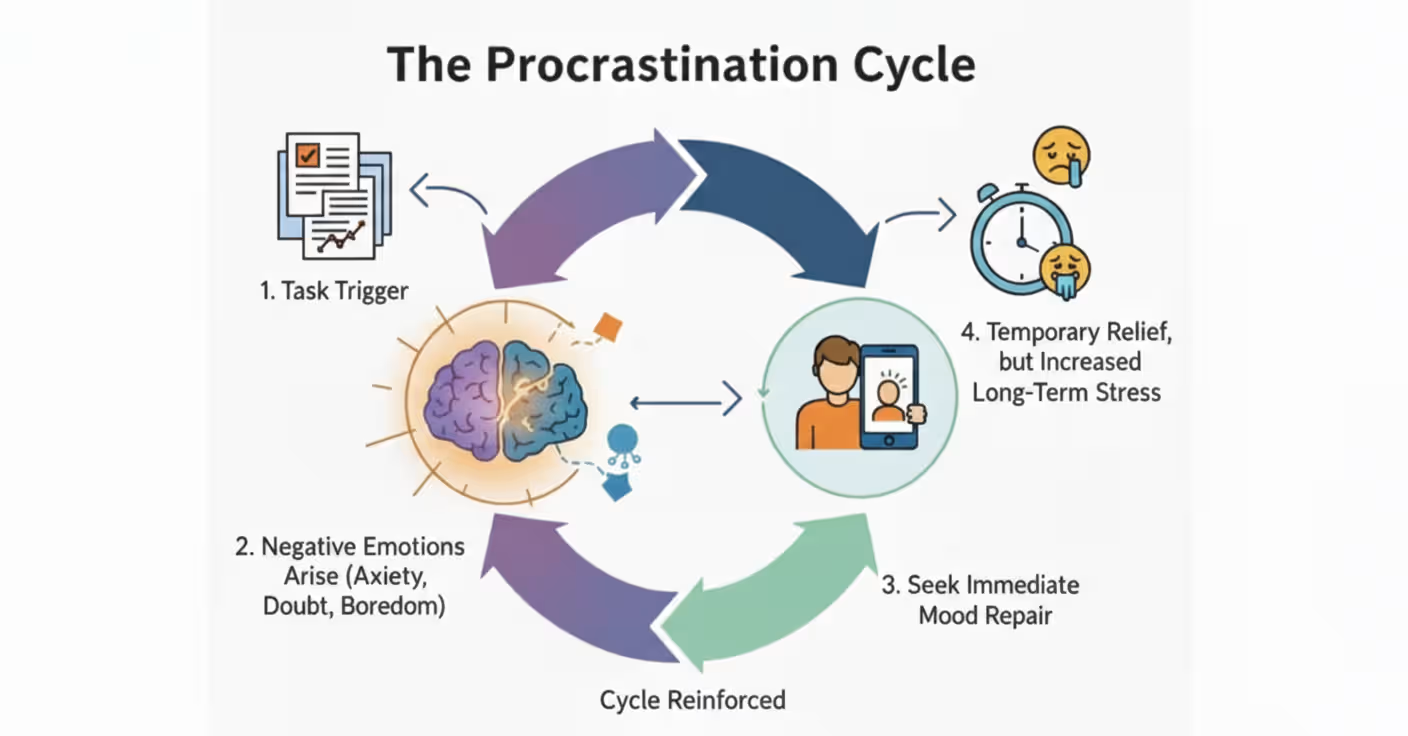
dopamine highbut leads to psychological addictions and worsening health. - Avoidance: Procrastinating on important tasks or avoiding difficult conversations.
- Dysfunctional Eating: Engaging in mindless, compulsive eating as a form of unhealthy self-soothing.
- Self-Defeating Humor: Using humor to put oneself down, which can erode self-esteem over time.
Proactive Coping: Anticipating and Preparing for Stressors
Effective coping is not solely reactive. A more advanced approach is proactive coping, which involves anticipating potential future stressors and acting in advance to prevent them or minimize their impact. This forward-thinking strategy shifts the focus from managing distress to building resources and resilience.
Proactive coping involves anticipating a challenge, such as a difficult project or a period of mass layoffs at work, and accumulating resources. This could mean gathering information, improving skills (e.g., hiring a public speaking coach), or strengthening your social support network. This Life-style management approach helps you face future challenges from a position of strength rather than deficit.
Meaning-Focused Coping: Finding Purpose in Adversity
Some of life's most profound stressors are those we cannot change—the death of a loved one, a serious diagnosis, or a traumatic event like a marital separation. This is where Meaning-making coping becomes essential for long-term emotional health.
This form of coping involves a cognitive shift to find or create meaning from the distressing experience. It's about answering the question, "How can I grow from this?" This can involve:
- Benefit Finding: Actively looking for positive outcomes, such as stronger relationships or a new perspective.
- Reordering Priorities: Using the event as a catalyst to refocus on what truly matters.
- Altruism: Helping others who are facing similar challenges, which can create a powerful sense of purpose.
What are coping mechanisms?
To revisit our foundational question, Coping mechanisms are the essential psychological tools we use to manage stress and maintain equilibrium in a world that is often unpredictable. They are the sum of our thoughts and actions when facing demands that tax or exceed our personal resources. These mechanisms can be simple or complex, conscious or automatic, healthy or harmful. Understanding the full spectrum of these tools is the first step toward intentionally cultivating the ones that support lasting emotional well-being and effective stress management. This guide aims to provide that deep understanding, moving you from simply reacting to stress to strategically managing it for a healthier, more resilient life.
The Universal Experience of Stress and the Need for Coping
No individual is immune to stress. It is a universal psychological and physiological response to demands that exceed our perceived ability to handle them. Whether it stems from professional pressure, personal relationships, or health concerns, stress triggers a cascade of internal reactions designed to help us face a perceived threat. However, when this response becomes chronic or overwhelming, it can take a significant toll. This is why developing effective coping strategies is not a luxury, but a fundamental necessity for a healthy, functional life. They are the buffer between life's challenges and our mental health.
What This Guide Will Cover: Your Path to Emotional Well-being
This article serves as a comprehensive roadmap to understanding and mastering the art of coping. We will begin by establishing a clear understanding of stress—what it is and why managing it is critical. From there, we will delve into the core concepts, defining what coping mechanisms are and distinguishing between different foundational approaches. A significant focus will be placed on the critical difference between adaptive (adaptive coping) strategies that foster growth and maladaptive (maladaptive coping) strategies that provide only temporary relief at a long-term cost. Ultimately, this guide will empower you with the knowledge to build a robust toolkit for enhanced emotional well-being.
Understanding Stress: The Catalyst for Coping
To effectively manage stress, we must first understand its nature. Stress is not merely a feeling of being busy or worried; it is a complex biological and psychological process that serves as the primary catalyst for our coping responses.
What is Stress? Defining Psychological Stress and Stressors
Psychological stress is a particular relationship between a person and their environment that is appraised by the person as taxing or exceeding their resources and endangering their well-being. The key element here is appraisal. An event is not inherently stressful; it becomes stressful when we perceive it as a threat we may not be able to manage. The events that trigger this appraisal are known as stressors. Stressors can be acute (a sudden job loss) or chronic (ongoing financial difficulties), and it is our interpretation of them that initiates the stress response.
The Body's Response: From Fight-or-Flight to Neurobiological Reactions
When we appraise a situation as stressful, our body's sympathetic nervous system initiates the "fight-or-flight" response. Hormones like adrenaline and cortisol are released. Cortisol, the primary stress hormone, increases sugars in the bloodstream and enhances the brain's use of glucose. As detailed in research from institutions like Johns Hopkins Medicine, while this response is highly effective for short-term threats, chronic activation can disrupt nearly all of the body's processes, increasing the risk of numerous health problems.
Why Effective Stress Management is Crucial for Mental Health and Emotional Well-being
Because chronic stress has such a pervasive negative impact, effective management through healthy coping is vital. Unmanaged stress is a primary contributor to the development and exacerbation of mental health conditions like anxiety disorders and depression. It impairs cognitive function and emotional regulation. Conversely, individuals who employ effective coping mechanisms are better able to mitigate these negative effects. They experience greater emotional stability and a stronger sense of control. Effective stress management is not about eliminating stress, but about developing the skills to navigate its challenges successfully.
Foundations of Coping: Defining Mechanisms and Distinctions
With a clear understanding of stress as the trigger, we can now examine the response: coping. The term is often used broadly, but understanding its specific components and how it differs from related concepts is crucial for intentional skill development.
What Are Coping Mechanisms, Coping Strategies, and Coping Skills?
These terms are frequently used interchangeably, but they have subtle distinctions.
- Coping Mechanisms is the broadest term, referring to the collection of thoughts and behaviors we use to manage stressful situations.
- Coping Strategies typically refer to the specific, intentional actions and thought patterns we choose to employ. For example, deciding to engage in physical activity after a stressful meeting is a coping strategy.
- Coping Skills are the learned abilities to execute these strategies effectively. Like any skill, they can be developed and strengthened through practice. The ability to calm oneself through deep breathing is a coping skill.
Understanding the Purpose: How We Adapt to Stressors
The ultimate purpose of any coping mechanism is to restore psychological equilibrium. When a stressor disrupts our sense of normalcy, coping mechanisms are our attempts to adapt and reduce the resulting distress. The goal is twofold: to alter the problem causing the distress (problem-focused) or to regulate the emotional response to the problem (emotion-focused). This process of adaptation is central to maintaining emotional well-being in the face of adversity.
Coping Mechanisms vs. Defense Mechanisms (Ego Defenses)
It is important to distinguish coping mechanisms from defense mechanisms.
- Coping Mechanisms are generally conscious, purposeful, and oriented towards reality. They are flexible strategies aimed at actively resolving a problem or managing the emotions associated with it.
- Defense Mechanisms, a concept rooted in psychoanalytic theory, are largely unconscious, involuntary, and often distort reality to protect the ego from anxiety. Examples include denial or rationalization. While some ego defenses can be temporarily adaptive, overreliance on them prevents genuine growth and problem-solving.
The Core Approaches to Coping: Problem-Focused vs. Emotion-Focused
Most coping strategies can be broadly categorized into two fundamental approaches: problem-focused and emotion-focused. The effectiveness of each depends heavily on the nature of the stressor, specifically whether it is something we have the