Here is the complete article, written according to your specifications.
Introduction: Unleashing Your Brain's Inner CEO
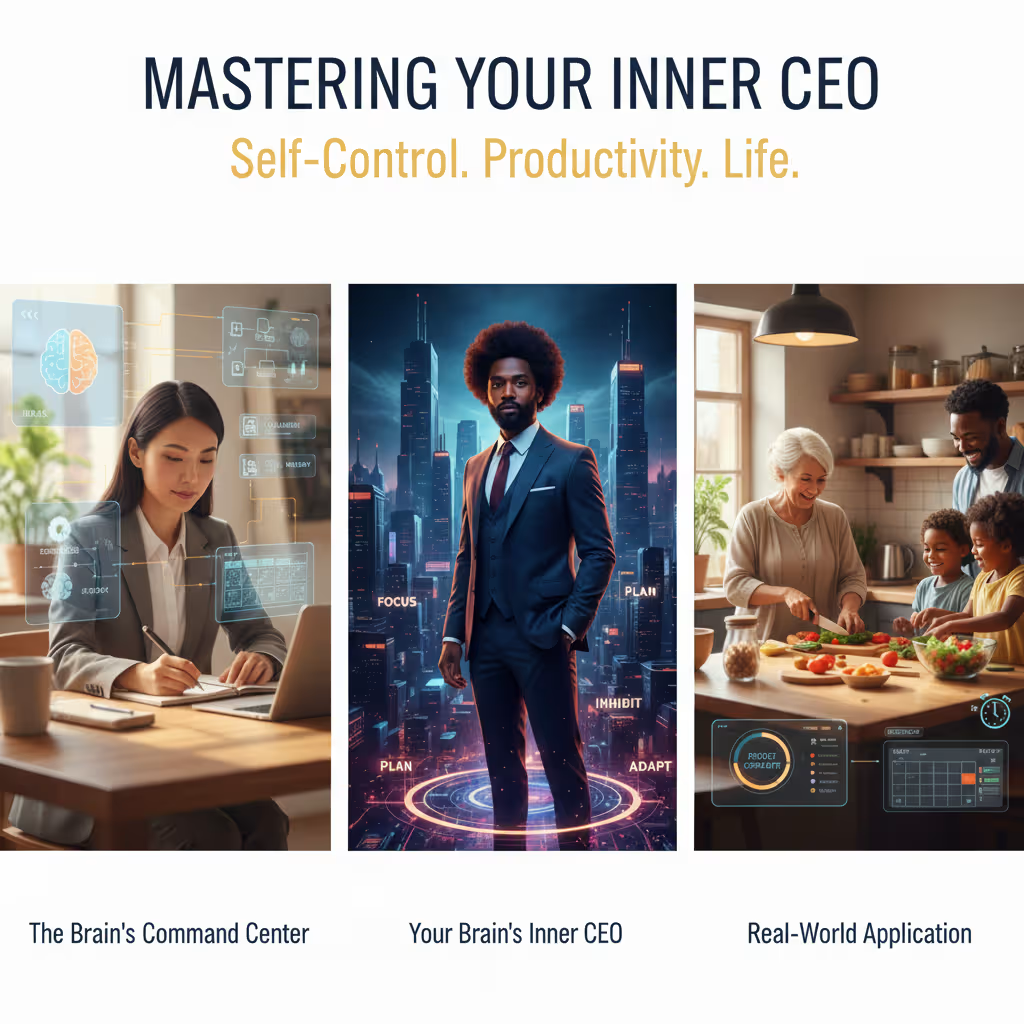
Imagine the chief executive officer of a bustling corporation. This individual doesn't handle every small task, but they set the vision, create the strategic plan, allocate resources, and keep the entire team focused on the most important goals. They inhibit bad ideas, adapt when the market shifts, and regulate the company's culture. Now, imagine this entire complex management system exists inside your own head. This is your executive function—a suite of high-level cognitive skills that act as your brain's inner CEO, responsible for guiding your focus, managing your impulses, and orchestrating your actions to achieve future goals.
The Modern Struggle: Overwhelm, Distraction, and the Need for Better Focus
In today's hyper-connected world, our brain's CEO is under constant siege. We are bombarded by a relentless stream of notifications, emails, and information, all competing for our limited attention. The demands to multitask, pivot instantly, and manage complex projects are higher than ever. This modern environment creates a perfect storm for overwhelming our executive functions. The result is a pervasive sense of being distracted, disorganized, and perpetually behind. The struggle to maintain focus, resist the temptation of a quick dopamine hit from social media, and control our emotional responses to stress is not a personal failing; it is a fundamental conflict between our brain's architecture and the demands of the world we've built.
What You'll Discover: A Practical Roadmap to Enhanced Self-Control and Productivity
This guide is designed to serve as your practical roadmap to reclaiming control and strengthening your internal CEO. We will move beyond abstract concepts to provide a clear, actionable framework for understanding and improving your executive functioning skills. You will discover the core pillars of executive functioning, learn to recognize the subtle signs of its dysfunction in your daily life, and, most importantly, acquire a toolkit of science-backed strategies to boost your focus, tame your impulses, and elevate your capacity for planning and execution. This is not about becoming a different person; it is about unlocking the full potential of the cognitive machinery you already possess, enabling you to navigate the complexities of modern life with greater clarity, purpose, and control.
Understanding Executive Function: Your Brain's Command Center
To effectively enhance these critical skills, we must first understand what they are and where they originate. Executive function is not a single, monolithic entity but a collection of interrelated mental processes that work in concert. Think of it less as a single tool and more as the entire control panel of your brain, allowing you to engage in purposeful, goal-directed behavior.
Defining Executive Function: More Than Just "Getting Things Done"
At its core, executive function is the set of cognitive processes that enables self-regulation and goal pursuit. While it certainly helps us "get things done," its scope is far broader. It's the "how" behind achievement. It's what allows you to formulate a goal (e.g., "I want to run a 5k"), create a plan (download a training app, schedule runs), execute that plan (get up early to run even when you don't feel like it), monitor your progress (track your times), and adjust your strategy as needed (rest an injured ankle). It is the bridge between intention and action, governing everything from complex project management to resisting the urge to eat a second piece of cake.
The Brain's Orchestrator: A Glimpse into the Prefrontal Cortex and Frontal Lobes
The biological home of our executive functions is primarily located in the frontal lobes of the brain, with the prefrontal cortex (PFC) acting as the main headquarters. Situated right behind the forehead, the PFC is responsible for synthesizing information from other brain areas, anticipating future consequences, and guiding behavior accordingly.
This isn't a solo act. Effective brain functions rely on intricate networks:
- Fronto-Parietal Network: The workhorse for moment-to-moment task control, attention, and working memory.
- Cingulo-Opercular Network: Your brain's "stay-on-task" manager, crucial for sustained focus.
- Default Network: Involving regions like the medial prefrontal cortex and posterior cingulate cortex, this network is active during rest and is essential for planning, daydreaming, and self-reflection. Poor regulation of this network can lead to mind-wandering and distraction.
Furthermore, emotional centers in the brain exert powerful limbic influences on the PFC, while reward pathways involving the nucleus accumbens and ventral tegmental area drive motivation. When you weigh the pros and cons of a decision or shift your attention, it is your prefrontal cortex orchestrating these complex mental maneuvers.
What Happens When Executive Function Falters? Introducing Executive Dysfunction
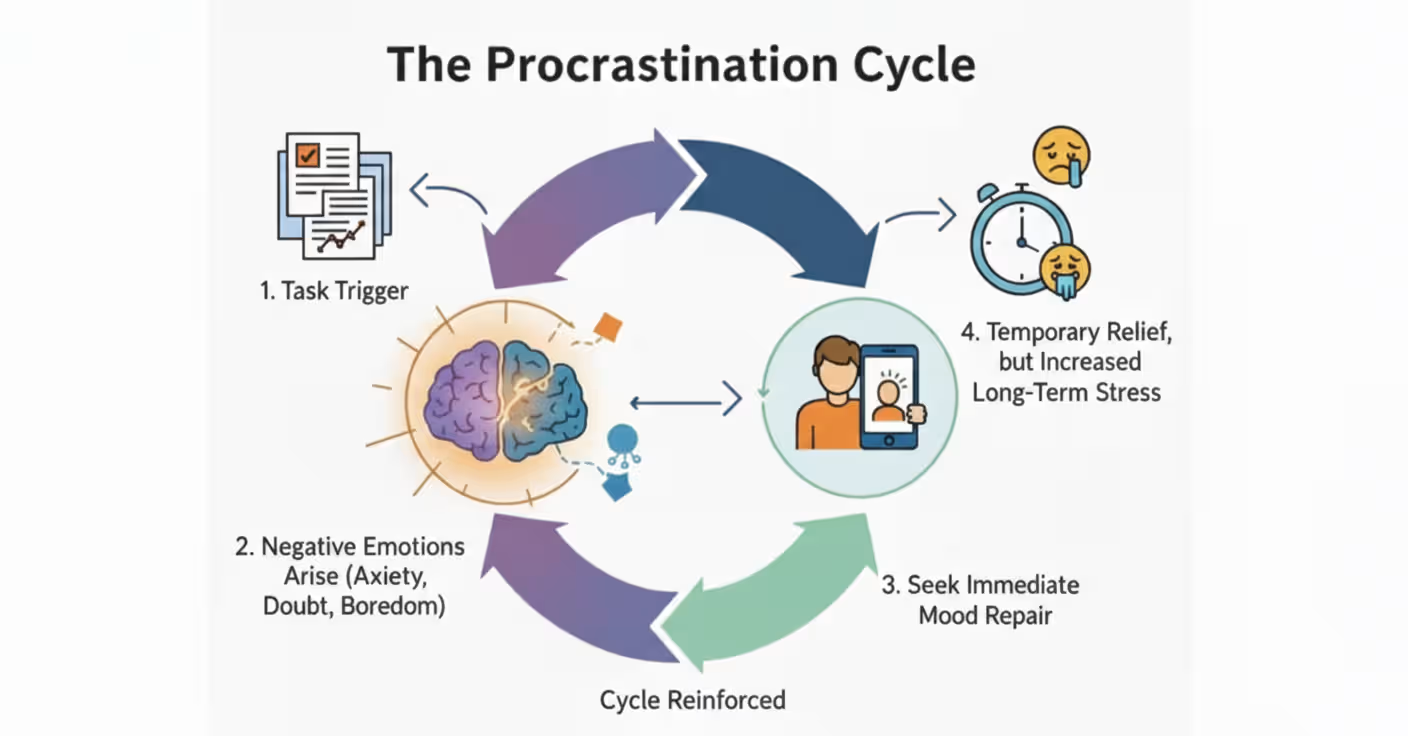
When these crucial skills are weak or impaired, we refer to the condition as executive dysfunction. This is not about a lack of intelligence or willpower. It is a neurological challenge in the management systems of the brain. An individual with executive dysfunction might know exactly what they need to do but find themselves utterly unable to start the task. These executive deficits can be developmental or acquired later in life through a brain injury. This disconnect between knowledge and execution can be a source of immense frustration, impacting academic achievement, career progression, and personal relationships.
The Core Pillars of Executive Function: Skills for Everyday Mastery
Executive function is comprised of several distinct yet interconnected skills. Understanding these core pillars—the foundational Executive Function Skills—allows us to pinpoint specific areas of weakness and apply targeted strategies for improvement. Let's break down the key components that form your brain's command center.
Inhibition Control: The Power to Pause and Resist Impulses
Inhibition control, or inhibitory control, is the ability to override our automatic responses and resist temptations or distractions. It is the mental "brake" that allows us to think before we act. This skill operates in two key domains:
- Behavioral Inhibition: The ability to control your actions and resist impulses, such as refraining from checking your phone during a meeting.
- Cognitive Inhibition: The ability to tune out irrelevant information and distractions to stay focused on the task at hand.
Working Memory: Holding Information and Thinking in Real-Time
Working memory is a temporary mental workspace where we hold and manipulate information to complete a task. It's like the RAM on a computer. You use it when you solve a multi-step math problem in your head or remember a list of items while navigating a grocery store. This includes both verbal information and visual-spatial information, known as Nonverbal working memory. Poor memory performance in this area makes it hard to follow conversations, learn new skills, and complete complex sequences.
Planning and Prioritizing: Charting Your Course and Managing Tasks
This pillar involves the ability to set a goal and create a roadmap to reach it. Planning and organizing requires you to think ahead, anticipate future needs, and sequence steps in a logical order. Prioritizing is the complementary skill of evaluating the importance and urgency of different tasks to decide where to focus your attention and resources. Weaknesses in this area can lead to feeling constantly overwhelmed.
Set Shifting (Cognitive Flexibility): Adapting to Change and Problem-Solving
Cognitive flexibility, also known as set shifting, is the ability to adapt your thinking and behavior in response to changing demands or new information. It allows you to switch between tasks, see a problem from multiple perspectives, and adjust your plan when you encounter an obstacle. This skill is a cornerstone of strong critical thinking skills and effective problem-solving.
Emotional Regulation: Navigating Feelings for Clearer Thinking and Action
This is a critical executive skill that involves managing our emotional responses to achieve our goals. It’s not about suppressing emotions, but rather modulating them so they don't derail our actions. Emotional regulation allows you to remain calm under pressure and persist through frustration. When an emotional reaction runs high, it can hijack the prefrontal cortex, making it nearly impossible to access other executive skills.
Self-Monitoring and Metacognition: Becoming Aware of Your Own Thinking and Performance
Self-monitoring is the ability to observe your own performance and assess how you are doing in relation to your goals. Metacognition, or "thinking about thinking," is the higher-level awareness of your own cognitive processes. This includes the developmental process of Internalization of Speech, where self-talk becomes an internal guide for planning. This self-awareness also extends to social cognition—understanding social cues—which relies on systems like the mirror neuron network to interpret others' intentions.
Recognizing Executive Function Challenges in Your Daily Life
Executive function challenges are not abstract psychological concepts; they are tangible struggles that show up in our daily routines, workplaces, and relationships. Identifying these patterns in your own life is a critical step toward empowerment and change, shifting the narrative from "I'm lazy" or "I'm not smart enough" to "This is a cognitive skill I can work on."
Common Signs of Executive Dysfunction in Adults
What are signs of poor executive function? While everyone experiences these issues occasionally, a persistent pattern may indicate underlying executive function impairments. In an adult context, these often manifest as:
- "Time Blindness": A chronic inability to accurately gauge how long tasks will take, leading to consistent lateness or over-scheduling.
- "Clutter Blindness": Living or working in a disorganized environment without a clear system, frequently misplacing essential items like keys or documents.
- Analysis Paralysis: Getting stuck when faced with decisions, overwhelmed by too many options, and unable to initiate action.
- Project Inertia: Having numerous great ideas or starting multiple projects but struggling to follow through and bring them to completion.
- Emotional Volatility: Experiencing quick-to-ignite frustration or being easily overwhelmed by stress, indicating challenges with emotional regulation.
The Impact on Focus, Productivity, and Relationships
The cumulative effect of these challenges can be profound. Professionally, it can lead to underperformance and chronic job-related stress. In personal life, disorganization and poor time management can create conflict with partners and family members. The short- and long-term consequences are not just external; internally, this ongoing friction can erode self-esteem and lead to feelings of inadequacy and anxiety.
Understanding the Link: Executive Function Challenges in Conditions like ADHD and Autism (Brief Context)
What are common disorders or conditions related to impaired executive function? Significant executive dysfunction is a hallmark of certain neurodevelopmental conditions.
- As renowned expert Dr. Russell Barkley has extensively documented, difficulties with inhibition control and working memory are central to attention deficit hyperactivity disorder (ADHD).
- Similarly, Dr. Tom Brown's model of ADHD frames it as a disorder of executive function.
- Individuals with autism spectrum disorder (ASD) often face challenges with cognitive flexibility and planning.
- Learning Disorders and learning disabilities are frequently accompanied by weaknesses in executive skills. The term executive function disorder is sometimes used informally to describe these significant, life-impairing challenges, which can also result from an acquired brain injury.
Your Action Plan: Practical Strategies for Boosting Focus and Self-Control
Understanding the theory is essential, but the real transformation comes from applying practical strategies. This action plan is organized around the core pillars of executive function, providing you with tangible techniques you can begin implementing today. For those with significant concerns, formal neuropsychological tests can provide clarity. Professionals may use assessments like the Stroop Color and Word Test or the Montreal cognitive assessment to identify specific areas of weakness and guide intervention.
Strategy 1: Mastering Inhibition Control – Taming Distractions and Impulses
- Engineer Your Environment: Make desired behaviors easier and impulsive behaviors harder. If you want to stop scrolling on your phone, move social media apps off your home screen. This externalizes control, reducing the cognitive load on your internal "brakes."
- Practice the "Pause": Create a deliberate gap between impulse and action. Before making an impulse purchase online, put the item in your cart and wait 24 hours. This small delay allows your prefrontal cortex to come back online.
- Implement "If-Then" Plans: Proactively decide how you will handle predictable temptations. For example, "IF I get the urge to check my email while writing, THEN I will take three deep breaths and write down the thought to check later."
Strategy 2: Sharpening Working Memory – Holding and Manipulating Information Effectively
- Externalize Information: Your brain is for having ideas, not holding them. Use calendars, online task lists, and phone reminders. This frees up your mental RAM for active processing, not passive storage.
- Use Visualization and Association: To better encode information, create a vivid mental picture. The more unusual the image, the more memorable it will be.
- Engage in Brain-Training: Games like chess and Sudoku challenge working memory. For children, imaginative pretend play is a powerful and proven way to develop these crucial cognitive skills.
Strategy 3: Elevating Planning & Prioritizing – From Ideas to Execution
- Conduct a Weekly Review: Set aside 30 minutes each week to identify your most important goals and schedule them into your calendar first.
- Use Visual Supports: For overwhelming projects, use mind mapping, flow charts, or simple time organizers to break the project down into its smallest possible action steps.
- Apply Skills to Real Life: Use these strategies for everything from planning homework assignments with effective back-to-school tips to managing complex financial information. Developing the financial skills to plan for a retirement account is a high-level application of executive function.
Strategy 4: Cultivating Cognitive Flexibility – Adapting and Problem-Solving
- Intentionally Seek Novelty: Break your routines. Take a different route to work or try a new recipe. Novelty challenges your brain to form new connections and makes it more comfortable with change.
- Practice "Yes, and...": Instead of shutting down an unexpected idea with "No, but...", respond with "Yes, and...". This forces you to build on new information rather than resist it.
- Explore Structured Programs: Methodologies like Unstuck and On Target are designed to improve flexibility. Innovative approaches like intergenerational programs, which expose individuals to different perspectives, can also boost adaptability.
Strategy 5: Empowering Emotional Regulation – The Key to Calm and Control
- Name Your Emotions (Labeling): The simple act of labeling an emotion—"I am feeling intense frustration"—can reduce its intensity by engaging the prefrontal cortex.
- Develop a "Calm-Down" Routine: Identify a short, reliable sequence of actions that helps you self-soothe, such as a 2-minute deep breathing exercise. Practice it when you are calm so it becomes an automatic resource.
- Seek Professional Support: For persistent challenges, behavioral therapy (like CBT or DBT) and individual counseling sessions can provide structured strategies for improving emotional regulation.
Strategy 6: Developing Metacognition & Self-Monitoring – Becoming Your Own Executive Coach
- Schedule Regular "Check-Ins": Throughout the day, set reminders to pause and ask yourself: "Is what I'm doing now aligned with my goals?"
- Conduct a "Post-Game" Analysis: After completing a project, take five minutes to reflect. What went well? What was challenging? What could you do differently next time?
- Work with a Professional: Occupational therapy is particularly effective at developing metacognitive strategies for daily life, helping individuals create personalized systems that work for their unique brain wiring.
Are there therapists that help with executive function?
Yes, absolutely. A variety of therapists and professionals are equipped to help individuals strengthen their executive function skills. Seeking professional guidance is a proactive step toward managing challenges and building a more effective cognitive toolkit.
- Cognitive Behavioral Therapists (CBT): CBT is highly effective for addressing executive deficits. Therapists teach practical strategies for overcoming procrastination, managing emotional impulses, and restructuring unhelpful thought patterns.
- Executive Function Coaches: These professionals work one-on-one with clients to develop personalized systems for organization, time management, and goal attainment.
- Occupational Therapists (OT): OTs are experts in the practical skills of daily living. They help individuals create routines, modify their environment, and use assistive tools to compensate for weaknesses. Occupational therapy is especially crucial for brain injury survivors who may be working with a full rehabilitation team.
- Neuropsychologists: These specialists conduct comprehensive assessments using tools like the Stroop Color and Word Test to pinpoint specific areas of weakness and provide detailed recommendations for intervention.
Conclusion
Mastering your executive function is not about achieving perfection but about making consistent, incremental progress. By understanding your brain's inner CEO—its strengths, weaknesses, and the complex neural systems that drive it—you empower yourself to take deliberate control of your focus, actions, and emotions. The strategies outlined in this guide provide a practical roadmap for building the mental scaffolding needed to navigate an increasingly distracting world.
Remember that strengthening these cognitive skills is a lifelong journey. Start by identifying one or two areas you want to improve and implement a single new strategy. Whether it's externalizing your to-do list to support your working memory or practicing a "pause" rule to improve inhibition control, every small step builds momentum. By actively engaging with these techniques, you are not just managing tasks more effectively; you are fundamentally rewiring your brain for greater clarity, resilience, and success.