Anger is a universal human experience. It’s the flash of heat when you feel wronged, the tightening in your chest during a frustrating traffic jam, or the slow burn of resentment after a conflict. While a normal and even healthy emotion, uncontrolled anger can become a destructive force, eroding relationships, damaging careers, and taking a significant toll on both physical and mental health. The modern world often seems engineered to provoke, with a 2024 Gallup poll revealing that workers continue to report high levels of anger, often exceeding pre-pandemic levels. The challenge isn’t to eliminate anger entirely—an impossible and undesirable goal—but to understand, manage, and channel it constructively.
Mastering anger is not about suppression; it is about developing lasting emotional control. It involves building a sophisticated internal toolkit that allows you to navigate this powerful emotion without letting it dictate your actions. This article will guide you on a comprehensive journey toward that mastery. We will begin by demystifying anger, exploring its roots and its far-reaching impact. From there, we will equip you with an immediate toolkit for calming the storm in the heat of the moment, followed by proactive, long-term strategies to build a resilient emotional fortress. Finally, we will outline when and how to seek professional support for deeper healing, ensuring you have a complete roadmap for transforming your relationship with anger and cultivating a life of greater calm and connection.
How can I control my anger?
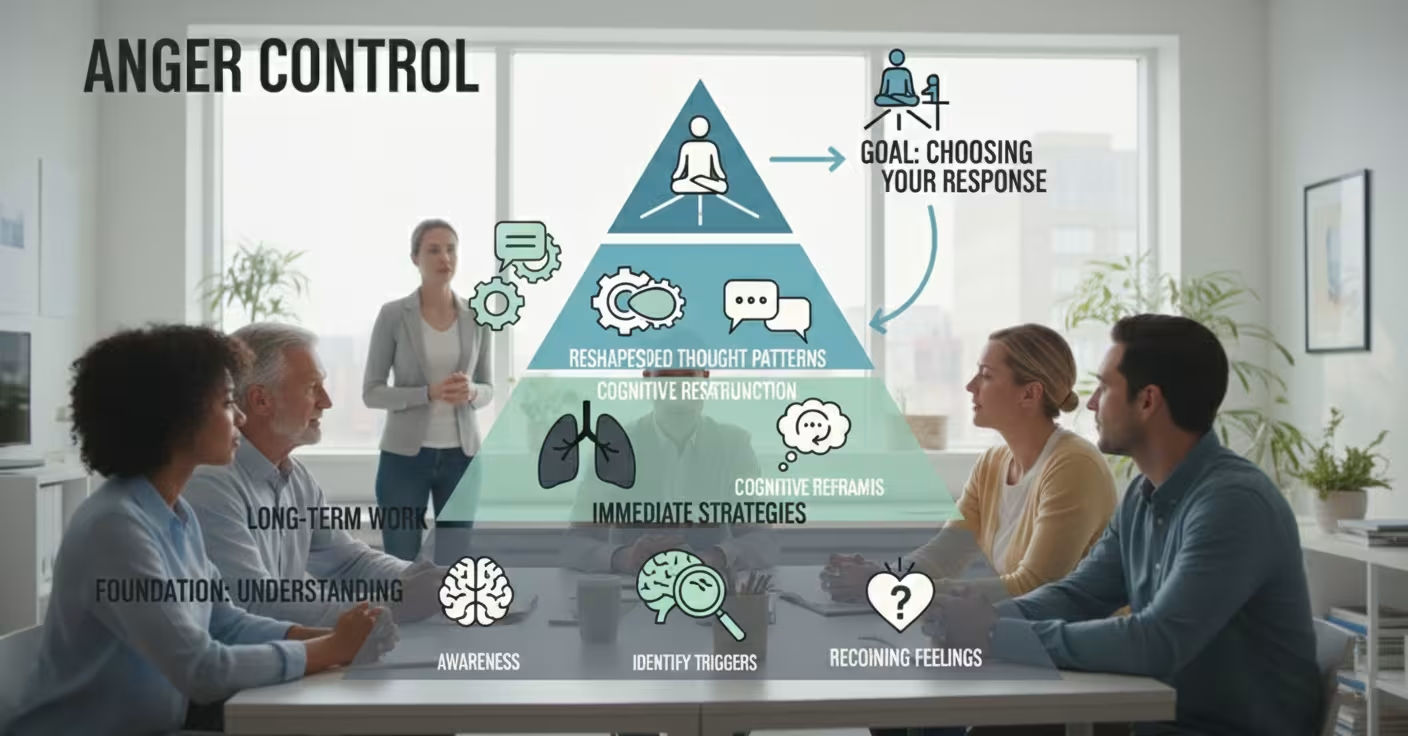
 Lasting anger control is built in layers, starting with a foundation of understanding, adding immediate coping strategies, and reinforcing it with long-term proactive work.
 Anger is often just the 'tip of the iceberg,' masking deeper, more vulnerable emotions that lie beneath the surface.
Controlling anger is an active, learnable skill, not a passive state. It stems from a multi-layered approach that addresses the emotion from its root to its expression. The path to control begins with understanding: recognizing what anger truly is, what triggers it for you personally, and the underlying feelings it might be masking, such as fear, hurt, or frustration. Once you have this awareness, you can apply immediate, in-the-moment strategies—like deep breathing or mental reframing—to de-escalate your physiological and emotional response before it becomes overwhelming. However, true, lasting control is built through proactive, long-term work. This involves reshaping the thought patterns that fuel your anger, improving your communication skills to express needs constructively, and adopting lifestyle habits that promote overall emotional well-being. Ultimately, control is the cultivated ability to choose your response rather than being driven by an automatic reaction.
What are your best anger management tips?
The most effective anger management tips form a comprehensive ecosystem of strategies that work together to build emotional resilience. While specific techniques will be explored in depth, the core pillars of successful anger management can be summarized as follows:
- Develop Self-Awareness: Learn to recognize your personal anger triggers and the early physical warning signs, such as a racing heart or tense muscles. This awareness is your first line of defense.
- Master Immediate Calming Techniques: Equip yourself with simple, powerful tools to use in the heat of the moment. Deep breathing, taking a brief time-out, and progressive muscle relaxation can interrupt the anger cycle before it escalates.
- Reframe Your Perspective: Challenge the thoughts that fuel your anger. Learning to look for alternative explanations, avoid jumping to conclusions, and practice cognitive restructuring are foundational to changing your emotional response.
- Improve Communication: A significant portion of anger stems from feeling unheard or misunderstood. Practice assertive—not aggressive—communication by using "I" statements to express your feelings and needs clearly and respectfully.
- Build a Healthy Lifestyle: Prioritize foundational wellness habits. Regular exercise, adequate sleep, and a balanced diet significantly impact your mood and ability to manage stress, thereby raising your threshold for anger.
When should someone seek professional help for anger control issues?
While self-help strategies are powerful, there are clear indicators that professional help is necessary. You should consider seeking support from a therapist or counselor when your anger feels unmanageable and consistently leads to negative consequences. Key red flags include anger that results in verbal or physical aggression, such as shouting, threatening, or breaking things. If your anger is damaging important relationships with family, friends, or partners, or causing significant problems at work—where 45% of employees admit to losing their temper—it is time to seek guidance. Furthermore, if your anger is a symptom of or contributes to other mental health challenges like depression or anxiety, professional intervention is crucial. When you find yourself in legal trouble due to your actions while angry or turn to substances to cope, these are urgent signs that self-management is no longer sufficient.
Beyond the Roar: Understanding Your Anger for Lasting Change
Before you can manage anger, you must understand it. Anger is more than just a fleeting feeling; it’s a complex emotional and physiological response with deep roots and significant consequences. Moving beyond the surface-level "roar" to examine its nature, origins, and effects is the first critical step toward lasting change.
The Dual Nature of Anger: Friend or Foe?
In its purest form, anger is not an enemy. It is a powerful signaling system designed to alert us to threats, injustices, or violations of our boundaries. It can be a potent motivator for positive change. For example, a 2023 study in the Journal of Personality and Social Psychology found that anger, compared to a neutral emotional state, can actually improve a person's ability to achieve challenging goals. It provides the energy to confront problems, stand up for oneself, and pursue solutions. Similarly, within relationships, anger can signal that a significant issue needs to be addressed. Research has even indicated that the angrier people felt toward a romantic partner, the more likely they were to try to repair the relationship, suggesting it can catalyze connection rather than just conflict. The problem arises when this adaptive emotion becomes maladaptive—when its intensity is disproportionate to the situation, its duration is prolonged, or its expression becomes aggressive and destructive. The goal of anger management is not to eliminate this vital emotion but to learn how to listen to its message and express it in a way that is healthy and constructive.
Unpacking the "Why": Common Roots and Underlying Emotions
Anger is often referred to as a "secondary emotion" because it frequently serves as a protective mask for more vulnerable feelings. Peeling back the layer of anger might reveal hurt from a cutting remark, fear of losing control, shame over a mistake, or deep-seated frustration from unmet needs. Understanding this is crucial, as addressing the root emotion is far more effective than simply trying to quell the anger on the surface. Triggers for anger are highly personal but generally fall into two categories. External triggers are situational: a traffic jam, a critical comment from a coworker, a broken appliance. Internal triggers are psychological: brooding over past events, worrying about future problems, or interpreting neutral situations through a lens of injustice. Chronic stress is a significant amplifier, lowering your tolerance and making you more susceptible to these triggers. This interplay with other mental health states is critical; unresolved anxiety can manifest as irritability, and the hopelessness of depression can sometimes express itself as lashing out.
The Ripple Effect: How Uncontrolled Anger Harms You and Your Relationships
When anger is chronically unmanaged, its consequences radiate outward, impacting every facet of your life. Physiologically, the constant state of "fight or flight" floods your body with stress hormones like cortisol and adrenaline, which over time can contribute to high blood pressure, heart disease, and a weakened immune system. Mentally, it creates a vicious cycle; uncontrolled anger can fuel anxiety and depression, while the distress from these conditions can, in turn, make anger more likely. The most visible damage is often to relationships. Frequent outbursts of anger, aggression, or contempt erode trust and intimacy with partners, families, and friends. They create an environment of fear and instability, pushing away the very support systems that are crucial for well-being. Professionally, uncontrolled anger can lead to disciplinary action, a toxic work environment, and missed opportunities. At its worst, anger can escalate into verbal or physical abuse, creating lasting trauma for others and severe legal and social consequences for the individual.
Your Immediate Toolkit: Taming the Flames in the Moment
While understanding anger is foundational, you also need practical, in-the-moment strategies to manage it when it flares. This immediate toolkit is designed to de-escalate your emotional and physiological response, creating the space you need to think clearly and choose a constructive action over a destructive reaction.
The Power of Pause: Breathing and Body Awareness
When anger ignites, your sympathetic nervous system kicks into high gear, preparing your body for a fight. Your heart rate increases, your breathing becomes shallow, and your muscles tense. The most direct way to counteract this is to consciously activate your parasympathetic nervous system, the body's "rest and digest" function. The key is your breath. Intentional, slow, deep breathing—also known as diaphragmatic breathing—is a powerful physiological reset button.
To practice this, sit or stand comfortably. Place one hand on your chest and the other on your stomach. Inhale slowly through your nose for a count of four, feeling your stomach expand while your chest remains relatively still. Hold the breath for a count of two, then exhale slowly through your mouth for a count of six. Repeat this cycle 5-10 times. This simple action sends a direct signal to your brain that the perceived threat has passed, helping to lower your heart rate and release muscle tension. A 2024 meta-analysis in Clinical Psychology Review reinforced this, finding that arousal-decreasing strategies like deep breathing and mindfulness are significantly effective at reducing anger and aggression. Combining this with body awareness—briefly scanning your body to notice where you're holding tension (jaw, shoulders, fists) and consciously relaxing those areas—doubles its effectiveness.
Shifting Your Focus: Mental Techniques for Quick Relief
Your thoughts are the fuel for the fire of anger. Interrupting and redirecting those thoughts is a crucial skill for immediate relief. One simple technique is thought-stopping. As soon as you notice angry, escalating thoughts, internally (or even out loud if you're alone) command yourself to "Stop!" or "Hold on." This brief interruption can break the momentum of a negative thought spiral.
Follow this with a quick mental shift. Change your physical location if possible—step into another room, go outside, or simply turn to face a window. This physical change helps create a mental one. You can also engage your senses in your current environment: name five things you can see, four things you can feel, three things you can hear, two things you can smell, and one thing you can taste. This mindfulness exercise grounds you in the present moment and pulls your focus away from the internal turmoil. Another effective technique is to use a calming mantra or self-statement. Silently repeat a phrase like, "This feeling will pass," "I can handle this," or "I am in control of my response." This provides a new, constructive thought to focus on instead of the one provoking your anger.
Physical Release: Channeling Intense Energy Constructively
Anger creates a surge of physical energy that demands an outlet. The key is to release this energy constructively, not destructively. While older advice suggested "venting" by punching a pillow or screaming, modern research suggests this can actually reinforce aggressive behavior. A comprehensive review of 154 studies found that activities that increase physiological arousal, like jogging or hitting a punching bag, were ineffective at reducing anger.
Instead, the goal is to choose actions that help regulate and decrease arousal. A brisk walk can be highly effective, as it combines gentle physical movement with a change of scenery. Stretching, yoga, or tai chi are excellent options because they focus on controlled movement and breathwork, helping to release physical tension while calming the nervous system. Engaging in a distracting, non-aggressive physical task can also be beneficial, such as gardening, cleaning, or working on a hands-on hobby. These actions provide a physical outlet for nervous energy without mimicking or rehearsing aggressive behavior, allowing you to channel the intensity of your emotion into something productive until the initial wave of anger subsides.
Building Your Emotional Fortress: Proactive Strategies for Lasting Control
Immediate coping skills are your emergency response team, but for lasting change, you need to build an emotional fortress—a resilient internal structure fortified with proactive habits and skills. This involves deep self-awareness, cognitive restructuring, improved communication, and a supportive lifestyle.
Understanding Your Triggers: A Deeper Dive into Self-Awareness
Effective anger management begins with knowing exactly what sets you off. While you might be aware of major triggers, a deeper dive is necessary to uncover the subtle patterns that precede an outburst. The most effective tool for this is an anger journal. For a few weeks, make a note every time you feel angry. Record the date, time, and intensity of your anger on a scale of 1 to 10. Most importantly, document the specifics: What was happening? Who were you with? What were you thinking and feeling right before the anger surfaced? Were there contributing physical factors, such as lack of sleep, hunger (sometimes called "hanger"), or stress from an unrelated event? Over time, this log will reveal invaluable patterns. You may discover your anger spikes during morning commutes, in interactions with a specific person, or when you feel your expertise is being questioned. This detailed self-awareness is not about avoiding triggers—which is often impossible—but about anticipating them, allowing you to mentally and emotionally prepare to deploy your management strategies effectively.
Reshaping Your Thinking: Applying Cognitive Behavioral Techniques
Cognitive Behavioral Therapy (CBT) is a cornerstone of modern anger management. Its core principle is that your thoughts, not external events, ultimately determine your feelings and behaviors. Anger is often fueled by cognitive distortions—unhelpful, irrational thought patterns that warp your perception of reality. Common distortions linked to anger include:
- Catastrophizing: Blowing events out of proportion (e.g., "This traffic jam will ruin my entire day!").
- Black-and-White Thinking: Seeing things in all-or-nothing terms (e.g., "If you're not with me, you're against me.").
- Mind Reading: Assuming you know what others are thinking without evidence (e.g., "He's ignoring me on purpose to be disrespectful.").
- Overgeneralizing: Taking one negative event as a never-ending pattern of defeat (e.g., "I always get stuck with the worst projects.").
The work of CBT is to identify these distortions as they happen and actively challenge them. When you catch yourself in a distorted thought, ask critical questions: "What is the evidence for this thought? Is there another, more balanced way to view this situation? What would I tell a friend in this same scenario?" A practical tool is the "thought record," where you write down the situation, your initial automatic thought, the resulting emotion (anger), and then consciously generate a more balanced, alternative thought. This practice gradually retrains your brain to move away from automatic, anger-inducing interpretations toward more rational and measured responses.
Enhancing Communication: Speaking Your Truth Without Shouting
Much anger arises from communication breakdowns—feeling unheard, disrespected, or misunderstood. Learning to communicate assertively is a game-changing skill. It's the healthy middle ground between passive (stuffing your feelings down) and aggressive (lashing out) communication. Assertiveness is about expressing your own needs, feelings, and boundaries clearly and respectfully, while also acknowledging the rights of others.
The most powerful tool for assertive communication is the "I" statement. Instead of accusatory "you" statements like, "You never listen to me," an "I" statement frames the issue from your perspective: "I feel frustrated when I'm interrupted because it makes me feel like my opinion doesn't matter." This structure—"I feel [emotion] when [specific behavior] because [impact on you]"—is less likely to put the other person on the defensive and opens the door for constructive dialogue. Paired with active listening—giving someone your full attention, paraphrasing what they've said to ensure you understand, and validating their feelings even if you disagree—these skills can defuse potential conflicts before they escalate into angry confrontations, strengthening your relationships in the process.
Lifestyle Foundations: Fueling Your Inner Calm
Your overall physical and emotional state creates the backdrop for your daily experiences. A well-cared-for mind and body are inherently more resilient to stress and anger. Regular physical exercise is a potent stress reducer, releasing endorphins and helping to regulate mood. Prioritizing consistent, high-quality sleep is non-negotiable; sleep deprivation shortens your fuse and impairs the brain's ability to manage emotions. Pay attention to your diet, as blood sugar fluctuations can lead to irritability. Additionally, be mindful of your intake of stimulants like caffeine and depressants like alcohol, which can exacerbate emotional volatility. Beyond these basics, intentionally incorporate calming activities into your routine. This could involve listening to relaxing music, spending time in nature, practicing meditation, or engaging in hobbies that bring you joy and focus. These lifestyle foundations don't just help with anger; they contribute to a holistic sense of well-being that makes emotional storms less frequent and less intense.
When to Seek Support: Professional Guidance for Deeper Healing
Self-help strategies are incredibly effective for many, but some anger issues are too deep-seated or severe to tackle alone. Recognizing when to seek professional support is a sign of strength and a critical step toward profound and lasting healing.
Recognizing the Red Flags: When Self-Help Isn't Enough
It's time to seek professional help when your anger consistently crosses a line into destructive territory. If your angry outbursts involve verbal, emotional, or physical abuse, it is imperative to get help immediately. Another major red flag is when your anger is causing tangible, severe consequences in your life—you are facing legal issues, your job is in jeopardy, or you have damaged or destroyed important relationships beyond simple arguments. If you feel like you are constantly simmering with rage or that your anger is an explosive force you cannot predict or control, a professional can provide the necessary structure and safety to address it. Furthermore, if your anger co-exists with other significant mental health challenges, such as substance abuse, deep depression, severe anxiety, or trauma, a therapist can help you untangle these interconnected issues in a way that self-help alone cannot.
Navigating Your Options: Types of Professional Help
There are several effective forms of professional support for anger issues. Individual therapy is a common starting point, offering a confidential space to explore the roots of your anger with a trained professional. Therapists specializing in CBT or Dialectical Behavior Therapy (DBT) are particularly well-equipped to provide practical skills for emotion regulation. Group therapy or structured anger management programs offer a different benefit: the opportunity to learn and practice skills in a supportive environment with others who share similar struggles. This can reduce feelings of isolation and allow for real-time feedback. For anger that primarily impacts relationships, couples or family therapy can be invaluable, helping all parties improve communication and resolve underlying conflicts. Each format offers unique advantages, and the right choice depends on your individual circumstances and comfort level.
Finding Credible Resources and Support
Finding the right professional is crucial for a successful outcome. Start by asking for a referral from your primary care physician. You can also use online directories provided by professional organizations like the American Psychological Association or the National Board for Certified Counselors. When searching, look for licensed professionals—such as psychologists, licensed clinical social workers (LCSW), or licensed professional counselors (LPC)—who list anger management, CBT, or emotion regulation as a specialty. Research shows that this approach works; for instance, data from Aspire Counseling demonstrated that clients' average anger scores dropped significantly after 20 weeks of therapy. In addition to therapy, credible self-help books and workbooks written by psychologists can supplement your professional treatment. Look for resources grounded in evidence-based practices like CBT to ensure you are working with proven strategies.
Cultivating a Life of Calm: Integrating Self-Compassion and Connection
Mastering anger is not just about implementing techniques; it's about shifting your entire approach to your emotional life. This final phase of the journey involves cultivating a gentler inner world through self-compassion and strengthening your outer world through meaningful connections.
The Power of Self-Compassion: Be Kind to Yourself
The journey of managing anger is rarely a straight line. There will be moments when you react in old ways, and the temptation will be to respond with harsh self-criticism. However, this self-judgment often adds another layer of fuel to the fire, creating a cycle of anger followed by shame, which in turn can lead to more frustration and anger. Self-compassion is the antidote. It involves treating yourself with the same kindness and understanding you would offer a good friend who is struggling. Acknowledge that you are human and that learning a new skill takes time and practice. When you have a setback, approach it with curiosity rather than condemnation. Ask yourself, "What can I learn from this? What trigger did I miss? What strategy can I try next time?" This gentle, learning-oriented approach fosters resilience and prevents a single misstep from derailing your entire progress.
Nurturing Healthy Relationships: Love and Friendship
Strong, supportive relationships are one of the most powerful buffers against stress and emotional dysregulation. The people you surround yourself with—your family, friends, and partner—form a crucial support network. As you develop better anger management skills, you also create the capacity for deeper, healthier connections. Use your newfound assertive communication skills not just to manage conflict, but to proactively build intimacy. Share your feelings and experiences, listen actively to your loved ones, and work collaboratively to solve problems. Rebuilding trust that may have been damaged by past anger takes time and consistent effort, but it is a worthwhile investment. By nurturing these bonds, you create a positive feedback loop: as your relationships become more secure and fulfilling, you feel less stress and have a stronger support system to lean on during difficult times, further reducing the likelihood of destructive anger.
Embracing a Growth Mindset: Your Journey to Lasting Emotional Control
Finally, it's essential to view anger management through the lens of a growth mindset—the belief that your abilities can be developed through dedication and hard work. See this journey not as a quest to "fix" a flaw, but as an opportunity for profound personal growth. Each trigger becomes a chance to practice a new skill. Each successful de-escalation builds confidence. Each conversation where you choose assertion over aggression strengthens your character. Lasting emotional control isn't a final destination you arrive at, but an ongoing practice of self-awareness and intentional action. Embrace the process, celebrate your progress, and remain committed to becoming the person who can experience the full range of human emotions, including anger, with wisdom, strength, and grace.
Conclusion: Mastering Your Inner Landscape
The path to mastering anger is a transformative journey from reactive outbursts to intentional emotional navigation. It is not about eradicating a natural and sometimes necessary emotion, but about disarming its destructive potential and harnessing its energy for constructive purposes. By embracing this process, you are not just managing a single emotion; you are fundamentally upgrading your entire emotional operating system, leading to greater peace, stronger relationships, and a more profound sense of personal power.
A Path to Empowerment: Taking Charge of Your Emotions
Throughout this guide, we have laid out a comprehensive framework for lasting emotional control. The journey begins with understanding—recognizing anger's dual nature, its underlying causes, and its ripple effect on your life. From there, it moves to immediate action, equipping you with an in-the-moment toolkit of breathing, mental, and physical techniques to tame the flames when they first ignite. The core of lasting change lies in proactively building your emotional fortress through deep self-awareness, cognitive restructuring with CBT, assertive communication, and a wellness-focused lifestyle. Finally, knowing when and how to seek professional support ensures you have the expert guidance needed to navigate the deepest challenges. This integrated, holistic approach transforms anger management from a series of disconnected tips into a cohesive strategy for a more balanced life.
Your Journey Starts Now
Mastery is built one step at a time. Reading this article is an important first move, but true change comes from implementation. Your journey starts with a single, conscious choice. Today, choose one small, actionable step:
- Start Your Journal: Dedicate a notebook to becoming an expert on your own anger. Tonight, reflect on the last time you felt angry and write down what you remember about the situation, your thoughts, and your physical sensations.
- Practice One Technique: Choose one immediate calming skill, such as the 4-2-6 breathing exercise