Conflict is an inherent part of the human experience, an unavoidable friction that arises whenever individuals with different needs, values, and perspectives interact. From minor disagreements in a family setting to complex disputes in the workplace, conflict can feel disruptive and stressful. The prevalence of this friction is significant; nearly two-thirds of U.S. workers have experienced incivility at work, a clear indicator of the routine nature of interpersonal clashes. However, the presence of conflict is not a sign of failure. Rather, how we navigate these disagreements determines whether they lead to broken relationships and stalled progress or become catalysts for growth, deeper understanding, and innovative solutions.
The key lies in moving beyond simply ending a dispute and cultivating a mindset and skillset geared toward achieving genuinely peaceful and sustainable outcomes. This requires a structured approach known as conflict resolution, a process that transforms adversarial encounters into collaborative problem-solving. This guide provides a comprehensive, step-by-step framework for mastering this essential life skill. We will journey from understanding the foundational mindsets necessary for resolution to mastering the practical steps of communication, negotiation, and agreement. By exploring common techniques and best practices, from direct dialogue to the involvement of a neutral mediator, you will gain the tools to manage conflict constructively, fostering healthier relationships and more effective collaboration in every area of your life.
What is conflict resolution?
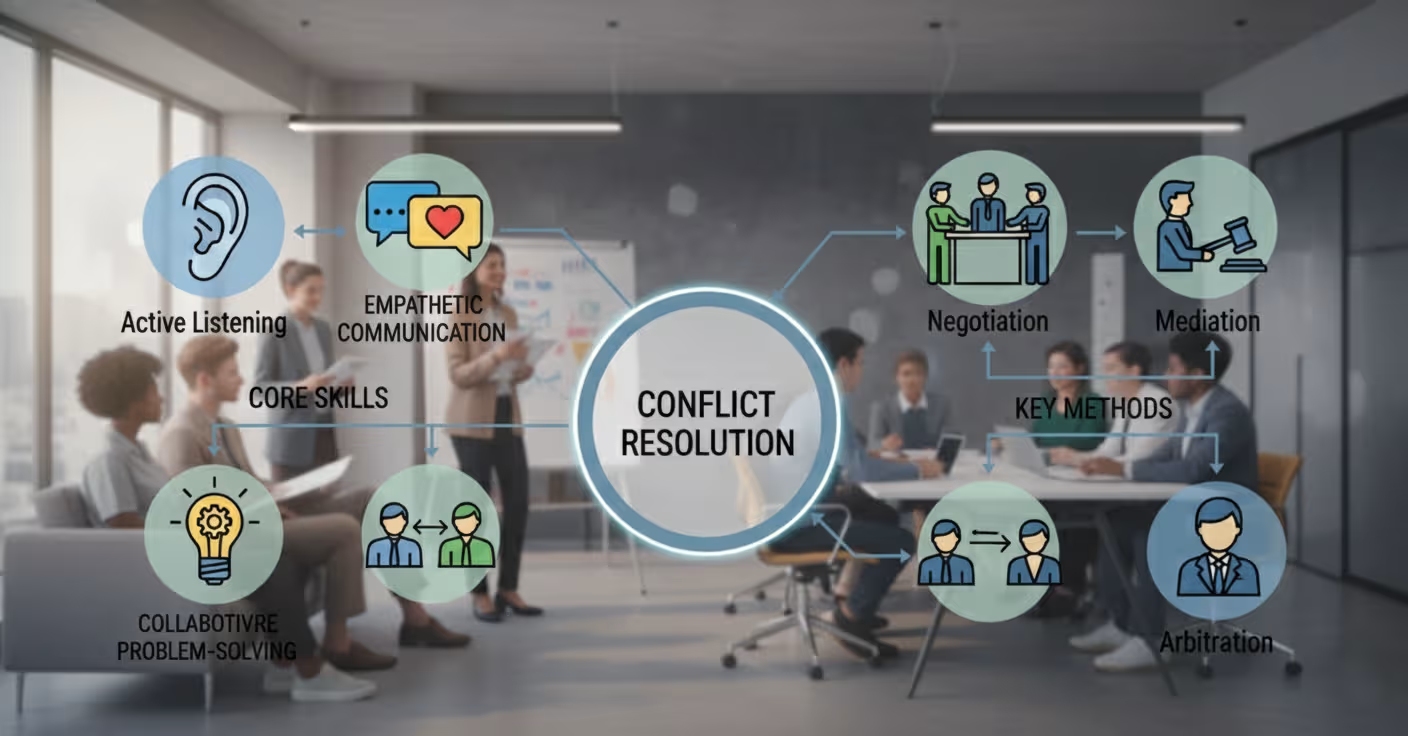
 Conflict resolution is a discipline built on a foundation of core skills and applied through various structured methods.
 Conflict resolution transforms an adversarial, win-lose battle into a collaborative, win-win search for a shared solution.
Conflict resolution is the formal or informal process that two or more parties use to find a peaceful solution to their disagreement. At its core, it is a structured approach to managing and resolving a dispute in a way that minimizes hostility and maximizes mutual understanding. The primary objective is not to determine a winner and a loser, but to arrive at an outcome that addresses the core interests of all involved parties, thereby creating a lasting agreement. This process encompasses a wide range of methods, including negotiation, mediation, and arbitration, and relies on a robust set of skills such as active listening, empathetic communication, and collaborative problem-solving. It is a proactive discipline aimed at transforming conflict from a destructive force into a constructive opportunity for positive change.
Introduction: Beyond Disagreement – Cultivating Peaceful Outcomes
Conflict resolution is more than a set of techniques; it's a fundamental shift in how we approach discord. It involves recognizing that behind every dispute are legitimate needs and interests waiting to be understood. The best practices for resolving conflicts, whether between employees, family members, or within a community, are rooted in principles of respect, empathy, and a commitment to collaboration. Common techniques include reframing issues to find common ground, separating the people from the problem, and brainstorming a wide array of potential solutions before settling on a single course of action. This introduction lays the groundwork for understanding the profound impact of conflict and the immense value of mastering its resolution.
The Inevitability and Impact of Conflict
Conflict is a natural consequence of human diversity. Our unique experiences, beliefs, and goals inevitably lead to friction when we interact. While it cannot be entirely eliminated, unmanaged conflict carries a substantial cost. In professional settings, the impact is quantifiable. U.S. employees spend an average of 2.8 hours per week dealing with workplace conflict, a significant drain on productivity and resources. The emotional toll is equally severe, leading to stress, anxiety, and damaged morale. Unresolved disputes can erode trust, break down communication channels, and create toxic environments. A staggering 77% of employees report being disengaged due to workplace conflict, demonstrating its corrosive effect on motivation and commitment. In personal relationships, lingering disagreements can lead to resentment and emotional distance, sometimes causing irreparable harm to family and community bonds. In its most extreme forms, unchecked conflict can escalate to aggression and even violence.
Defining Conflict Resolution: From Ending Disputes to Fostering Lasting Peace
True conflict resolution transcends the simple act of stopping a fight. It is a comprehensive process aimed at fundamentally resolving the core issues that created the dispute in the first place. Unlike a temporary truce, which leaves underlying tensions simmering, effective resolution seeks to create a new standard of interaction between the parties. It involves a deep dive into the underlying interests—the fundamental needs, wants, and fears—that drive each party's position. By addressing these core interests, the resulting agreement is more likely to be durable and mutually satisfactory. The ultimate goal is not just to reach a resolution, but to repair the relationship, rebuild trust, and equip the parties with better tools to handle future disagreements constructively. It's about transforming a moment of crisis into an opportunity for a stronger, more resilient future.
Why Mastering Conflict Resolution Matters: Benefits for Relationships, Well-being, and Goal Achievement
Developing strong conflict resolution skills offers profound benefits across all facets of life. On a personal level, it enhances emotional well-being by reducing the chronic stress associated with unresolved disputes. It empowers individuals to advocate for their needs respectfully while also understanding and validating the perspectives of others, leading to stronger, more authentic relationships with family and friends. In the workplace, effective conflict management is a cornerstone of successful teams and healthy organizational culture. When employees are equipped to handle disagreements constructively, collaboration improves, innovation flourishes, and morale soars. The value of this training is clear, as research shows that 95% of employees say conflict management training improved their ability to resolve disputes. Mastering these skills enables individuals and groups to navigate obstacles efficiently, stay focused on shared goals, and build a supportive environment where everyone can thrive.
Laying the Foundation: The Mindset for Effective Resolution
Before any specific technique can be applied, successful conflict resolution begins with cultivating the right internal mindset. The process is as much about managing our own perceptions and emotional responses as it is about engaging with another person. Without this foundational work, even the best communication tactics can fail. This involves a conscious shift from a defensive or adversarial posture to one of curiosity, openness, and a genuine belief that a mutually beneficial solution is possible. It requires self-awareness, emotional regulation, and a willingness to see the situation from multiple viewpoints.
Shifting Perspective: Viewing Conflict as an Opportunity for Growth and Understanding
The most critical mental shift in conflict resolution is moving from viewing conflict as a threat to seeing it as an opportunity. An adversarial mindset frames the situation as a zero-sum game—a battle to be won or lost. This perspective triggers defensive reactions, shuts down creative thinking, and prioritizes being "right" over finding the right solution. A constructive mindset, however, reframes the conflict as a problem to be solved collaboratively. It views the disagreement as a signal that something needs to be addressed or improved. This perspective opens the door to curiosity, prompting questions like, "What can I learn from this?" and "How can this situation improve our relationship or process?" By seeing conflict as a catalyst for positive change, we can engage with less fear and more creativity, transforming a potentially destructive event into a moment of profound learning and connection.
Understanding Your Own Conflict Style (Thomas-Kilmann Model)
Self-awareness is a key component of the foundational mindset, and understanding your default approach to conflict is crucial. The Thomas-Kilmann Conflict Mode Instrument (TKI) provides a valuable framework for this by identifying five distinct styles:
- Competing: Assertive and uncooperative. The focus is on winning the dispute at the other's expense. This style is useful in emergencies but can damage relationships if overused.
- Accommodating: Unassertive and cooperative. This involves neglecting your own concerns to satisfy the concerns of others, often to maintain harmony.
- Avoiding: Unassertive and uncooperative. The individual sidesteps the conflict, postpones it, or withdraws from the situation entirely.
- Collaborating: Assertive and cooperative. This style aims to find a true win-win solution that fully satisfies the concerns of all parties. It is highly effective but requires significant time and energy.
- Compromising: Moderately assertive and cooperative. The goal is to find a quick, mutually acceptable solution that partially satisfies everyone. It's a middle-ground approach.
No single style is universally right or wrong; effectiveness depends on the situation. Recognizing your dominant style allows you to consciously choose the most appropriate approach for a given conflict, rather than reacting automatically. This strategic choice is vital, as studies show that constructive styles like collaborating and accommodating are consistently linked to better outcomes; for example, a meta-analytic study found that integrating and accommodating conflict styles are linked to higher employee retention and job satisfaction.
Cultivating Emotional Intelligence: The Cornerstone of Peaceful Resolution
Emotional intelligence (EI) is the ability to perceive, understand, and manage your own emotions while simultaneously recognizing and influencing the emotions of others. It is arguably the most critical element in effective conflict management. A conflict is rarely a purely logical event; it is almost always charged with emotions like anger, fear, frustration, and hurt. High EI allows you to:
- Practice Self-Awareness: Recognize your own emotional triggers and how they affect your behavior. This prevents you from being hijacked by your emotions and reacting impulsively.
- Exercise Self-Regulation: Manage your emotional responses, choosing to remain calm and composed even when feeling attacked. This de-escalates the situation and creates a safer space for dialogue.
- Develop Empathy: Accurately perceive and acknowledge the emotions of the other party. Validating someone's feelings—even if you don't agree with their position—is a powerful tool for building trust and rapport.
- Utilize Social Skills: Effectively use communication and influence to guide the conversation toward a positive outcome.
Without EI, a discussion can quickly devolve into an emotional battle. By cultivating these skills, you can navigate the emotional landscape of a dispute with grace and precision, keeping the focus on constructive problem-solving.
Step 1: Deeply Understanding the Conflict
The first active step in the resolution process is to move beyond the surface-level argument and conduct a thorough analysis of the conflict itself. Rushing to find a solution without a deep understanding of the problem often leads to agreements that fail to address the real issues, causing the dispute to resurface later. This diagnostic phase requires patience, curiosity, and a commitment to looking beneath the obvious. It involves identifying the specific trigger of the dispute, uncovering the underlying needs and values of everyone involved, and acknowledging the emotional currents at play.
Moving Beyond the Surface: Identifying the Core Issues and Specific Dispute
Conflicts often present as a tangled mess of accusations, history, and hurt feelings. The first task is to untangle this and identify the specific, tangible dispute. What is the central disagreement about? Is it over limited resources, a particular decision, a perceived injustice, or a breakdown in communication? It's crucial to distinguish between the presenting problem (e.g., "You're always late with your reports") and the core issue (e.g., "Your lateness makes me feel disrespected and jeopardizes the team's success"). In some cases, external factors are a primary cause; for instance, over half of organizations surveyed identified ineffective line management as a leading cause of workplace disputes. Clearly defining the problem helps to focus the conversation and prevents it from spiraling into a series of unrelated grievances.
Uncovering Underlying Interests, Needs, and Values of All Stakeholders
This is the most critical part of understanding the conflict. People often state their position—the tangible outcome they want (e.g., "I want a raise"). However, their interests are the underlying needs, desires, and fears that motivate that position (e.g., "I need to feel valued and financially secure"). A successful resolution must address the interests, not just negotiate the positions. To uncover these, ask "why" questions:
- "Why is that particular outcome so important to you?"
- "What concerns you most about this situation?"
- "What are you hoping to achieve through this?"
Exploring interests transforms the dynamic from a battle over opposing solutions to a collaborative search for a way to meet everyone's fundamental needs. It often reveals that multiple solutions can satisfy the same underlying interest, opening up a much wider range of possibilities for an agreement.
The Role of Emotions: Acknowledging and De-escalating Emotional Responses
Emotions are not an obstacle to be ignored; they are data. They provide vital information about what truly matters to each person. Attempting to suppress or dismiss emotions during a conflict is a recipe for failure. Instead, the goal is to acknowledge them constructively. This starts with managing your own emotional response, taking deep breaths or a short break if you feel overwhelmed. Next, it involves acknowledging the other person's emotions without judgment. A simple statement like, "It sounds like you're feeling incredibly frustrated by this," can be profoundly de-escalating. It shows that you are listening and that their feelings are valid. By addressing the emotional component directly and respectfully, you clear the way for more rational, productive problem-solving to begin.
Step 2: Mastering Effective and Empathetic Communication
Once you have a clear understanding of the conflict's landscape, the next step is to engage in dialogue. The quality of this communication will largely determine the outcome of the resolution process. Effective communication in a conflict setting is not about winning an argument or proving a point; it's about fostering mutual understanding. It requires a specific set of skills designed to transmit information clearly, listen deeply, and build a bridge of empathy between parties who may feel worlds apart. This step is the engine of the resolution process, turning adversarial energy into collaborative momentum.
Active Listening: Hearing Beyond the Words
Active listening is a disciplined practice of focusing completely on the speaker, understanding their message, comprehending the information, and responding thoughtfully. It goes far beyond simply remaining silent while the other person talks. Key techniques include:
- Paraphrasing: Restating the other person's message in your own words to ensure you've understood correctly (e.g., "So, if I'm hearing you right, you're concerned that...").
- Reflecting: Acknowledging the emotions you hear in their voice or see in their body language (e.g., "You seem really disappointed about this.").
- Asking Clarifying Questions: Probing for more detail to avoid assumptions (e.g., "When you say the process is 'unfair,' could you give me a specific example?").
Active listening serves two purposes: it ensures you gather accurate information, and it demonstrates respect, making the speaker feel heard and valued. This simple act can significantly lower defenses and create an atmosphere of trust.
Assertive Communication: Expressing Your Needs and Boundaries Clearly
Assertive communication is the ability to express your own needs, feelings, and boundaries in a clear, direct, and respectful manner. It is the healthy midpoint between passive communication (failing to speak up for yourself) and aggressive communication (attacking or blaming others). The most effective tool for assertive communication is the "I" statement. Instead of saying, "You never listen to me," which sounds like an accusation, an "I" statement focuses on your own experience: "I feel unheard when I'm interrupted." This structure—"I feel [emotion] when [specific behavior] because [impact on you]"—allows you to express your perspective without provoking defensiveness, making it much more likely that your message will be received.
Reading Verbal and Nonverbal Signals
A significant portion of communication is nonverbal. Tone of voice, facial expressions, posture, and gestures often convey more than words alone. During a conflict, being attuned to these signals provides crucial insights into the other person's emotional state and level of engagement. A person might say they agree, but their crossed arms and lack of eye contact suggest otherwise. Conversely, leaning forward and nodding can indicate receptiveness. Pay attention to inconsistencies between verbal and nonverbal cues. Gently pointing them out can open up a deeper level of dialogue: "I hear you saying you're fine with the proposal, but I sense some hesitation. Is there something we haven't addressed?" This holistic approach to communication ensures you are responding to the whole person, not just their words.
Principles of Nonviolent Communication (NVC) for Constructive Dialogue
Developed by Marshall Rosenberg, Nonviolent Communication (NVC) offers a powerful framework for fostering empathetic dialogue. It structures communication around four components:
- Observations: State a concrete, factual observation without evaluation or judgment (e.g., "I noticed you arrived 20 minutes after our meeting was scheduled to start.").
- Feelings: Express the emotion the observation triggered in you (e.g., "...and I felt worried and a little frustrated.").
- Needs: Connect the feeling to an underlying, universal human need (e.g., "...because I have a need for reliability and respect for our shared time.").
- Requests: Make a clear, specific, and positive request for action (e.g., "In the future, would you be willing to send me a text if you know you're going to be late?").
Using the NVC model helps to de-personalize the conflict, focusing the conversation on observable behaviors and universal needs rather than on blame or criticism. It creates a structured, respectful pathway for navigating even the most difficult conversations.
Step 3: Exploring and Brainstorming Mutually Beneficial Solutions
With a deep understanding of the conflict and open lines of communication, the process moves from analysis to creation. This stage is dedicated to generating a wide range of potential solutions. The key is to suspend judgment and approach this step with a spirit of creativity and collaboration. The goal is not to find the "perfect" solution immediately but to expand the field of possibilities. This requires consciously shifting away from entrenched positions and embracing a mindset of shared problem-solving.
Fostering a Collaborative Environment: Moving Away from "Win-Lose" Mentality
The foundation of effective brainstorming is a collaborative environment. This means all parties must agree to temporarily set aside the adversarial dynamic and work together as a team against a common enemy: the problem itself. Frame the session with language like, "How can we solve this?" rather than "What am I going to get?" This "win-win" orientation is essential. It encourages mutual respect and reinforces the idea that the best solution will be one that addresses the key interests of everyone involved. Establishing ground rules, such as no interrupting and no personal attacks, can help create the psychological safety needed for open and honest idea generation.
Creative Brainstorming Techniques for Generating Diverse Options
The objective of brainstorming is quantity over quality. The more ideas generated, the higher the likelihood of finding an innovative and effective solution. Several techniques can facilitate this process:
- The No-Criticism Rule: During the brainstorming phase, all evaluation and criticism of ideas must be suspended. Any idea, no matter how impractical it may seem at first, should be welcomed and written down. Criticism stifles creativity and discourages participation.
- Building on Ideas: Encourage participants to listen to others' suggestions and see if they can be combined or modified to create new options. This is the "yes, and..." approach, where you add to an idea rather than shutting it down.
- Think Outside the Box: Challenge underlying assumptions about the conflict. What if resources weren't as limited as they seem? What if the timeline could be changed? Pushing boundaries can lead to breakthrough solutions.
The aim is to create a long list of potential options without getting bogged down in debating their merits. The evaluation will come in the next step.
Understanding Your Best Alternative to a Negotiated Agreement (BATNA)
While working collaboratively, it is also crucial for each party to be realistic and prepared. Your Best Alternative to a Negotiated Agreement (BATNA) is the most advantageous course of action you can take if negotiations fail and an agreement cannot be reached. It is your walk-away point. Knowing your BATNA is a source of power and clarity. If you have a strong BATNA, you can negotiate with more confidence, as you are not desperate for any deal. If your BATNA is weak, you know you have a greater incentive to find a creative solution within the negotiation. Understanding your BATNA is not a threat to be wielded against the other party; rather, it is a private assessment that helps you evaluate proposed solutions realistically. Any potential agreement should be better than your BATNA. If it's not, you should be prepared to walk away and pursue your alternative.
Step 4: Evaluating Options and Reaching a Sustainable Agreement
After a productive brainstorming session has generated a diverse pool of potential solutions, the process shifts from creative expansion to analytical evaluation. This is where the options are carefully assessed, refined, and woven into a final, workable agreement. This step requires a blend of objectivity, skilled negotiation, and a forward-thinking perspective to ensure the chosen solution is not only acceptable today but also durable for the future. The goal is to move from a list of possibilities to a concrete commitment.
Criteria for a Successful Resolution
Before evaluating specific options, it is helpful to agree on a set of objective criteria that a successful solution must meet. This shifts the discussion from a battle of wills to a more principled evaluation. These criteria should reflect the core interests identified in Step 1. Common criteria include:
- Fairness: Is the solution perceived as equitable by all parties?
- Efficiency: Does it solve the problem without consuming excessive time or resources?
- Durability: Is the agreement sustainable over the long term? Does it address the root cause of the conflict?
- Feasibility: Are the proposed actions realistic and achievable for all parties?
- Relationship Impact: Does the solution help to repair or at least not further damage the relationship between the parties?
By measuring each brainstormed option against these shared standards, the parties can more objectively identify the most promising solutions.
The Negotiation Process: From Options to Agreement
Negotiation is the process of discussing and refining the potential solutions to arrive at a final agreement. This is not about haggling from extreme positions, but about a principled discussion centered on the agreed-upon criteria and underlying interests. During this phase, options can be combined or modified. For example, parts of one solution might be merged with parts of another to create a more comprehensive plan. This is also where compromise may be necessary. If a single option doesn't fully satisfy everyone, parties may need to make concessions on less critical issues to protect their most important interests. Effective negotiation here is collaborative, focusing on finding the best fit from the options generated, rather than reverting to a competitive, win-lose mentality.
Formalizing the Agreement: Clarity and Commitment
Once a final solution has been agreed upon, it is crucial to formalize it. A verbal agreement can be prone to misinterpretation and forgotten details. Writing down the agreement ensures clarity and reinforces commitment. The written document should be specific, outlining:
- Who: Who is responsible for each action?
- What: What specific actions will be taken?
- When: What are the timelines and deadlines for each action?
- How: How will success be measured or verified?
Formalizing the agreement transforms a conversation into a concrete plan of action. It provides a shared reference point and a mechanism for accountability, significantly increasing the likelihood that the resolution will be implemented successfully and stand the test of time.
Step 5: When Direct Resolution Needs Support – Mediation and Beyond
While the steps outlined provide a robust framework for resolving conflicts directly, some disputes are too complex, emotionally charged, or deadlocked for the parties to navigate on their own. In these situations, involving a neutral third party can provide the structure, safety, and support needed to move forward. This external assistance can take several forms, most notably mediation and arbitration, which offer structured processes for dispute resolution when direct negotiation has stalled. This is often where a formal program or community resource can provide invaluable help.
Understanding the Role of a Neutral Third Party
A neutral third party is an individual who is impartial and has no personal stake in the outcome of the dispute. Their primary role is to facilitate a more productive conversation than the parties can achieve on their own. This person, often a trained mediator, does not take sides or impose a solution. Instead, they manage the process of the resolution. A mediator helps to establish ground rules for communication, ensures each party has an opportunity to be heard, reframes inflammatory language, and guides the brainstorming and negotiation phases. Their presence can de-escalate tensions and restore a sense of order and fairness, allowing the disputing parties to focus on the substance of the problem. Many community centers rely on trained volunteers to serve in this capacity, providing accessible support for local disputes.
Brief Overview of Arbitration as an Alternative Dispute Resolution Mechanism
When parties are unable to reach a voluntary agreement, even with the help of a mediator, arbitration presents another path. Unlike mediation, which is a facilitative process, arbitration is an adjudicative one. It functions more like a private court proceeding. Both sides present their case and evidence to an arbitrator (or a panel of arbitrators), who then makes a decision. This decision is typically legally binding and enforceable. Arbitration is often faster and less formal than traditional litigation, but it fundamentally differs from mediation in one key way: the power to decide the outcome is transferred from the parties themselves to the arbitrator. It is a process for reaching a definitive resolution when collaborative agreement is no longer possible.
The effectiveness of these supported methods is well-documented. For instance, data from the Centre for Effective Dispute Resolution shows that as of February 2023, the overall settlement rate for commercial mediations was an exceptional 92%, highlighting its power as a tool for achieving a mutually acceptable agreement.
Conclusion
Mastering conflict resolution is not about eliminating disagreement but about transforming it. It is a journey that begins with an internal shift in mindset—viewing conflict as an opportunity for growth and understanding our own emotional responses and behavioral patterns. From this solid foundation, a structured, step-by-step process provides a clear pathway to peaceful outcomes. This process involves deeply analyzing the conflict to uncover core interests, mastering empathetic and assertive communication, collaboratively brainstorming creative solutions, and carefully negotiating a sustainable and formal agreement. Each step builds upon the last, turning