What is emotional regulation and why is it important?
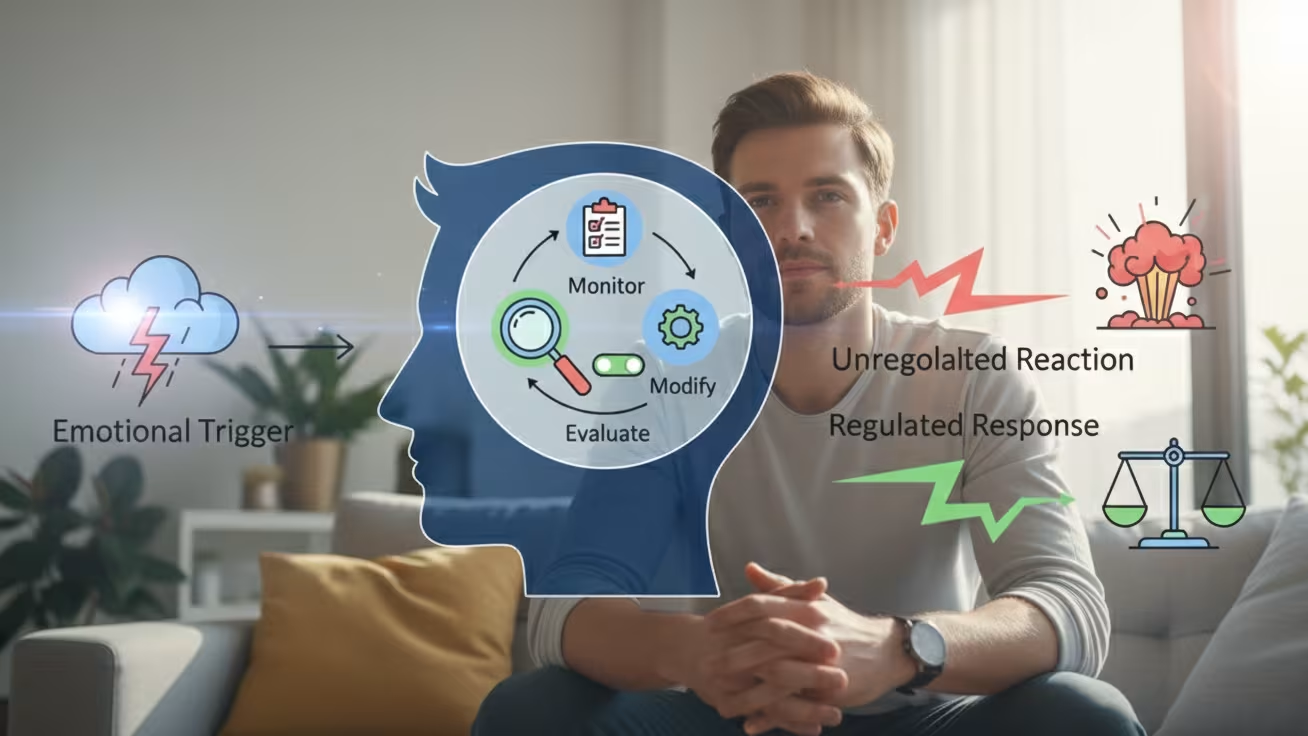
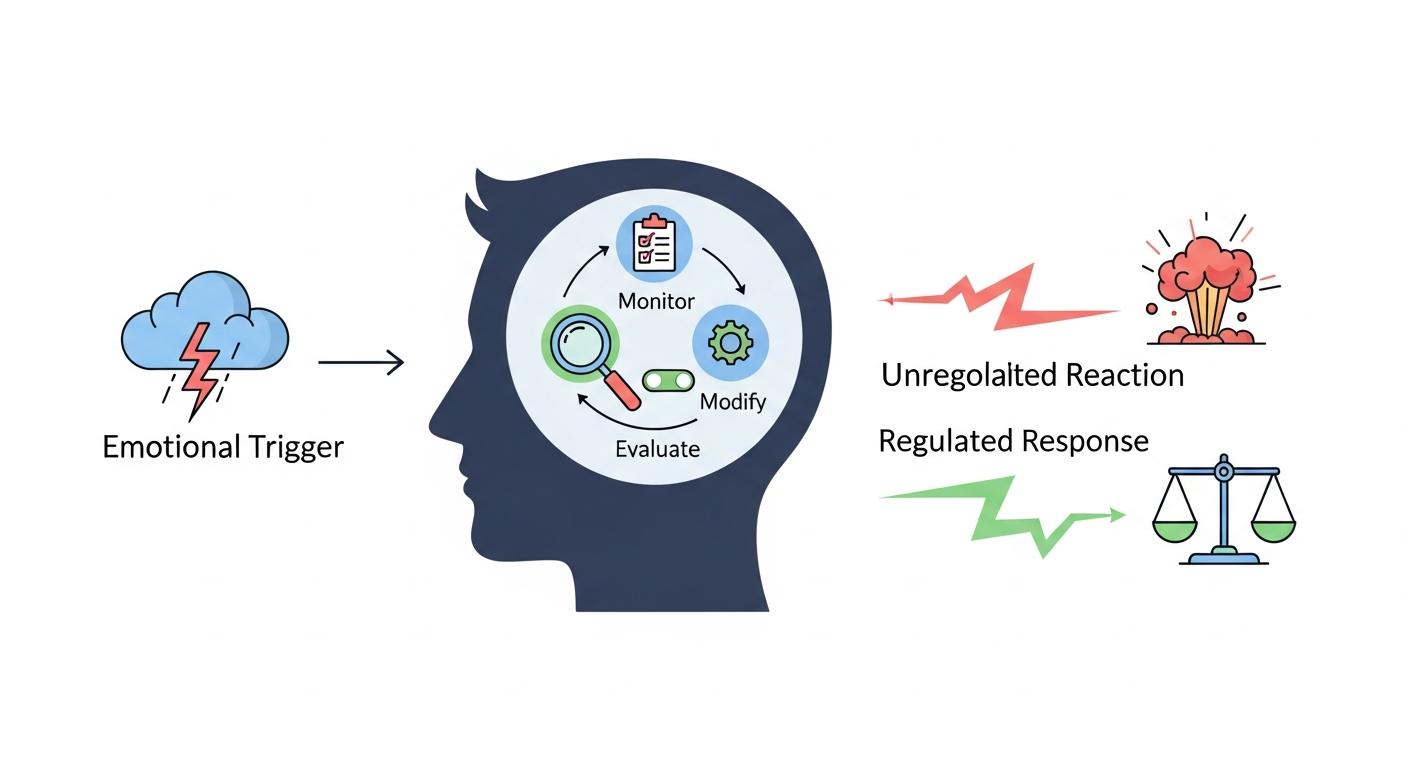 Emotional regulation is a process of monitoring, evaluating, and modifying our emotional reactions to respond thoughtfully rather than reactively.
Emotional regulation is the process by which individuals influence which emotions they have, when they have them, and how they experience and express these feelings. It is a complex set of conscious and unconscious processes that allows us to manage and respond to an emotional experience. This skill is not about suppressing feelings but rather about navigating them in a healthy and adaptive manner. Effective emotion regulation involves monitoring, evaluating, and modifying emotional reactions to accomplish one's goals.
The importance of this ability cannot be overstated. Strong emotion regulation skills are a cornerstone of mental health, social success, and overall well-being. On a personal level, they help mitigate the impact of stress, reduce the likelihood of developing conditions like anxiety and depression, and foster a sense of inner calm and control. Socially, the ability to manage one’s emotional response is critical for building and maintaining healthy relationships, resolving conflicts constructively, and communicating effectively. In professional settings, it contributes to better decision-making, leadership, and resilience in the face of workplace challenges. Ultimately, mastering emotional regulation empowers individuals to respond to life's situations thoughtfully rather than reactively, leading to more intentional and fulfilling lives.
Emotional regulation tips?
 A toolkit of practical strategies can help you build your emotional regulation skills over time.
Improving emotional regulation is an active process that involves developing a toolkit of strategies. Here are some practical tips:
- Identify and Label Your Emotions: The first step is awareness. Pause and ask, "What am I feeling right now?" Naming the emotion (e.g., "I feel frustrated," not "I feel bad") can reduce its intensity.
- Practice Mindfulness: Engage in mindfulness exercises like focused breathing or a body scan. This practice trains your brain to observe emotions without immediate judgment or reaction, creating a crucial space between feeling and action.
- Use Cognitive Reappraisal: Challenge and reframe your thoughts about a situation. Ask if there's another way to view the event. Changing your interpretation can directly alter your emotional response.
- Engage in Problem-Solving: If an emotion is signaling a real problem, focus on finding a solution. Breaking down a challenge into smaller, manageable steps can reduce feelings of being overwhelmed.
- Practice Self-Soothing: When distressed, engage your five senses to calm your nervous system. Listen to calming music, light a scented candle, wrap yourself in a soft blanket, or sip a warm, non-caffeinated beverage.
- Prioritize Lifestyle Factors: Ensure you are getting adequate sleep, regular physical activity, and balanced nutrition. These physiological foundations are essential for the brain's capacity to manage stress and regulate emotions.
- Develop Distress Tolerance: Learn to sit with uncomfortable emotions without needing to immediately escape them. This builds resilience and teaches you that you can survive difficult feelings.
Introduction: The Quest for Inner Calm
The Universal Challenge of Emotional Swings
Life is a symphony of experiences, each accompanied by its own emotional score. From the exhilarating highs of joy and success to the profound lows of grief and disappointment, emotions are the vibrant threads that color our human existence. However, this same vibrancy can often feel overwhelming. The sudden surge of anger in traffic, the persistent hum of anxiety before a presentation, or the heavy blanket of sadness after a setback are universal challenges. Navigating these emotional swings without being capsized is a fundamental human endeavor. The feeling of being at the mercy of one's emotions—of being reactive rather than responsive—can lead to significant stress and a sense of being out of control. This internal turbulence disrupts our peace, strains our relationships, and can hinder our personal and professional growth. The quest for inner calm, therefore, is not about eliminating emotions but about learning to skillfully conduct the orchestra of our inner world.
What is Emotional Regulation and Why Does It Matter?
At the heart of this quest lies the concept of emotional regulation. Formally, it refers to the processes we use to manage and control our emotional responses. This includes influencing which emotions we have, when we have them, and how we experience and express them. It is a form of Self-regulation specifically focused on our affective states. It’s the critical capacity that allows us to pause between a trigger and our behavior, enabling a thoughtful response instead of an impulsive reaction.
The importance of this skill extends into every facet of life. Effective emotion regulation is a strong predictor of mental health, protecting against conditions such as anxiety and depression. It fosters resilience, enabling us to bounce back from adversity. Socially, it is the bedrock of empathy, effective communication, and stable relationships. Professionally, it supports clear decision-making under pressure and effective leadership. In essence, mastering emotional regulation means moving from being a passive passenger on an emotional rollercoaster to becoming a skilled pilot of your own inner state.
What You'll Learn: Your Practical Path to Inner Calm
This guide is designed to be a practical roadmap to cultivating that inner calm. We will move beyond abstract concepts to provide concrete, science-backed tools and strategies. We will begin by decoding the purpose of our emotions and building the foundational skill of self-awareness. From there, we will explore the spectrum of healthy and unhealthy regulation strategies, identifying common pitfalls like suppression and highlighting adaptive approaches like cognitive reappraisal and mindfulness. You will be equipped with a practical toolkit of cognitive and behavioral techniques designed for the down-regulation of intense feelings. Finally, we will discuss how to integrate these skills into your daily life, the critical role of lifestyle factors like sleep, and when it might be necessary to seek professional support for persistent emotion dysregulation. This journey is about empowering you with the knowledge and skills to navigate your emotional world with greater confidence, flexibility, and peace.
Decoding Your Emotional World: Foundations of Self-Awareness
Beyond Good and Bad: Understanding the Purpose of Emotions
Before one can regulate emotions, one must first understand them. A common mistake is to categorize emotions into a simple binary of "good" (e.g., happiness, joy) and "bad" (e.g., anger, sadness, fear). This view is not only inaccurate but also counterproductive. Emotions are not arbitrary states; they are sophisticated data points generated by our nervous system. Each emotion serves an evolutionary purpose, providing vital information about our environment and our internal state.
Fear, for example, signals a potential threat, preparing our body for fight or flight. Anger indicates that a boundary has been crossed or an injustice has occurred, motivating us to take corrective action. Sadness signals loss, prompting us to seek comfort and re-evaluate our priorities. Even emotions we find uncomfortable are messengers. The goal of emotional regulation is not to silence these messengers but to learn to listen to their messages without letting them dictate our every action. By viewing emotions as information rather than as enemies, we can begin to work with them constructively, using the data they provide to navigate our situations more effectively.
Cultivating Self-Awareness: The Cornerstone of Control
Self-awareness is the bedrock upon which all effective emotion regulation strategies are built. You cannot manage what you do not perceive. Cultivating self-awareness involves developing the ability to turn your attention inward and accurately identify your emotional and physiological states in real-time. This is more than just a vague sense of feeling "off"; it's the capacity to distinguish between frustration and disappointment, or between anxiety and excitement, which can have very similar physical signatures.
Practical methods for building this skill include regular check-ins throughout the day. Set a reminder to pause and ask yourself: "What am I feeling physically? Where do I feel it in my body? What emotion might this sensation be connected to?" Journaling is another powerful tool. Writing down your feelings without judgment helps to externalize and clarify them, revealing patterns in your emotional responses to specific triggers or situations. The consistent practice of noticing and naming your emotions builds a crucial mental muscle, creating the necessary foundation for applying more advanced regulation techniques.
The Power of Emotional Intelligence: Understanding and Managing Feelings
Self-awareness is a key component of a broader concept: emotional intelligence (EI). EI is the ability to perceive, use, understand, manage, and handle emotions. It encompasses not only understanding your own feelings but also recognizing and influencing the emotions of others. High emotional intelligence allows an individual to navigate social complexities, make sound personal decisions, and manage their behavior to achieve positive outcomes.
In the context of personal regulation, emotional intelligence is the bridge between awareness and action. It involves understanding what triggered an emotion and predicting its likely trajectory. For instance, a person with high EI recognizes that their irritation is rising due to a lack of sleep and can then choose a proactive behavior, such as taking a short break, rather than snapping at a colleague. It is the application of emotional knowledge. By strengthening your emotional intelligence, you enhance your ability to not only identify your emotional response but also to manage it in a way that aligns with your long-term goals and values, turning raw feeling into wise action.
Navigating the Spectrum: Healthy vs. Unhealthy Regulation Strategies
The Pitfalls of Emotional Dysregulation
Emotional Dysregulation occurs when an individual’s emotional response is not within the conventionally accepted range of intensity or duration for a given situation. It represents a difficulty or inability to manage emotional experiences effectively. This is not simply having a "bad day"; it is a persistent pattern of emotional volatility that can significantly impair daily functioning, strain relationships, and damage one's sense of self.
The consequences of chronic emotion dysregulation are severe. It is a transdiagnostic feature across many mental health conditions, including borderline personality disorder, bipolar disorder, anxiety disorders, and depression. Unhealthy regulation strategies often fuel this dysregulation. Common maladaptive techniques include:
- Suppression: Consciously trying to push away or ignore unwanted thoughts and feelings. While it might offer temporary relief, research shows that suppression often leads to a rebound effect, where the emotion returns with even greater intensity. It also requires significant cognitive effort, depleting mental resources needed for other tasks.
- Avoidance: Actively staying away from people, places, or situations that might trigger uncomfortable emotions. This shrinks an individual's world and prevents them from learning that they can cope with distress.
- Rumination: Compulsively focusing on and replaying distressing thoughts or events, which amplifies and prolongs negative emotional states.
- Self-Medication: Using substances like alcohol or drugs to numb or escape from painful emotions, a behavior that provides short-term relief at the cost of long-term health and dependency issues.
These strategies are often reflexive attempts to deal with overwhelming feelings, but they ultimately exacerbate the problem, creating a vicious cycle of intense emotion and ineffective coping.
Embracing Adaptive Strategies: The Path to Well-being
In contrast to maladaptive strategies, adaptive emotion regulation strategies are those that help individuals manage their feelings in a healthy, constructive way that supports long-term well-being. These approaches do not aim to eliminate emotions but to modulate them effectively. The goal is to cultivate flexibility in one's emotional and behavioral repertoire.
Key adaptive strategies include:
- Cognitive Reappraisal: This is a cornerstone of healthy regulation. It involves changing the way one thinks about a situation to alter its emotional impact. Instead of viewing a job rejection as a personal failure (appraisal), one might reframe it as an opportunity to find a better-fit role (reappraisal). This cognitive shift can significantly reduce the intensity of negative feelings.
- Acceptance: This strategy involves acknowledging and allowing emotions to exist without judging or trying to change them. It is a core component of mindfulness and stands in direct opposition to suppression. Acceptance reduces the secondary suffering that comes from fighting with our feelings.
- Problem-Solving: When an emotion is a valid signal of a tangible problem, engaging in active problem-solving is a highly adaptive response. This involves identifying the issue, brainstorming solutions, and taking steps to address it, thereby resolving the source of the emotional distress.
- Seeking Support: Reaching out to trusted friends, family, or professionals to share feelings and gain perspective is a powerful regulation tool. Social connection can co-regulate our nervous systems and provide comfort and practical advice.
Embracing these adaptive strategies shifts the focus from fighting emotions to working with them, paving the way for greater emotional stability and resilience.
Your Practical Toolkit for Inner Calm: Core Regulation Techniques
The Power of Presence: Mindfulness for Emotional Regulation
Mindfulness is the practice of paying attention to the present moment—to thoughts, feelings, bodily sensations, and the surrounding environment—on purpose and non-judgmentally. It is a powerful tool for emotional regulation because it creates a crucial gap between an emotional trigger and our reaction. By cultivating present-moment awareness, we learn to observe our emotions as they arise without immediately getting swept away by them.
Practicing mindfulness can be as simple as focusing on the sensation of your breath entering and leaving your body for a few minutes. When a thought or emotion appears, the practice is to simply note it ("Ah, there is anxiety") and gently guide your attention back to the breath. This is not about emptying the mind but about changing your relationship with its contents. Regular practice strengthens neural pathways associated with self-awareness and attention control, regions often linked to the prefrontal cortex. This helps to weaken the automatic, reactive patterns of the brain's emotional centers. Over time, mindfulness builds the capacity to experience an emotional response without being defined by it, allowing for a more measured and intentional behavior.
Rewiring Your Thoughts: Cognitive Strategies
Our thoughts are not passive observers of our world; they are active creators of our emotional reality. Cognitive strategies for emotion regulation are based on this principle: by changing our thoughts, we can change our feelings. The most well-researched of these is cognitive reappraisal.
Cognitive reappraisal is the art of reframing a situation to change its emotional meaning. This is an antecedent-focused strategy, meaning it intervenes before an emotional response has fully taken hold. To practice it, consider the following steps:
- Identify the Triggering Thought: What specific interpretation of the event is causing the distress? For example, if a friend cancels plans, the thought might be, "They don't value my friendship."
- Challenge the Thought: Look for evidence that contradicts this initial interpretation. Is it objectively true? Are there alternative explanations? Perhaps the friend had a family emergency or is feeling unwell.
- Generate an Alternative Frame: Create a more balanced or helpful interpretation. "It's disappointing they cancelled, but it likely has nothing to do with me personally. I can use this evening to relax."
This is not about forced positivity but about cultivating cognitive flexibility. It involves actively engaging the prefrontal cortex, the brain's executive center, to override more primitive, automatic emotional reactions. Consistently practicing reappraisal can rewire your brain to default to more balanced interpretations, fundamentally reducing the frequency and intensity of distressing emotions.
Behavioral Techniques: Taking Action for Emotional Change
While cognitive strategies work on the mind, behavioral techniques focus on taking action to shift your emotional state. Our bodies and actions have a profound impact on our feelings.
- Behavioral Activation: This technique is particularly effective for combating the lethargy and low mood associated with depression. It involves scheduling and engaging in activities that are pleasurable or provide a sense of accomplishment, even if you don't feel like it. The action itself often precedes motivation and can create an upward spiral of positive emotion and energy.
- Relaxation Techniques: Actions that calm the body's physiological response to stress can directly lead to emotional down-regulation. Techniques like progressive muscle relaxation (tensing and then releasing different muscle groups) or diaphragmatic (deep belly) breathing activate the parasympathetic nervous system, our body's "rest and digest" mode, which counteracts the "fight or flight" response.
- Opposite Action: This skill, drawn from Dialectical Behavior Therapy (DBT), involves acting opposite to what your emotion is telling you to do when the emotion is unjustified or unhelpful. If you feel the urge to isolate when sad, opposite action would be to call a friend. If you feel the urge to avoid something out of fear, opposite action would be to approach it in a safe, gradual way. This breaks the link between feeling and maladaptive behavior, teaching you that you are in control.
Cultivating Distress Tolerance: Navigating Intense Emotions When You Can't Regulate Immediately
There are times when an emotional storm is too powerful to be regulated in the moment. In these situations, the primary goal shifts from changing the emotion to simply surviving it without making the situation worse. This is the skill of Distress Tolerance. It's about accepting reality as it is and finding ways to get through a crisis.
Effective distress tolerance techniques, often grouped under the acronym "ACCEPTS," include:
- Activities: Engage in a healthy activity that requires concentration, distracting your mind from the emotional pain (e.g., doing a puzzle, exercising, cleaning).
- Contributing: Shift your focus outward by doing something for someone else. This can be as simple as sending a supportive text or volunteering.
- Comparisons: Put your situation in perspective by comparing it to a time you felt worse or by thinking of others who are less fortunate. This should be done to foster gratitude, not to invalidate your feelings.
- Emotions: Generate a different, competing emotion. Watch a funny movie or listen to uplifting music.
- Pushing Away: Temporarily block the distressing thoughts or situation from your mind. Imagine putting them in a box and setting it on a shelf to deal with later.
- Thoughts: Force your mind to think about something else entirely, like counting floor tiles or reciting song lyrics.
- Sensations: Use intense physical sensations to ground you in the present. Hold an ice cube in your hand, take a cold shower, or bite into a lemon. The strong sensation can break the cycle of overwhelming emotion.
Distress tolerance is a survival skill, not a long-term solution, but it is an essential part of any comprehensive emotional regulation toolkit.
Integrating Emotional Regulation into Your Daily Life
Building Consistent Habits for Lasting Change
Mastering emotional regulation is not the result of a single insight or a one-time effort; it is the product of consistent practice. Like building physical strength, developing emotional resilience requires regular exercise. The key is to integrate small, manageable habits into your daily routine. This requires self-discipline, but the payoff is immense.
Start by choosing one or two strategies to focus on at a time. For instance, you could commit to a five-minute mindfulness breathing exercise every morning. Or, you could practice identifying and labeling your emotions in a journal each evening. The goal is to make these practices automatic. As you become more proficient, you can introduce more complex skills like cognitive reappraisal.
Crucially, this process demands flexibility. There is no one-size-fits-all approach. Some days, a cognitive strategy might be most effective; on other days, a behavioral one will be better suited. The aim is to build a diverse toolkit and develop the wisdom to know which tool to use in a given situation. Consistency, combined with the flexibility to adapt your approach, is what transforms these techniques from intellectual concepts into deeply ingrained skills for lasting change.
The Foundational Role of Lifestyle in Emotional Stability
No amount of cognitive or behavioral strategy can fully compensate for a depleted physiological foundation. Our capacity for Self-regulation is deeply intertwined with our physical health. Three pillars stand out as particularly crucial:
- Sleep: Quality sleep is arguably the most critical factor for emotional stability. During sleep, especially deep sleep, the brain consolidates memories and clears metabolic waste. The prefrontal cortex, which governs our executive functions and emotional control, is highly sensitive to sleep deprivation. When we are sleep-deprived, the connection between the PFC and the amygdala (the brain's emotion center) is weakened, leading to heightened emotional reactivity, poor impulse control, and an increased negative bias. Prioritizing 7-9 hours of quality sleep per night is non-negotiable for anyone serious about improving their emotion regulation.
- Nutrition: The brain requires a steady supply of nutrients to function optimally. A diet high in processed foods, sugar, and unhealthy fats can contribute to inflammation and mood instability. Conversely, a balanced diet rich in whole foods, omega-3 fatty acids, vitamins, and minerals supports neurotransmitter production and overall brain health, enhancing our ability to manage stress.
- Exercise: Regular physical activity is a potent tool for down-regulation. It reduces stress hormones like cortisol, increases feel-good endorphins, and improves sleep quality. Exercise also promotes neurogenesis and enhances the function of the prefrontal cortex. Even a brisk 20-minute walk can have a significant and immediate positive effect on mood and regulatory capacity.
Cultivating Self-Compassion and Positive Affect
The journey of mastering emotional regulation is often challenging, with inevitable setbacks. In these moments, self-criticism can be a significant obstacle, amplifying feelings of failure and shame. This is where self-compassion becomes an essential skill. Self-compassion involves treating yourself with the same kindness, care, and understanding you would offer a good friend who is struggling. It means acknowledging your pain without judgment and recognizing that imperfection is a part of the shared human experience. Practicing self-compassion reduces the secondary suffering that comes from berating yourself for having difficult emotions.
Furthermore, it is important not just to manage negative emotions but to actively cultivate positive ones. This concept, known as increasing positive affect, is a proactive regulation strategy. Engaging in hobbies, spending time in nature, practicing gratitude, and savoring small daily pleasures can build a reservoir of positive emotional resources. Research shows that positive emotions broaden our mindset, enhance creativity, and build psychological resilience, making us better equipped to handle life's challenges when they arise.
When to Seek Support: Recognizing Deeper Challenges
Signs You Might Need Professional Guidance for Emotion Dysregulation
While the strategies outlined in this guide can be profoundly helpful, self-help has its limits. For some individuals, emotion dysregulation is a severe and persistent problem that significantly interferes with their ability to live a fulfilling life. It is crucial to recognize the signs that professional guidance may be needed. These can include:
- Intensity and Duration: Your emotional reactions are consistently disproportionate to the triggering event, and the feelings last for extended periods.
- Impaired Functioning: Your emotional struggles are negatively impacting your work, school performance, or important relationships. You find yourself avoiding social situations or unable to meet your responsibilities.
- Reliance on Maladaptive Coping: You frequently turn to harmful behaviors such as substance abuse, self-harm, disordered eating, or reckless behavior to manage your emotions.
- Chronic Suicidal Thoughts: You experience persistent thoughts of ending your life or feel that your emotional pain is unbearable.
- Symptoms of Mental Health Conditions: Your emotion dysregulation is accompanied by other symptoms of anxiety, depression, trauma, or other mood disorders. For example, persistent sadness, loss of interest, excessive worry, or panic attacks.
If you recognize these patterns in yourself, seeking help from a qualified mental health professional is a sign of strength and an important step toward healing.
The Journey is Ongoing: Embracing Imperfection and Continuous Growth
Mastering emotional regulation is not a final destination one arrives at but a lifelong journey of practice and refinement. There will be days when you skillfully navigate a challenging emotional response and other days when you fall back into old, reactive patterns. This is normal and expected. The goal is not perfection but progress.
Embracing this journey means adopting a mindset of continuous growth. Each emotional challenge becomes an opportunity to practice your skills, learn more about your triggers, and refine your approach. It involves celebrating small victories and, most importantly, treating setbacks with self-compassion rather than judgment. By viewing emotional regulation as an ongoing practice, you relieve yourself of the pressure to be perfect and open yourself up to a more patient, curious, and resilient relationship with your inner world. This long-term perspective is the key to sustainable growth and a deeper, more authentic sense of inner calm.
Conclusion: Your Path to a Calmer, More Resilient Self
Recap of Key Principles for Emotional Mastery
The path to mastering your inner world is paved with awareness, skill, and consistent practice. We have explored the fundamental principles that underpin this transformative journey. First, we recognized that emotions are not enemies to be vanquished but vital messengers to be understood. The foundation of control is self-awareness—the ability to accurately identify and label your feelings. We differentiated between maladaptive strategies like suppression, which often backfire, and adaptive strategies like cognitive reappraisal and mindfulness, which build long-term resilience. You have been equipped with a practical toolkit containing cognitive, behavioral, and distress tolerance techniques to manage your emotional response effectively. Finally, we emphasized that true emotional mastery is a holistic endeavor, built upon the bedrock of a healthy lifestyle—especially quality sleep—and nurtured by self-compassion and the proactive cultivation of positive emotions.
Empowering Your Journey to Cultivate Inner Calm
You now hold a map and a compass for navigating your emotional landscape. The journey ahead is about applying this knowledge—integrating these skills into the fabric of your daily life. It is about choosing to pause before reacting, to question a distressing thought, to breathe through discomfort, and to prioritize your physical well-being as a prerequisite for mental strength. This is not a quest for an emotionless existence, but for a richer, more intentional one, where you are the conductor of your inner symphony, not a victim of its discordant notes. By committing to this ongoing practice, you empower yourself to move through the world with greater flexibility, resilience, and a profound sense of inner calm. The path to emotional stability is not about waiting for the storm to pass; it is about learning to dance in the rain. Your journey starts now.