Introduction: Unlocking Your Potential for Consistent Action
The journey toward overcoming Procrastination is not about finding a single magic bullet but about building a reliable system for consistent action. We've all been there: staring at a blank page, delaying a difficult conversation, or putting off a crucial project until the last possible moment. The resulting stress and anxiety are potent reminders of the gap between our intentions and our actions. This article moves beyond simplistic life hacks to offer a comprehensive blueprint—a structured, sustainable approach to dismantle the habits of delay and unlock your true productive potential. We will explore the "why" behind your procrastination, rewire your mindset, and equip you with a strategic toolkit to take control of your time and achieve your goals.
The Universal Struggle: Why Procrastination Holds Us Back
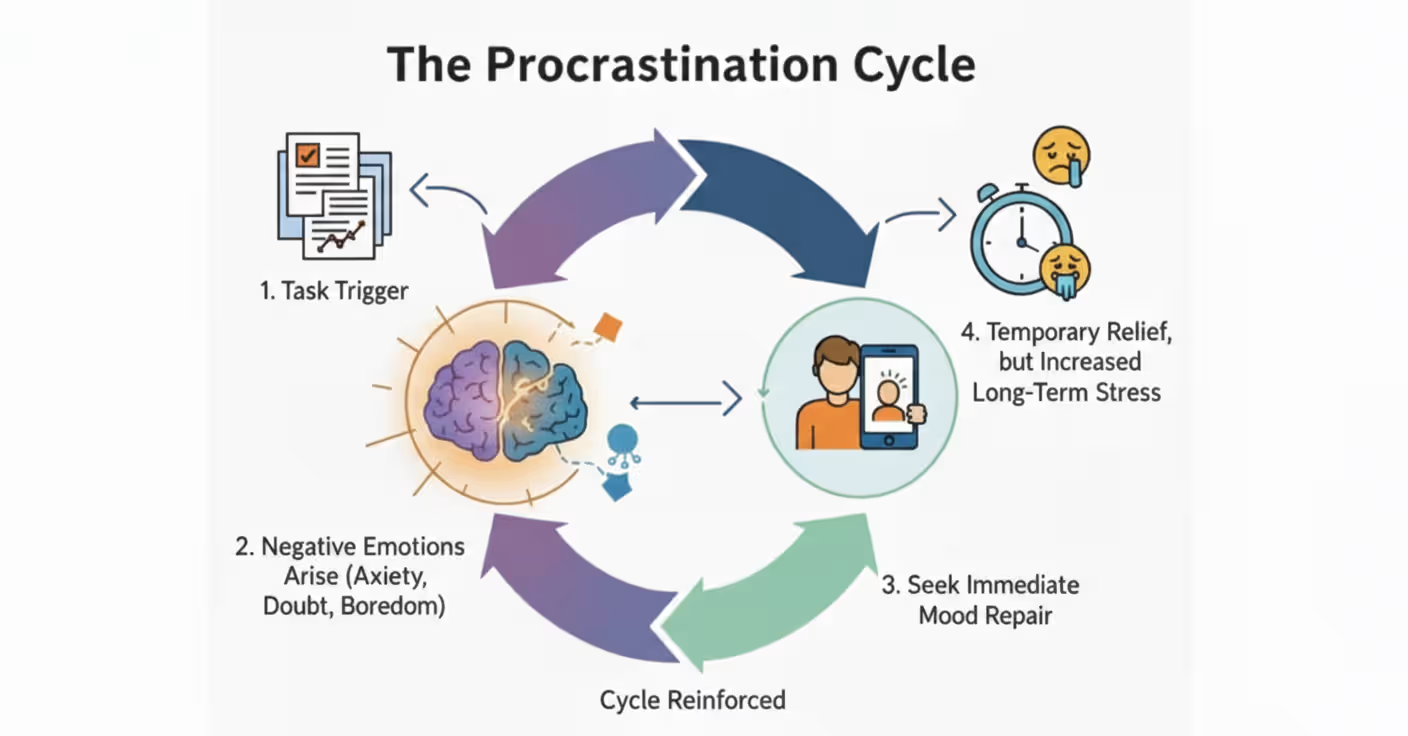
 Procrastination is often an emotional regulation cycle where the brain's emotional core (limbic system) overrides rational planning to avoid uncomfortable feelings.
Procrastination is not a sign of laziness or a character flaw; it is a complex and deeply human response. At its core, it's often an emotional regulation issue, not a time management problem. As psychologist Dr. Tim Pychyl notes, procrastination is a strategy to cope with challenging emotions and moods induced by certain tasks—boredom, anxiety, self-doubt, or resentment. When faced with these feelings, the brain's limbic system (our emotional core) seeks immediate relief, overriding the rational planning of the prefrontal cortex. This "mood repair"—choosing a pleasant distraction over an uncomfortable task—creates a self-perpetuating cycle that reinforces the very behavior we wish to stop, leading to significant negative consequences for our careers, academic success, and overall well-being.
The Promise of a Blueprint: Moving Beyond Quick Fixes to Lasting Change
The internet is flooded with quick fixes for procrastination, yet many people remain stuck in the same cycle. A new app or a trendy productivity hack might provide a temporary jolt of motivation, but they rarely address the underlying causes. A blueprint, in contrast, provides an integrated, multi-layered plan. It acknowledges that sustainable change is built on a foundation of self-awareness, psychological resilience, strategic planning, and consistent practice. This approach focuses on rewiring the thought patterns that fuel delay, replacing them with a robust system that supports action even when motivation is low. The goal is not to eliminate procrastination entirely—an unrealistic feat—but to reduce its frequency and impact, empowering you to move forward with confidence.
What This Blueprint Offers: A Holistic Path to Sustainable Productivity
This blueprint will guide you through a complete, multi-stage process for reclaiming your focus and drive. It is a holistic path that integrates mindset shifts with practical action.
- Section 1: Decoding Procrastination – We will delve into the psychological reasons for delay, helping you identify your personal triggers.
- Section 2: Building a Resilient Mindset – You will learn to challenge perfectionism, silence your internal critic, and cultivate self-compassion.
- Section 3: Strategic Planning – We will cover how to turn overwhelming goals into clear, manageable action plans using proven frameworks.
- Section 4: Activating Your Blueprint – You will discover powerful techniques to overcome inertia and initiate action consistently.
- Section 5: Sustaining Momentum – We will explore how to build lasting habits, manage your energy, and learn from inevitable setbacks.
- Section 6: Seeking Support – You will learn to identify when professional guidance can provide the necessary support to overcome deeper challenges.
Section 1: Decoding Procrastination – Understanding Your Personal "Why"
Before any effective strategy for overcoming procrastination can be implemented, it is essential to understand what it is and the specific reasons it manifests in your life. This section delves into the reality of procrastination, explores its deep psychological roots, and guides you in identifying the personal triggers that activate your patterns of delay.
What Procrastination Truly Is (and Isn't): Separating Myth from Reality
Procrastination is often mislabeled as laziness, but the two are fundamentally different. Laziness is characterized by apathy and an unwillingness to exert effort. Procrastination, however, involves actively choosing to do something else despite knowing you should be working on a specific task and anticipating negative consequences. It is, as researchers describe, a complex failure of self-regulation. Procrastinators often genuinely want to complete their tasks but are emotionally hijacked, unable to bridge the gap between their intention and the necessary action.
Another pervasive myth is that procrastinators work better under pressure. While some may produce acceptable results at the last minute, this is usually accompanied by immense stress, poor mental health outcomes, and a higher likelihood of errors. The perceived clarity under pressure is often just the result of having no other options left, a state that is neither sustainable nor conducive to high-quality work.
The Deep Psychological Roots: Common Reasons for Delay
The decision to procrastinate is rarely a simple one. It is often driven by a host of underlying psychological reasons and deeply ingrained fears. Identifying these core drivers is crucial for developing targeted solutions.
- Fear of Failure or Criticism: Perfectionism is a primary cause. The pressure to produce flawless work can be so paralyzing that it becomes easier to not start at all than to risk creating something imperfect. This fear is rooted in the belief that one's self-worth is tied to performance.
- Fear of Success: While less intuitive, the fear of success can also lead to delay. Success can bring new responsibilities, higher expectations, and increased visibility, which may feel threatening.
- Task Aversion: Sometimes, we procrastinate simply because the task is boring, unpleasant, or unstructured. The brain seeks to avoid the discomfort associated with such tasks, opting for a more immediately gratifying activity.
- Decision Paralysis: When faced with too many choices or an unclear path forward, the overwhelm can lead to a complete shutdown, making it impossible to begin.
Identifying Your Personal Procrastination Triggers and Habits
Overcoming your procrastination habit requires a personalized approach, which begins with self-observation. The goal is to become a detective of your own behavior, identifying the specific cues that trigger your impulse to delay. These triggers can be emotional, environmental, or situational.
Start by noticing when you are most likely to procrastinate. Is it when you feel anxious or overwhelmed? Is it when you encounter a specific type of task, like writing projects that begin with intimidating blank spaces? Or does it happen at a certain time of day? Keep a simple log for a week on a piece of paper or in a notes app. When you find yourself procrastinating, jot down:
- The task you are avoiding.
- What you are doing instead.
- Your emotional state at that moment (e.g., bored, anxious, confused).
- The thoughts running through your head ("I can't do this perfectly," or "I'll do this later").
This simple act of data collection provides invaluable insight into your unique procrastination patterns, forming the diagnostic foundation of your blueprint.
Section 2: Building a Resilient Mindset – The Foundation for Change
Strategies and techniques are only effective if they are built upon a solid mental foundation. Chronic procrastination is often sustained by unhelpful thought patterns like perfectionism and harsh self-criticism. Shifting this internal landscape is essential for long-term success. This section focuses on cultivating a mindset that supports action, resilience, and intrinsic motivation.
Shifting from Perfectionism to Progress: Embracing "Good Enough"
Perfectionism creates an impossible standard where the only acceptable outcome is flawless. This "all-or-nothing" thinking, often stemming from a rigid attitude, makes starting a task incredibly daunting. The antidote to this paralysis is to consciously shift your focus from perfection to progress. Embrace the concept of "good enough."
This does not mean producing shoddy work. It means recognizing that a completed project that is 80% perfect is infinitely more valuable than an unfinished one that exists only as a perfect idea in your mind. To put this into practice, redefine what "done" looks like for a given task. Set realistic goals that prioritize completion over flawlessness. Give yourself permission to produce a rough first draft of your essay or a basic outline for your presentation, knowing that you can refine it later. This is a crucial component of self development.
Cultivating Self-Compassion: Acknowledging Struggles Without Self-Sabotage
The cycle of procrastination is often fueled by a harsh internal critic. When you procrastinate, you might berate yourself for being lazy or undisciplined. Research from Dr. Kristin Neff shows that this negative self-talk increases shame and stress, making it even harder to start. This self-sabotaging loop can only be broken with self-compassion.
Self-compassion involves treating yourself with the same kindness you would offer a struggling friend. It means acknowledging that procrastination is a common human challenge, not a personal failing. When you catch yourself delaying, instead of engaging in self-criticism, try a compassionate pause. Acknowledge the discomfort you are feeling without judgment ("This is hard, and I'm feeling anxious about it"). Forgive yourself for the lapse and gently redirect your focus back to the next small step.
Connecting Tasks to Your Values: Igniting Intrinsic Motivation
Motivation is a key component in the fight against procrastination, but relying solely on fleeting feelings of inspiration is an unreliable strategy. A more robust source of fuel is intrinsic motivation—the drive that comes from within. This can be cultivated by connecting your daily tasks, even the mundane ones, to your deeper, core values.
Take time to identify what truly matters to you. Is it self development, creativity, financial security, or contributing to your community? Once you have clarity on your values, you can begin to frame your tasks in that context. For example, instead of viewing a challenging set of problem sets as a tedious chore, you might see it as an opportunity to sharpen your analytical skills (personal growth). Instead of seeing your Art History research paper as an obligation, reframe it as a chance to explore your creativity and contribute a unique perspective (value: intellectual curiosity). This reframing injects meaning into your work, making it far more compelling to start.
Section 3: Strategic Planning – Blueprinting Your Path to Action
With a resilient mindset in place, the next stage is to create a clear and actionable plan. Procrastination thrives in ambiguity and overwhelm. Strategic planning systematically eliminates these conditions by translating abstract goals into concrete, manageable steps. This section provides the architectural framework for your blueprint, focusing on goal clarification, task deconstruction, and realistic time management.
Clarifying Your Goals: The SMART Framework for Success
Vague goals are a primary catalyst for procrastination. An objective like "get in shape" or "work on my report" is too ambiguous to be actionable. To counter this, use the SMART goals framework to define your objectives with precision. SMART stands for:
- Specific: Clearly define what you want to accomplish. Instead of "clean the house," specify "clean the kitchen by wiping down counters, washing dishes, and sweeping the floor."
- Measurable: Define how you will track progress. "Write for one hour" is measurable; "work on my novel" is not. A visual goal-setting chart can be an excellent tool for tracking these measurable steps.
- Achievable: Ensure the goal is realistic. Setting goals that are too ambitious can lead to discouragement.
- Relevant: The goal should align with your broader objectives and values.
- Time-bound: Set a specific deadline or timeline. "Finish the first draft by Friday at 5 PM" creates a clear target.
Breaking Down Overwhelming Tasks: Making the Impassable Passable
One of the most powerful anti-procrastination strategies is task decomposition. Large, complex projects often trigger overwhelm, which is a direct pathway to avoidance. The solution is to apply basic project management principles and break these "macro-tasks" down into their smallest possible components, or "micro-tasks."
Take a large project, such as "prepare a presentation," and dissect it into a checklist of discrete actions: "research topic A," "find three supporting statistics," "create an outline," "design slide 1," "write speaker notes for slide 1," and so on. Each micro-task should be so small that it feels almost trivial. This process serves two critical functions. First, it provides a clear roadmap, eliminating the "I don't know where to start" paralysis. Second, completing each small step provides a hit of dopamine, building momentum and motivation to continue.
The Art of Realistic Scheduling and Time Management
Effective time management is not about cramming every minute with productive activity. For a procrastinator, a rigid schedule can feel restrictive and trigger rebellion. Realistic scheduling involves creating a structure that provides guidance without inducing anxiety.
- Time Blocking: Instead of a simple to-do list, assign specific blocks of time in your calendar for your most important tasks. This commits you to working on a specific item for a defined period of time, reducing the cognitive load of deciding what to do next.
- Prioritization: Not all tasks are created equal. Use a system like the Eisenhower Matrix (Urgent/Important) to focus on what truly matters.
- Buffer Time: Acknowledge that tasks often take longer than expected. Build buffer time into your schedule to accommodate unexpected delays and prevent a single setback from derailing your whole day.
- Confront the "Plenty of Time" Myth: One of the most common lies we tell ourselves is, "I have plenty of time." Realistic scheduling forces you to confront the reality of how much time you actually have, making it harder to justify delays.
Section 4: Activating Your Blueprint – Proven Techniques for Overcoming Inertia
A well-designed plan is useless if it is never put into motion. The greatest challenge for many procrastinators is overcoming the initial inertia—that powerful resistance to starting. This section introduces a toolkit of proven, practical techniques designed to break through that resistance, build momentum, and create an environment that facilitates action.
The "2-Minute Rule": Starting Small to Build Momentum
Popularized by author James Clear in his book Atomic Habits, the 2-minute rule is a profoundly effective technique for overcoming the friction of starting. The rule states: "When you start a new habit, it should take less than two minutes to do." The principle can be applied to any task you are procrastinating on by scaling it down to its simplest two-minute version.
- "Read my course material" becomes "Open my textbook and read one paragraph."
- "Complete my writing projects" becomes "Open the document and write one sentence."
- "Go for a run" becomes "Put on my running shoes."
The goal is not to complete the task, but simply to start it. This tiny act bypasses the brain's resistance network. Often, this is enough to build the momentum needed to continue for a longer period of time.
Leveraging the Pomodoro Technique for Focused Work Sprints
The Pomodoro Technique is a time management method that uses a timer to break down work into focused intervals, traditionally 25 minutes, separated by short breaks. This technique is highly effective for procrastinators because it addresses several key challenges at once.
First, it combats overwhelm. Committing to just a 25-minute sprint feels far more manageable than facing an entire afternoon of undefined work. Second, it creates a gentle sense of urgency. The ticking timer encourages you to stay on task. Third, it institutionalizes breaks, preventing burnout. The structure is simple:
- Choose one task.
- Set a timer for 25 minutes (a "pomodoro").
- Work on the task without interruption until the timer rings.
- Take a short 5-minute break.
- After four pomodoros, take a longer break of 15-30 minutes.
Tackling the Toughest Tasks First: "Eating the Frog" for Early Wins
The "Eat That Frog" technique, inspired by a Mark Twain quote, is based on tackling your most challenging and important task first thing in the morning. This "frog" is the task you are most likely to procrastinate on but also the one that can have the greatest positive impact.
By completing your most difficult task early, you leverage your peak mental energy and willpower. You generate a significant sense of accomplishment that creates positive momentum for the rest of the day. This principle can be integrated with systems like Getting Things Done (GTD) by identifying your "Next Action" for your most important project and making that your "frog" for the day. While it requires initial discipline, consistently "eating the frog" builds resilience and dramatically reduces the stress of having a dreaded task hanging over your head.
Creating a Productive Environment: Optimizing Your Workspace
Your physical and digital environments profoundly impact your ability to focus. A distraction-rich workspace creates constant friction and offers easy escape routes. Optimizing your environment is a form of "choice architecture"—making the desired action easier and the undesired action harder.
- Minimize Digital Distractions: Use productivity software like website blockers to restrict access to distracting sites during work periods. Turn off non-essential notifications on your phone, computer, and even your Apple Watch.
- Organize Your Physical Space: A cluttered desk can lead to a cluttered mind. Keep your workspace tidy and ensure everything you need is within reach.
- Implement Advanced Strategies: For deep-seated anxieties about a task, consider paradoxical intention. This involves deliberately trying to do the task poorly. For example, tell yourself you will write the worst first paragraph imaginable. This lowers the stakes and often short-circuits the perfectionistic anxiety that causes the block. This is one of many effective learning strategies for managing task-related fear.
Section 5: Sustaining Momentum – Maintaining Action and Building Resilience
Overcoming procrastination is not a one-time event; it is an ongoing process of building and maintaining positive habits. The initial burst of motivation from new techniques can fade. True success lies in creating systems that sustain your efforts over the long term, even when faced with setbacks. This section focuses on strategies for accountability, reinforcement, energy management, and learning from failure.
Implementing Accountability Systems: External Support for Internal Drive
Internal motivation is powerful but can be inconsistent. Supplementing it with external accountability can provide the structure needed to stay on track. An accountability system makes you answerable to someone or something outside yourself, increasing the likelihood that you will follow through.
One effective method is to find an accountability partner—a colleague or friend with whom you share your weekly goals. Schedule brief check-ins to report on your progress. Another approach is using technology. Apps designed for goal tracking or platforms that block distracting websites during scheduled work times create an automated form of accountability. For students, leveraging classroom resources or forming study groups can serve the same purpose, creating a supportive network committed to mutual success.
Strategic Self-Rewarding: Reinforcing Positive Habits
Your brain is wired to repeat behaviors that are followed by a reward. You can leverage this to reinforce the habit of taking action. A strategic reward system counteracts the immediate gratification of procrastination by providing a positive consequence for completing tasks.
The rewards should be immediate, enjoyable, and proportional to the effort. After completing a 25-minute Pomodoro technique session, the reward might be five minutes of stretching. After finishing a major project milestone, it could be dedicating time to socializing hours with friends. It is crucial to tie the reward directly to the completion of the task. This forges a positive feedback loop in your brain, training it to associate effort with pleasure and making it easier to start next time.
Managing Energy and Preventing Burnout: The Importance of Self-Care
Sustained productivity is a function of energy management, not just time management. Pushing yourself relentlessly is a direct path to burnout, which inevitably leads to a resurgence of procrastination. Integrating self-care and stress management into your productivity system is a strategic necessity.
Ensure you are prioritizing the fundamentals: adequate sleep, regular physical activity, and nutritious food. These form the biological foundation for focus and emotional regulation. Build restorative activities into your schedule, such as mindfulness, hobbies, or simply disconnecting from screens for at least a half hour (½ hour) each evening. Recognizing that your energy is a finite resource is key to playing the long game of productivity.
Embracing Discomfort and Learning from Setbacks: The Path of Growth
The journey of overcoming procrastination will include setbacks. There will be days you fall back into old patterns. The crucial difference lies in how you respond. A perfectionistic mindset sees a setback as total failure, triggering guilt and further avoidance. A growth mindset, however, sees a setback as a learning opportunity.
When you procrastinate, approach it with curiosity. Ask yourself: What triggered this? Was I feeling overwhelmed? Was the task unclear? Use the answers to refine your strategies. Perhaps a task needed to be broken down into even smaller steps, or maybe you needed to adjust your schedule. Embracing the discomfort of starting is a skill that strengthens with practice. Each time you act despite feeling resistance, you are building the mental muscle of discipline and resilience.
Section 6: When to Seek Professional Support – Recognizing Deeper Challenges
While the strategies outlined in this blueprint are effective for many, it is important to recognize that for some, procrastination can be a symptom of a deeper issue. Chronic, debilitating procrastination that significantly impairs your work, relationships, or well-being may warrant professional support. This section helps you identify the red flags that suggest it may be time to seek help.
Identifying Red Flags: When Procrastination Becomes Debilitating
Self-help strategies are designed to address common behavioral and psychological patterns. However, if your procrastination is persistent and severe, it may be linked to conditions such as Attention-Deficit/Hyperactivity Disorder (ADHD), anxiety disorders, or depression.
Consider seeking professional guidance if you experience the following:
- Chronic Overwhelm: You consistently feel paralyzed by your to-do list, and no amount of planning helps.
- Significant Negative Consequences: Your procrastination has led to serious repercussions, such as job loss, academic failure, or financial problems.
- Co-occurring Symptoms: Your procrastination is accompanied by other significant symptoms, such as persistent low mood, excessive worry, difficulty concentrating on anything, or physical symptoms of anxiety.
- Failure of Strategies: You have consistently applied the strategies in this blueprint with little to no improvement over an extended period.
In these cases, professional resources can provide a formal diagnosis and tailored treatment plan. Consider reaching out to a mental health professional, a university Writing Center, a study consultant, or a career resource hub for guidance.
Conclusion
Overcoming procrastination is not a battle to be won overnight but a system to be built over time. The journey from chronic delay to sustainable action is paved with self-awareness, strategic planning, and consistent, compassionate effort. This blueprint has provided a comprehensive framework designed to move you beyond the cycle of temporary fixes and toward lasting behavioral change. The core principle is that procrastination is not a character flaw but a complex emotional response that can be understood and managed with the right tools and mindset.
The process begins with decoding your personal "why," understanding the deep-seated fears and habits that trigger your impulse to delay. From there, it requires building a resilient mindset founded on self-compassion and progress over perfection. With this foundation, you can implement strategic plans and action-oriented techniques like the 2-minute rule and the Pomodoro method to build momentum. Finally, sustaining this change involves accountability, self-care, and viewing setbacks as opportunities for growth.
Embrace this blueprint not as a rigid set of rules but as a flexible guide. Experiment with the techniques, adapt them to your unique needs, and celebrate the small victories along the way. By committing to this process, you are not just becoming more productive; you are engaging in a profound act of


.avif?alt=media&token=ea0595b3-79aa-4e53-b3aa-d9bf81c639eb)