What role does childhood or past trauma play in developing self-defeating behaviors?
It is a common human experience to act in ways that are contrary to one's best interests. This phenomenon, often occurring just as a goal is within reach, can manifest as procrastination on a critical project, initiating an argument in a healthy relationship, or neglecting self-care despite knowing its importance. These actions are not random acts of carelessness; they are often deeply ingrained patterns known as self-defeating behaviors. They are the invisible chains that hold individuals back from achieving their full potential, creating a frustrating cycle of ambition and self-sabotage. Understanding this cycle is the first, most critical step toward breaking it.
Introduction: Recognizing the Invisible Chains
Self-defeating behaviors are persistent patterns of action or inaction that prevent an individual from reaching their goals. They are paradoxical because, on the surface, they seem to cause the very outcomes a person wishes to avoid: failure, rejection, or unhappiness. Yet, they continue. This guide delves into the complex world of these behaviors, exploring their origins, manifestations, and, most importantly, the comprehensive strategies required to dismantle them.
What Are Self-Defeating Behaviors?
At their core, self-defeating behaviors, also known as self-sabotage, are actions that undermine one's own success and well-being. They are not typically born from a conscious desire to fail but from deeper, often subconscious, psychological roots. These behaviors can range from the overt, such as substance use or impulsive spending, to the subtle, like persistent negative self-talk or avoidance of intimacy. The common thread is a discrepancy between stated goals (e.g., "I want a promotion") and subsequent actions (e.g., consistently missing deadlines). The result is a cycle where an individual inadvertently engineers their own setbacks, reinforcing negative beliefs about their capabilities and worth.
The Cycle of Self-Defeat: How We Get Trapped
The cycle of self-defeat is a self-perpetuating loop. It begins with an underlying fear or negative belief, such as a fear of failure or a core belief of unworthiness. This belief triggers a self-defeating behavior—for instance, procrastination. The procrastination leads to a negative outcome, like a poorly executed project, which then validates the original belief ("See, I knew I couldn't do it"). This reinforcement strengthens the belief, making the individual more likely to engage in the same behavior pattern in the future. This loop can become so automatic that the person feels powerless, trapped by a force they cannot control, without realizing they are a key participant in the cycle's continuation.
Why This Guide Matters: Breaking Free and Building Resilience
Breaking free from self-defeating behaviors is not about willpower alone; it requires understanding, strategy, and consistent effort. This guide provides a structured framework for this process. It moves beyond simply identifying the problem to explore the psychological underpinnings, from early life experiences to the cognitive distortions that fuel the cycle. By offering a comprehensive toolkit of evidence-based interventions—including cognitive restructuring, emotional regulation techniques, and an exploration of how modern technology can aid in rewiring neural pathways—this article empowers individuals to move from awareness to action. The goal is not just to stop a single behavior but to build lasting resilience, fostering a stronger sense of self-confidence and agency over one's life.
Unpacking Self-Defeating Behaviors: Types and Manifestations
Self-defeating behaviors are not monolithic; they appear in various forms across different domains of life, from personal relationships to professional ambitions. Recognizing these manifestations is a crucial step in identifying how they operate in one's own life. While the specific actions may differ, they all share the common function of obstructing progress and perpetuating a negative status quo. Understanding these common patterns helps to demystify them, transforming them from vague feelings of being "stuck" into identifiable targets for change.
Common Patterns of Self-Defeat
These behaviors often fall into several key categories, each serving a different, albeit counterproductive, psychological purpose.
- Procrastination: This is one of the most prevalent forms of self-sabotage. It involves intentionally delaying tasks, often until the last minute, creating unnecessary stress and often leading to subpar performance. Approximately 20% of adults are chronic procrastinators, indicating how widespread this particular behavior pattern is. Procrastination can be a form of avoidance, driven by fear of failure, fear of success, or perfectionism. By delaying, the individual protects their self-esteem; if they fail, they can blame the lack of time rather than a lack of ability.
- Avoidance: This involves steering clear of situations, people, or feelings that cause discomfort. It can manifest as avoiding difficult conversations, shying away from new opportunities, or refusing to address financial problems. While avoidance provides temporary relief from anxiety, it prevents personal growth and often allows problems to escalate. This pattern is deeply linked to fear, particularly the fear of rejection or judgment.
- Negative Self-Talk: The internal monologue can be a powerful force for either motivation or self-destruction. Negative self-talk involves a persistent inner critic that undermines self-confidence with harsh judgments, catastrophic predictions, and self-deprecating labels. Research underscores the prevalence of this pattern; a 2024 study from the American Psychological Association found that 78% of adults engage in negative self-talk daily. This internal narrative directly erodes self-esteem and can become a self-fulfilling prophecy.
- Addiction and Impulsivity: Behaviors like substance use, excessive gambling, compulsive shopping, or overeating often serve as coping mechanisms to numb painful emotions or escape from stress. This form of self-sabotage offers immediate gratification at the cost of long-term well-being. Impulsivity, the tendency to act on a whim without considering consequences, falls into this category and can derail financial, health, and relationship goals.
- Relationship Sabotage: This involves behaviors that push others away or destroy intimacy. It can include picking fights, being overly critical of a partner, cheating, or emotionally withdrawing. Often, this pattern stems from a fear of abandonment or a deep-seated belief of being unworthy of love. By sabotaging the relationship, the individual preemptively brings about the feared rejection, maintaining a sense of control over the outcome.
- Perfectionism: While often viewed as a positive trait, perfectionism can be a potent form of self-defeat. It sets impossibly high standards, leading to chronic stress, fear of making mistakes, and procrastination. The perfectionist often believes that anything less than flawless is a total failure. A 2022 study of young adults found that 85.4% identified with perfectionist traits that negatively affected their physical and mental health.
The Roots of the Cycle: Understanding the "Why"
To effectively dismantle self-defeating behaviors, one must look beyond the actions themselves and explore their origins. These patterns are not arbitrary; they are learned responses that once served a purpose, often as a form of protection or a strategy for navigating difficult environments. Understanding the psychological "why" behind self-sabotage is essential for developing compassion for oneself and for targeting the core issues rather than just the surface-level symptoms.
The Psychology Behind Self-Defeat
From a psychological perspective, many self-defeating behaviors can be understood as a type of defense mechanism. These are unconscious strategies the ego uses to protect itself from anxiety and distress. For example, an individual who fears failure may use procrastination as a defense. By not trying their best, they shield their ego from the potential pain of discovering that their best wasn't good enough. In this context, the behavior, while ultimately harmful, provides a short-term psychological benefit. This is the "Worked Before" Paradox: a behavior that once helped an individual cope with a hurtful experience now works against them in a different context. What was once a shield has become a cage.
Early Experiences and Attachment Styles
Childhood experiences play a foundational role in shaping the beliefs and behavior patterns that persist into adulthood. Individuals who grew up in environments characterized by instability, harsh criticism, or neglect may develop core beliefs of being unworthy, unlovable, or incompetent. These beliefs become the blueprint for future behavior. For example, a child who was consistently told they would never amount to anything might unconsciously sabotage their career success as an adult because achieving it would conflict with this deeply ingrained identity.
Attachment theory provides another crucial lens. A person with an insecure attachment style, formed through inconsistent or unresponsive caregiving, may struggle with trust and intimacy in adulthood. They might engage in relationship sabotage because the anxiety of a close connection feels more threatening than the certainty of being alone. Past trauma, in particular, can be a significant driver, as self-defeating behaviors may emerge as attempts to regain control or to reenact unresolved traumatic dynamics in a misguided effort to master them.
The Impact of Low Self-Esteem and Self-Doubt
Low self-esteem is both a cause and a consequence of self-defeating behaviors. When an individual has a poor opinion of themselves, they are more likely to act in ways that confirm that opinion. They may not pursue opportunities because they doubt their ability to succeed, or they may accept poor treatment from others because they don't believe they deserve better. Each act of self-sabotage erodes self-confidence further, strengthening the negative self-concept and perpetuating the cycle. This creates a powerful feedback loop where low self-worth fuels self-defeating actions, which in turn provide "proof" of that low worth.
The "Inner Critic": Disarming Your Harshest Judge
The "inner critic" is the voice of negative self-talk, a relentless internal commentator that finds fault in everything. This voice often internalizes the criticism of parents, teachers, or peers from childhood. It whispers doubts, magnifies flaws, and predicts failure. The average person has thousands of thoughts per day, and research suggests that a staggering 75% of these thoughts are negative. This constant barrage of internal criticism makes it incredibly difficult to take risks, trust one's judgment, or feel deserving of success. Disarming this inner critic is a central task in overcoming self-defeat, as it is the primary narrator of the self-sabotaging script.
Self-Handicapping Behavior: Unconsciously Engineering Failure
Self-handicapping is a specific and proactive form of self-sabotage where individuals create obstacles to their own success. This allows them to attribute potential failure to the obstacle rather than to their own inadequacy. Examples include staying out late the night before a major exam, failing to prepare for an important presentation, or consuming alcohol before a competitive event. This strategy protects self-esteem by muddying the waters of performance evaluation. If the person fails, they have a ready-made excuse. If they succeed despite the handicap, their success appears even more impressive. This behavior is heavily driven by a fear of being judged on one's true abilities and is a clear example of prioritizing short-term emotional protection over long-term achievement. This fear can be paralyzing; for instance, a 2023 report indicated that 55% of Canadian adults would not start a business for fear it might fail.
Igniting Self-Awareness: The First Step to Change
Change is impossible without awareness. Self-defeating behaviors often operate on autopilot, driven by subconscious scripts and emotional reactions. The first and most crucial step in breaking the cycle is to bring these patterns into conscious awareness. This process involves becoming a neutral observer of one's own thoughts, feelings, and actions without immediate judgment. By shining a light on these automatic processes, one can begin to understand their function and create the space needed to choose a different response.
Identifying Your Personal Triggers
Every self-defeating behavior is preceded by a trigger. A trigger is a specific event, thought, feeling, or situation that sets the behavior pattern in motion. Identifying these triggers is like finding the starting point on a map of your behavior. Triggers can be:
- Situational: A specific environment (e.g., a bar for someone with a substance use problem), a particular task (e.g., a blank page for a procrastinating writer), or a time of day (e.g., late at night for someone who overeats).
- Emotional: A specific feeling state, such as anxiety, boredom, loneliness, or stress. For many, uncomfortable emotions are a primary trigger for avoidance or numbing behaviors.
- Cognitive: A particular thought or belief, such as "I'm going to fail anyway," or "No one will like me." This internal self-talk can be a powerful catalyst for self-sabotage.
- Interpersonal: Interactions with specific people or types of people. A critical comment from a boss or a perceived slight from a partner can trigger a defensive, self-defeating reaction.
Keeping a journal to track instances of self-defeating behavior can be an effective way to uncover these triggers. By noting the who, what, where, when, and why surrounding the action, clear patterns begin to emerge.
Recognizing Your Behavior Patterns
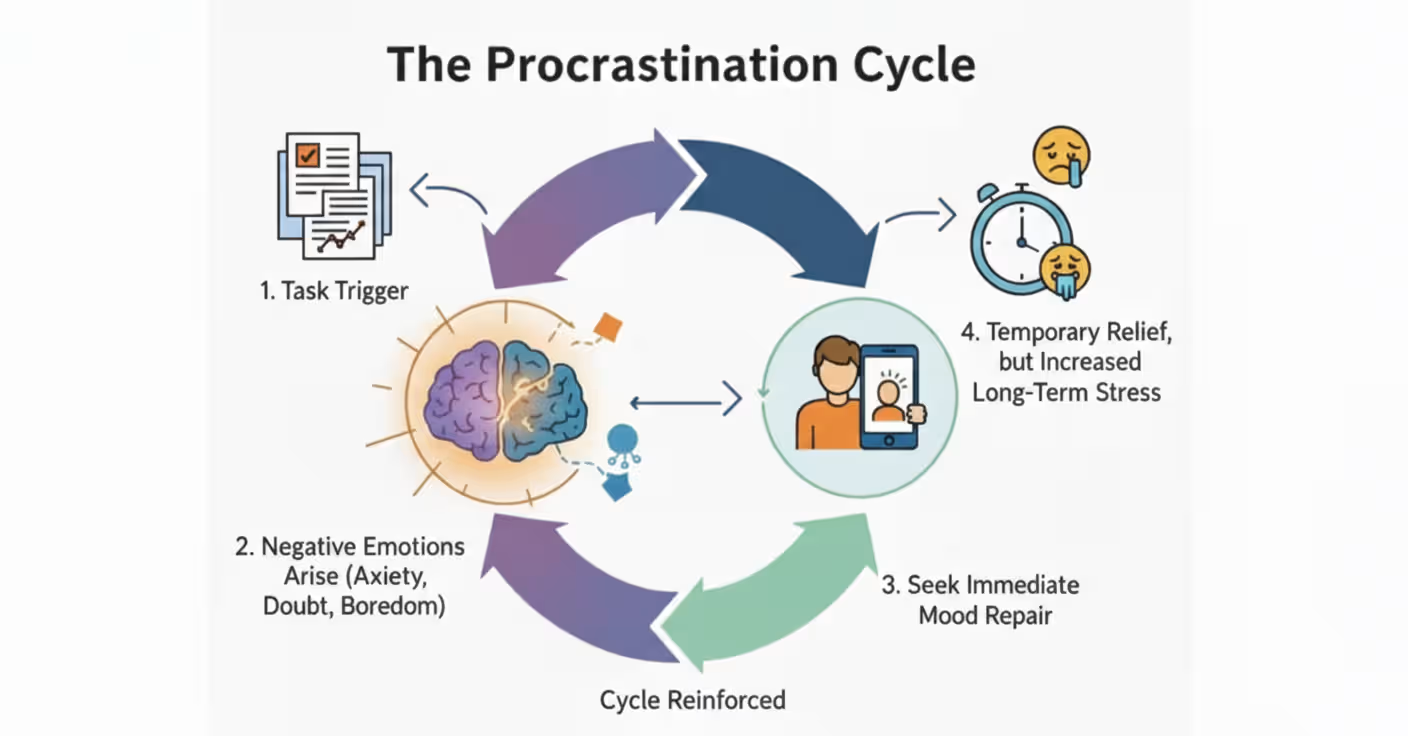
Once you begin to identify triggers, the next step is to map out the entire behavior pattern that follows. This involves looking beyond the single act of self-sabotage and seeing it as part of a larger sequence. A typical pattern includes the trigger, the resulting thought or feeling, the self-defeating behavior itself, and the immediate and long-term consequences. For example:
- Trigger: Receiving a challenging new project at work.
- Thought/Feeling: "This is too hard. I'm going to mess it up." (Anxiety, self-doubt).
- Behavior: Procrastinating by spending hours on social media or doing less important tasks.
- Immediate Consequence: Temporary relief from anxiety; a feeling of distraction.
- Long-Term Consequence: Increased stress, rushed work, potential for a negative performance review, reinforcement of the belief "I can't handle challenging projects."
Recognizing this full sequence helps to understand the function of the behavior. The immediate consequence, often a feeling of relief or escape, is the "payoff" that keeps the cycle going, despite the negative long-term outcomes.
Understanding the Payoff (Real or Perceived) of Self-Defeating Actions
Every behavior, even a self-defeating one, continues because it provides some kind of perceived benefit or "payoff" in the short term. This payoff is the key to the behavior's persistence. Understanding it is not about justifying the action but about comprehending its powerful, immediate allure. Common payoffs include:
- Avoidance of Discomfort: The behavior allows you to escape from fear, anxiety, boredom, or feelings of inadequacy.
- Sense of Control: By engineering your own failure, you control the "when" and "how," which can feel less threatening than facing an unknown outcome.
- Maintaining a Familiar Identity: If your identity is tied to being an underdog or someone who struggles, success can be disorienting. Self-sabotage keeps you in a familiar, albeit painful, role.
- Lowering Expectations: If you broadcast your struggles or handicap yourself, others may lower their expectations, reducing the pressure to perform.
- Validating Core Beliefs: The behavior provides evidence to support negative beliefs like "I'm not good enough," which creates a sense of cognitive consistency that can be oddly comforting.
Acknowledging this payoff without judgment is a critical insight. It reveals that you are not simply acting irrationally; you are engaging in a flawed strategy to meet a legitimate psychological need. The goal then becomes finding healthier, more adaptive ways to meet that same need.
Strategic Interventions: Tools for Breaking the Cycle
With a foundation of self-awareness, the focus can shift from understanding the problem to actively solving it. Breaking the cycle of self-defeat requires a multi-faceted approach that addresses thoughts, emotions, and behaviors. This involves learning and applying specific strategies to interrupt old patterns and build new, more constructive ones. It is a process of systematically replacing maladaptive coping mechanisms with healthier alternatives.
Mindset Shifts: Rewiring Your Thinking
Since many self-defeating behaviors are rooted in negative thought patterns, cognitive restructuring is a powerful tool. This involves challenging and changing the unhelpful beliefs that fuel self-sabotage. Techniques derived from Cognitive Behavioral Therapy (CBT) are particularly effective:
- Catch, Check, and Change: First, learn to catch the negative thought as it occurs. Second, check its validity. Ask questions like: "Is this thought 100% true? What is the evidence for and against it? What is a more balanced way of looking at this?" Third, change the thought to a more realistic and compassionate alternative. For example, change "I'm going to fail this presentation" to "I'm nervous, but I've prepared, and I'll do my best."
- Cultivating a Growth Mindset: Shift from a "fixed mindset" (believing abilities are static) to a "growth mindset" (believing abilities can be developed). This reframes failure not as a verdict on your worth but as an opportunity to learn and improve.
- Practicing Self-Compassion: Treat yourself with the same kindness you would offer a friend. Instead of harsh self-criticism after a setback, acknowledge the difficulty of the situation and offer yourself encouragement.
Building Emotional Intelligence and Regulation
Many self-defeating actions are impulsive reactions to overwhelming emotions. Building emotional intelligence—the ability to recognize, understand, and manage your own emotions—is key to breaking this link. Strategies from Dialectical Behavior Therapy (DBT) are highly useful here:
- Mindfulness: Practice paying attention to the present moment without judgment. This creates a pause between an emotional trigger and your reaction, giving you the space to choose a more thoughtful response.
- Distress Tolerance: Develop skills to navigate painful emotions without resorting to destructive behaviors. This can include techniques like intense exercise, temperature changes (e.g., holding ice), or engaging all five senses to ground yourself in the present.
- Emotional Labeling: Simply naming the emotion you are feeling (e.g., "I am feeling anxious and overwhelmed") can reduce its intensity and give you a greater sense of control.
Developing Self-Regulation and Self-Control
Self-regulation is the capacity to manage your impulses and behaviors to achieve long-term goals. It's the muscle that helps you resist the short-term payoff of a self-defeating act in favor of a better future outcome.
- Start Small: Build self-control by setting and achieving small, manageable goals. Each success strengthens your belief in your ability to follow through.
- "If-Then" Planning: Create specific plans for how you will handle triggers. For example, "If I feel the urge to procrastinate by opening social media, then I will work on my project for just 15 minutes before taking a break."
- Manage Your Environment: Make it harder to engage in self-defeating behaviors and easier to make good choices. If you impulsively shop online, unsubscribe from marketing emails. If you want to exercise more, lay out your gym clothes the night before.
Behavior Change Techniques
Directly modifying behavior is a crucial component. This can involve:
- Behavioral Activation: For issues like avoidance and procrastination, the best remedy is action. This technique involves scheduling positive or necessary activities, regardless of motivation. The act of doing often creates the motivation to continue.
- Habit Replacement: It's easier to replace a bad habit than to simply eliminate it. Identify the cue and reward for your self-defeating behavior and insert a new, healthier routine in its place. For example, if the cue is stress and the reward is the distraction of online videos, replace the video-watching with a short walk or a breathing exercise.
- Leveraging Technology: Modern technology offers innovative tools to support behavior change. Apps focused on mindfulness, habit tracking, and CBT can provide structure and reinforcement. Neuroscience-backed technologies, such as those using neural entrainment, aim to help rewire brainwave patterns associated with ingrained states like anxiety or lack of focus, offering a biological-level intervention to complement psychological strategies.
Confronting Avoidance and Rejection Sensitivity
For those whose self-sabotage is driven by fear of failure or rejection, a more direct approach is needed.
- Gradual Exposure: Systematically and safely expose yourself to the situations you fear. If you fear public speaking, start by speaking up in a small meeting, then a larger one, gradually building your confidence.
- Rejection Therapy: Intentionally seek out small, low-stakes rejections to desensitize yourself to the fear. This could be as simple as asking for a discount at a coffee shop. The goal is to learn that rejection is not catastrophic and to build resilience. This is vital in professional settings, where fear of failure can have a significant economic impact. A Harvard Business Review study found that self-sabotage in the workplace reduces productivity by 40%, demonstrating the high cost of avoidance.
Sustaining Change: Building a Resilient Future
Overcoming self-defeating behaviors is not a one-time event but an ongoing process of growth and self-management. The initial work of breaking the cycle is demanding, but the true challenge lies in sustaining these changes over the long term. This requires building a robust support system, knowing when to seek professional help, and integrating new, healthier practices into the fabric of daily life to foster lasting resilience.
The Importance of Accountability
Accountability is a powerful tool for maintaining momentum. When you are accountable to someone or something outside of yourself, you are more likely to follow through on your commitments, especially when motivation wanes.
- External Accountability: Share your goals with a trusted friend, family member, or mentor. Schedule regular check-ins to discuss your progress, challenges, and successes. This external support can provide encouragement and a gentle nudge when you feel like slipping back into old patterns.
- Formal Accountability: Joining a support group (either in-person or online) for a specific issue like addiction or procrastination can provide a community of people with shared experiences. A professional coach or therapist also serves as a key accountability partner.
- Internal Accountability: Develop systems to hold yourself accountable. Use a journal or a habit-tracking app to monitor your behaviors and progress. Regularly review your goals and reaffirm your commitment to them. This practice of self-monitoring reinforces your sense of agency and personal responsibility.
When to Seek Professional Support
While self-help strategies are effective for many, there are times when professional support is necessary. Self-defeating patterns can be deeply connected to underlying mental health conditions that require specialized care. Consider seeking help from a qualified professional if:
- Your behaviors are causing significant distress or impairment in your daily life.
- You are engaging in dangerous behaviors, such as significant substance use or self-harm.
- The behaviors may be symptomatic of a deeper issue, such as depression, an anxiety disorder, or certain Personality Disorders.
- You have a history of trauma that has not been addressed.
- Despite your best efforts, you feel stuck and unable to make progress on your own.
A psychologist, licensed counselor, or clinical social worker can provide a diagnosis, develop a tailored treatment plan, and offer evidence-based therapies like CBT, DBT, or psychodynamic therapy. They provide a safe, non-judgmental space to explore the roots of your behaviors and develop effective coping strategies.
Cultivating Long-Term Self-Care and Lifestyle Practices
Sustaining change requires creating a lifestyle that supports your new, healthier patterns. Self-care is not an indulgence; it is a fundamental requirement for mental and emotional resilience.
- Physical Well-being: Prioritize sleep, nutrition, and regular physical activity. These are the cornerstones of emotional regulation and cognitive function. A well-rested and well-nourished brain is better equipped to manage stress and resist impulsive behaviors.
- Stress Management: Integrate stress-reduction practices into your daily routine. This could include mindfulness meditation, yoga, spending time in nature, or engaging in hobbies that you find relaxing and fulfilling. As burnout rates remain high, with around 48% of workers reporting experiencing it, proactive stress management is essential.
- Supportive Environments: Be mindful of your social and professional environments. Surround yourself with supportive, positive people who encourage your growth. In the workplace, supportive employers who promote mental health and work-life balance can make a significant difference. Conversely, it may be necessary to set boundaries with or distance yourself from individuals or situations that consistently trigger your self-defeating behaviors.
By focusing on these long-term practices, you shift from a mindset of "fixing a problem" to one of "cultivating well-being." This proactive stance builds a strong foundation of resilience, making it easier to navigate future challenges without falling back into the destructive cycle of self-defeat.
Conclusion
The journey to overcome self-defeating behaviors is a profound act of self-reclamation. It begins with the courage to recognize the invisible chains of self-sabotage and to question the ingrained behavior patterns that have long dictated outcomes. This guide has illuminated the path from awareness to action, demonstrating that these behaviors are not character flaws but learned responses with deep psychological roots in past experiences, defense mechanisms, and a distorted inner narrative.
By understanding the "why" behind procrastination, avoidance, and other forms of self-defeat, you can begin to untangle the cycle. The key lies in igniting self-awareness—identifying personal triggers and recognizing the short-term payoffs that keep these destructive habits in place. This awareness creates the necessary space to implement strategic interventions. Rewiring your thinking through cognitive shifts, building emotional regulation skills, and applying targeted behavior change techniques are the essential tools for constructing new, healthier neural pathways.
Sustaining this transformation requires a commitment to building a resilient future. This involves embracing accountability, knowing when to seek the guidance of a therapist or counselor, and cultivating a lifestyle rooted in consistent self-