Every decision you make, from choosing morning coffee to pursuing a career, is guided by a powerful force inside your brain. Your brain has a reward system that acts as an engine for motivation, pleasure, and lasting habits. This intricate network is the biological machinery that generates the drive for achievement, processes the joy of connection, and forges the routines that define your daily existence. It is the reason you seek out delicious food, cherish social bonds, and strive for personal growth. Understanding this engine is not just an academic exercise; it is the first step toward consciously steering your behavior, building better habits, and designing a more fulfilling life.
What is the Human Reward System? Defining the brain circuitry that governs motivation, pleasure, and learning.
At its core, the human reward system consists of connected brain structures and neural pathways in the central nervous system. It controls the experience of reward, positive reinforcement, and motivation. Rather than a single location, it is a complex brain circuitry that evolved to promote survival by encouraging life-sustaining behaviors. When we perform an action the brain deems beneficial—like eating when hungry or receiving social approval—this system releases key neurotransmitters, most notably dopamine. This chemical release creates a positive feeling that reinforces the behavior, making us more likely to repeat it. These intricate connections form several crucial reward pathways that are fundamental to how we learn, what we desire, and who we become.
The Core Components: Building Your Brain's Engine
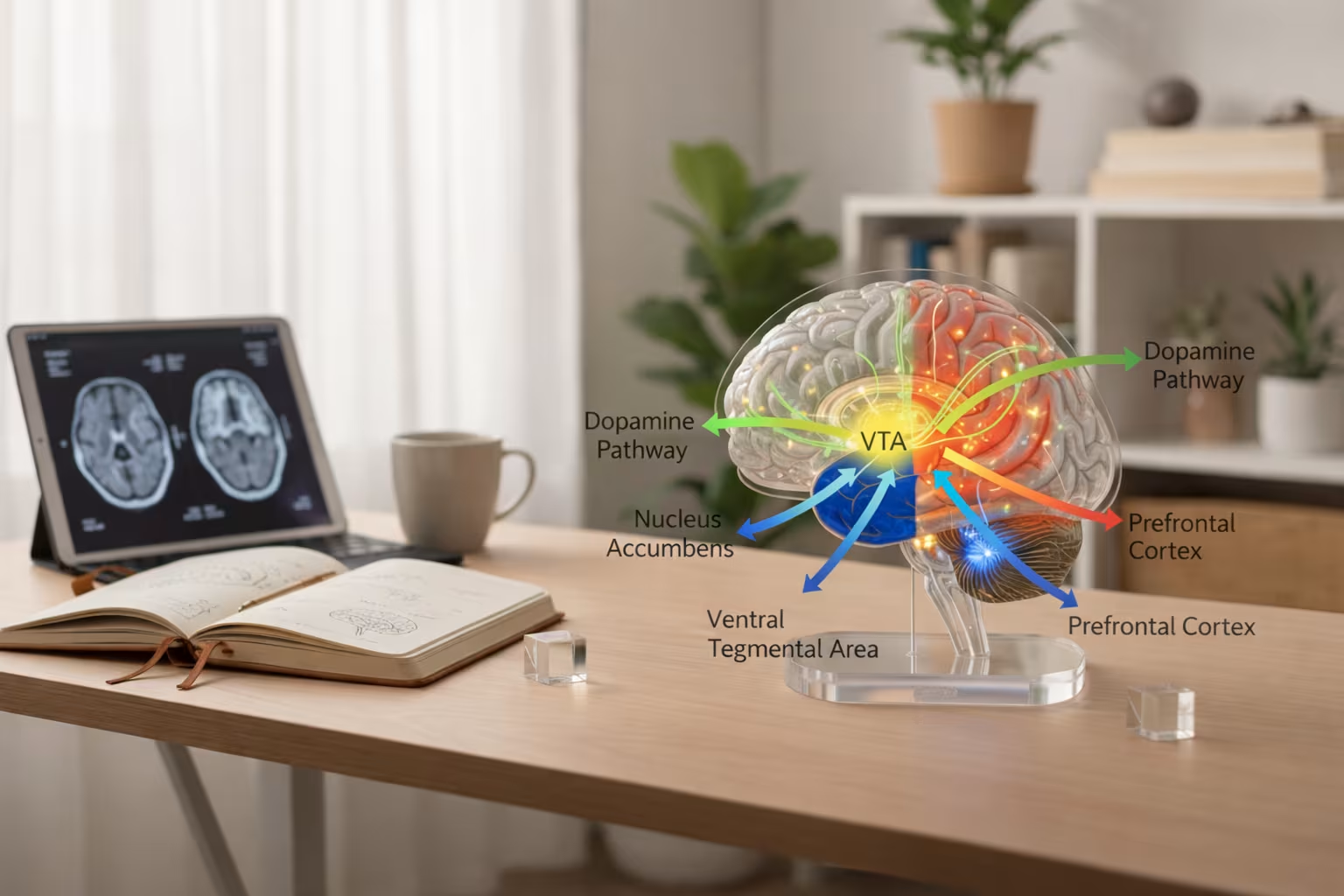
 The mesocorticolimbic circuit is the primary reward pathway in the brain. It begins in the Ventral Tegmental Area (VTA), which releases dopamine to other key areas like the Nucleus Accumbens and Prefrontal Cortex.
To truly understand how this system operates, we must first examine its key anatomical parts. Much like a high-performance engine, the reward system relies on specialized components working in perfect synchrony. These structures, primarily located in a circuit known as the mesocorticolimbic circuit, are the primary brain regions that process rewarding stimuli and translate them into action. Let's look under the hood at the main components.
The Ventral Tegmental Area (VTA): The "Fuel Pump" – Origin of dopaminergic projection neurons.
Located deep in the midbrain, the Ventral Tegmental Area (VTA) can be considered the engine's primary fuel pump. It is one of the principal sources of dopamine-producing (dopaminergic) neurons and the starting point for the major dopaminergic pathway. When we encounter or even anticipate something rewarding, the VTA is activated. Its dopaminergic projection neurons fire, initiating a cascade of dopamine signaling by releasing this crucial neurotransmitter into other critical areas of the reward circuit. The VTA doesn't act alone; it receives inputs from various brain regions that provide information about our internal state (e.g., hunger) and external environment (e.g., the sight of food). This allows it to modulate its dopamine output in response to relevant cues, initiating the cascade of neural responses that drive us toward a goal.
The Nucleus Accumbens (NAc) and Striatum: The "Ignition" – The central hub for reward, motivation, and action. (mesolimbic system)
If the VTA is the fuel pump, the Nucleus Accumbens (NAc) is the ignition switch. As part of the ventral striatum, the NAc is where dopamine-rich signals meet. When the VTA releases dopamine, the NAc is its main target. This VTA-to-NAc path is key in the mesolimbic pathway, often known as the primary "reward pathway" within the broader mesolimbic system. Dopamine entering the NAc links to pleasure, desire, and motivation. The NAc, full of GABAergic medium spiny neurons, combines reward info with context from other brain areas to turn "wanting" into goal-directed action. The broader striatum also helps form habits.
The Amygdala and Hippocampus: Adding Emotional Color and Memory – Linking rewards to emotional significance and context (reward learning).
Motivation and pleasure are not just abstract concepts; they are deeply intertwined with emotion and memory. The Amygdala and Hippocampus are the components that provide this crucial context, forming the foundation of reward learning. The Amygdala, the brain's emotional processing center, assesses the emotional significance of a stimulus. It helps link a rewarding experience with a positive emotional state, strengthening the association. For instance, the amygdala helps embed the warm feeling of social connection, making you more likely to seek it out again.
The Hippocampus, the brain's memory hub, works in concert to encode the memory of the rewarding experience, recording where you were and what you were doing. This creates a rich, contextual memory that serves as a powerful cue for future behavior. Together, they ensure that we not only enjoy rewards but remember how to find them again, turning beneficial actions into learned behaviors.
How the Engine Fuels Motivation and Pleasure
With the core components in place, we can now examine how this intricate engine generates the powerful forces of motivation and pleasure. These are not merely feelings but potent biological signals designed to guide our actions and ensure our survival by directing our attention and energy toward beneficial goals.
Motivation: The Spark of Desire – Explaining reward motivation and the power of reward anticipation in driving behavior.
Motivation is the driving force that initiates, guides, and maintains goal-oriented behaviors. Within the reward system, reward motivation is largely powered by dopamine, but not in the way it is commonly misunderstood. According to research from institutions like Columbia University, dopamine is less about the pleasure of consumption ("liking") and more about the motivation to seek ("wanting"). The power of reward anticipation is often a more potent activator of the VTA and NAc than the reward itself.
When your brain anticipates a positive outcome—whether it's the taste of your favorite meal or praise from a manager—it releases dopamine. This dopamine surge acts as a signal of salience, flagging the stimulus as something important and worth pursuing. It creates a state of energized focus that propels you to act, demonstrating that the desire for a reward is often a more powerful driver than the reward itself.
The Drive for Survival: Evolutionary Roots of Reward – How basic rewards like food reward and social stimuli tap into this ancient system.
The reward system is not a modern evolutionary development; its roots are ancient and deeply tied to survival. The primary rewards that activate this system most powerfully are those that have historically promoted the survival of our species. A classic example is the food reward. For our ancestors, finding high-calorie food was essential. The brain evolved to make this search-and-consume behavior highly rewarding, triggering a robust dopamine release that reinforces the behaviors that led to its discovery.
This ancient wiring is also deeply connected to our internal biology. Our circadian rhythms, controlled by the suprachiasmatic nucleus and clock genes, affect how sensitive we are to rewards. They especially influence our food intake and motivation to eat at different times of the day. Our home food environment also affects this process. Similarly, social stimuli—such as cooperation, acceptance, and pair-bonding—are powerful natural rewards. As social creatures, our survival has always depended on our ability to form groups. This evolutionary pressure shaped our brains to find social connection inherently rewarding, ensuring we build the communities necessary to thrive.
Building Lasting Habits: The Engine's Automatic Transmission
One of the most remarkable functions of the reward system is its ability to transition behaviors from conscious, effortful actions into automatic, ingrained habits. This process is like shifting a car from manual to automatic transmission; it frees up cognitive resources and makes our daily routines efficient. Understanding this mechanism is key to both building good habits and breaking bad ones.
From Conscious Effort to Automaticity: The Habit Loop – How the reward system solidifies behaviors into ingrained routines (behavior).
Habits are formed through a neurological process known as the "habit loop," which consists of three components: a cue, a routine, and a reward. The reward system is the engine that powers this loop.
- Cue: The trigger that initiates the behavior.
- Routine: The physical or mental action you perform—the behavior itself.
- Reward: The positive outcome that reinforces the loop.
Initially, performing a new routine requires conscious effort. But each time the routine is followed by a reward, the brain strengthens the neural connections associated with that loop. This is a classic example of operant conditioning, where a behavior is strengthened by a reinforcing stimulus. This is the same principle behind simple tools for child psychiatry and social-emotional development, like using Reward charts to promote positive actions and help children track and achieve behavioral milestones.
Dopamine's Shifting Role in Habit Formation: From reward prediction error to reinforcing established behaviors.
As a habit becomes more ingrained, the role of dopamine within the reward system undergoes a critical shift, a concept known as "reward prediction error." When a behavior is new, dopamine is released when the reward is received. However, as the brain becomes better at predicting the outcome, the dopamine spike shifts to the cue that predicts the reward. This anticipatory dopamine release generates the craving that drives the habitual behavior.
This complex signaling is mediated by different types of dopamine receptors. The "go" signal for action is often associated with the D1 receptor (and other D1-like receptors), while the D2 receptor (and other D2-like receptors) can play a more modulatory or inhibitory role. This intricate balance in dopamine signaling is what allows the brain to efficiently automate behaviors and prioritize actions based on their predicted outcomes.
The Interplay with Prefrontal Cortex: How executive function transitions actions to automated habit pathways.
The Prefrontal Cortex (PFC), particularly the lateral prefrontal cortex, is the brain's center for executive functions like planning and self-control. It plays a pivotal role in the initial stages of habit formation. When you decide to start a new behavior, your PFC is heavily engaged. The mesocortical pathway, which sends dopamine from the VTA to the PFC, supports this goal-directed reward-related cognition.
As the habit loop strengthens through repetition, control gradually shifts from the PFC to deeper brain structures like the dorsal striatum, which is specialized for automatic behaviors. This neural handoff is a mark of efficiency. By automating the routine, the brain frees up the PFC's valuable cognitive resources to focus on novel challenges and decisions. This transition is how a new gym routine moves from a daily debate to an unconscious part of your morning.
When the Engine Misfires: Understanding Dysfunctions and Addiction
While the reward system is a masterful engine for promoting well-being, it is not infallible. Certain substances and behaviors can hijack this machinery, leading to compulsive behaviors and addiction. James Olds and Peter Milner discovered this powerful effect in experiments. They found that rats would press a lever endlessly to get electrical stimulation of reward centers. This is called intracranial self-stimulation or brain stimulation reward.
Substances like opioids or behaviors like gambling can trigger a flood of dopamine that dwarfs natural rewards. This intense reinforcement forges an incredibly strong habit loop. Over time, the brain reduces its number of dopamine receptors, especially dopamine D2 receptors. This leads to tolerance and lowers the ability to feel pleasure from everyday activities. Furthermore, changes in brain circuits can also cause conditions like Attention deficit hyperactivity disorder (ADHD). Differences in dopamine signaling affect motivation and impulse control in these cases. Modern technologies like video games with reward loops and behaviour management software with points systems can strongly engage this system. This raises ethical questions about their design and the data security of systems that track behavior. These systems often use SSL encryption technology.
Tuning Your Engine for Optimal Performance: Practical Strategies
Understanding the mechanics of your brain's reward system is empowering. It transforms you from a passive passenger into an active driver, capable of tuning your neural engine for better performance. By consciously engaging with the principles of reward and motivation, you can build better habits, achieve your goals, and cultivate lasting well-being.
Harnessing Anticipation: Setting Clear, Achievable Goals and Visualizing Success to activate reward pathways.
The reward system is fueled by anticipation. You can leverage this by setting clear, specific, and achievable goals. Vague aspirations are less motivating than concrete goals like "walk for 30 minutes, three times a week." A clear goal allows your brain to anticipate a specific reward—the feeling of accomplishment—which activates the reward pathways and provides the motivational fuel to get started. Breaking larger goals into smaller steps creates more opportunities for these rewarding moments.
Visualizing success is another powerful tool. Taking a few moments to vividly imagine yourself achieving your goal can activate the same reward circuitry as actually performing the action. This mental rehearsal strengthens the neural pathways associated with the desired behavior and enhances motivation.
Cultivating Intrinsic Motivation: Moving Beyond External Rewards for lasting satisfaction.
External rewards, such as material rewards or praise, are effective motivators. However, a more robust and sustainable form of motivation comes from within. Intrinsic motivation is the drive to engage in a behavior because it is personally rewarding. To cultivate it, focus on autonomy, mastery, and purpose.
- Autonomy: Give yourself choices. When you feel in control, the process becomes more rewarding.
- Mastery: Engage in challenging activities. The process of improving a skill is a powerful intrinsic reward.
- Purpose: Connect your actions to a larger meaning. Understanding the "why" behind your efforts fuels deep and lasting motivation.
This approach is important for designing effective workplace programs. It goes beyond simple Performance-Based Incentives to include Professional Development Opportunities that build mastery and growth.
Mindful Engagement: Understanding Your Own Reward Triggers – Self-awareness in decision-making and risk evaluation.
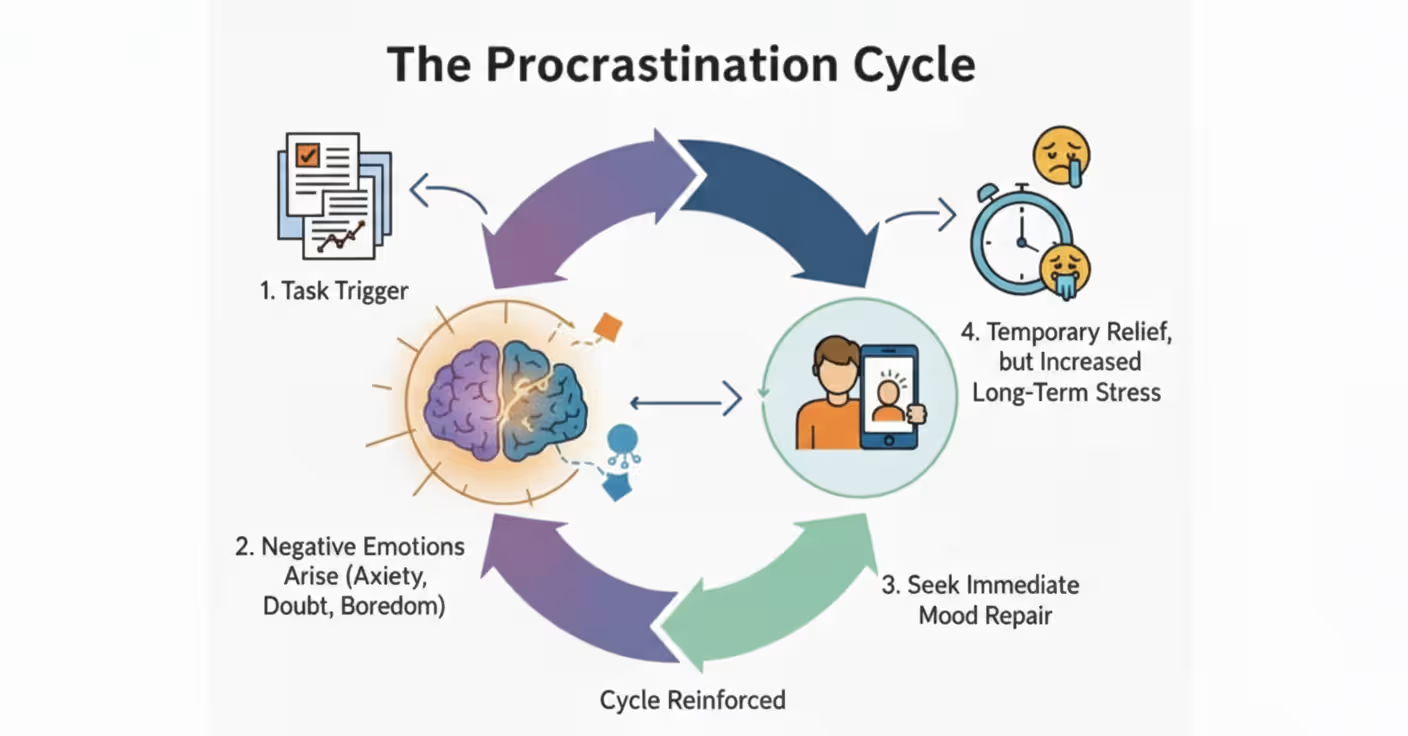
The final step in tuning your engine is developing self-awareness. By paying mindful attention, you can identify the cues, routines, and rewards that drive your behavior. What triggers procrastination? What is the true reward you seek when you mindlessly scroll through social media?
Mindfulness allows you to observe these urges without immediately acting on them, creating a space for your prefrontal cortex to engage in thoughtful decision-making and risk evaluation. By understanding your personal reward triggers, you can consciously design your environment to support your goals—removing cues for unwanted habits and adding cues for desired ones. This self-awareness is the key to moving from automatic, reactive behavior to conscious, intentional action.
Conclusion: Master Your Brain's Engine, Master Your Life
The human reward system is more than a fascinating piece of neurobiology; it is the fundamental engine that powers your journey through life. It is the architect of your desires, the sculptor of your habits, and the silent partner in every choice you make. From the basic drive for survival to the complex pursuit of lifelong ambitions, this intricate neural circuitry shapes the very essence of who you are and what you do.
Recap: The Reward System as Your Brain's Powerful Engine for motivation, pleasure, and lasting habits.
We have seen how core components like the Ventral Tegmental Area and Nucleus Accumbens work in concert, using dopamine to fuel motivation. We have explored how this system drives behavior not only through immediate pleasure but also through anticipation. It turns our actions into lasting habits by moving control from the conscious prefrontal cortex to automatic brain pathways. While this system can be hijacked, its fundamental purpose is to guide us toward a better, more successful life.
Empowering Future Action: Applying this knowledge to cultivate desirable behaviors and enhance well-being.
This knowledge is a practical user's manual for your brain. By understanding the habit loop, you can design new, positive routines. By setting clear goals, you can harness anticipatory dopamine to build momentum. This understanding is critical for creating an effective employee reward system at work or a personal rewards program at home. If you are a manager designing Nomination Programs like those at University Hospitals or a parent creating a behavior plan, the principles are the same. Use the brain's natural motivation system to encourage positive change.
Final Thought: The journey of self-mastery through understanding your brain.
The journey to a more intentional life begins with understanding the internal forces that guide you. Your brain's reward system is not a destiny to which you are passively bound; it is a powerful tool you can learn to work with. By respecting its power, understanding its mechanisms, and applying thoughtful strategies, you can tune your internal engine to drive you toward your most cherished goals. Mastering this system is, in essence, a profound step on the path toward mastering yourself.