Introduction: Finding Your Anchor in the Storm of Anxiety
Anxiety can feel like a relentless storm, a turbulent sea of worry, fear, and physical unease that threatens to capsize your sense of stability. In these moments, the search for an anchor—something solid to hold onto—becomes paramount. For millions, the modern world, with its constant connectivity and pressure, fuels this storm, making anxiety not just a fleeting emotion but a pervasive state of being that colors daily life. This guide is for those seeking not just a temporary safe harbor but a way to navigate the storm with skill, confidence, and a lasting sense of calm.
The Pervasive Impact of Anxiety in Modern Life
In our fast-paced society, stress and anxiety have become unwelcome companions for many. The impact extends far beyond simple worry. It can strain relationships, hinder professional growth, and erode overall mental health, often co-occurring with conditions like depression. The physiological toll is just as significant, manifesting as sleep disturbances, digestive issues, and a perpetually activated nervous system. This constant state of high alert is exhausting, leaving individuals feeling drained and disconnected from their own lives. The challenge lies in breaking this cycle and reclaiming a sense of inner peace.
Discovering Mindfulness: A Path to Lasting Calm and Breakthrough Relief
Amidst a sea of potential solutions, mindfulness emerges as a powerful, evidence-based approach to managing anxiety. It is not about eliminating anxious thoughts or feelings, an often-impossible task. Instead, mindfulness offers a radical alternative: changing your relationship with them. It is the practice of paying attention to the present moment—to your thoughts, emotions, and bodily sensations—with curiosity and without judgment. This simple but profound shift in awareness provides the breakthrough relief many are searching for, creating the mental space needed to respond to stressors with clarity rather than automatic fear.
What You’ll Learn in This Ultimate Guide
This guide is designed to be a comprehensive resource, moving beyond superficial tips to provide a deep, actionable understanding of how to use mindfulness to fundamentally transform your experience with anxiety. We will explore the psychological and neurological roots of anxiety and demystify what mindfulness truly is. You will learn how mindfulness practices actively rewire your brain to build resilience. Most importantly, you will be equipped with a full toolkit of essential mindfulness exercises, from foundational breathing techniques to advanced meditations, and learn how to integrate these powerful practices into your daily life for sustained calm and improved mental health.
Understanding Anxiety: More Than Just Worries
To effectively manage anxiety, it is essential to first understand its nature. Anxiety is a fundamental human emotion, an evolutionary alarm system designed to alert us to potential threats. However, when this system becomes overactive and triggered by perceived dangers rather than actual ones, it transitions from a protective mechanism into a source of chronic distress. It is more than just feeling worried; it is a complex interplay of cognitive, emotional, and physiological responses that can feel overwhelming and uncontrollable.
The Spectrum of Anxiety: From Everyday Stress to Clinical Disorders
Anxiety exists on a spectrum. On one end is the everyday stress and worry that everyone experiences before a presentation or a difficult conversation. This type of anxiety is typically transient and related to a specific situation. Further along the spectrum are anxiety disorders, which involve intense, excessive, and persistent worry and fear about everyday situations. These conditions, such as Generalized Anxiety Disorder (GAD), Panic Disorder, and Social Anxiety Disorder, significantly interfere with daily functioning and diminish quality of life. Understanding where your experience falls on this spectrum is a key step in seeking the appropriate support and strategies for management.
The "Fight or Flight" Response: How Anxiety Hijacks Your Nervous System
At the core of the anxiety experience is the activation of the sympathetic nervous system, commonly known as the "fight or flight" response. When your brain perceives a threat, a region called the amygdala signals the release of stress hormones like adrenaline and cortisol. This triggers a cascade of physiological changes: your heart rate increases, breathing becomes shallow and rapid, muscles tense, and your senses sharpen. This response is incredibly useful when facing a genuine physical danger. However, in cases of chronic anxiety, this system is chronically activated by thoughts of future events, social situations, or abstract fears, keeping the body in a sustained state of high alert and exhaustion.
The Cycle of Anxious Thoughts and Feelings: Perpetuating Distress
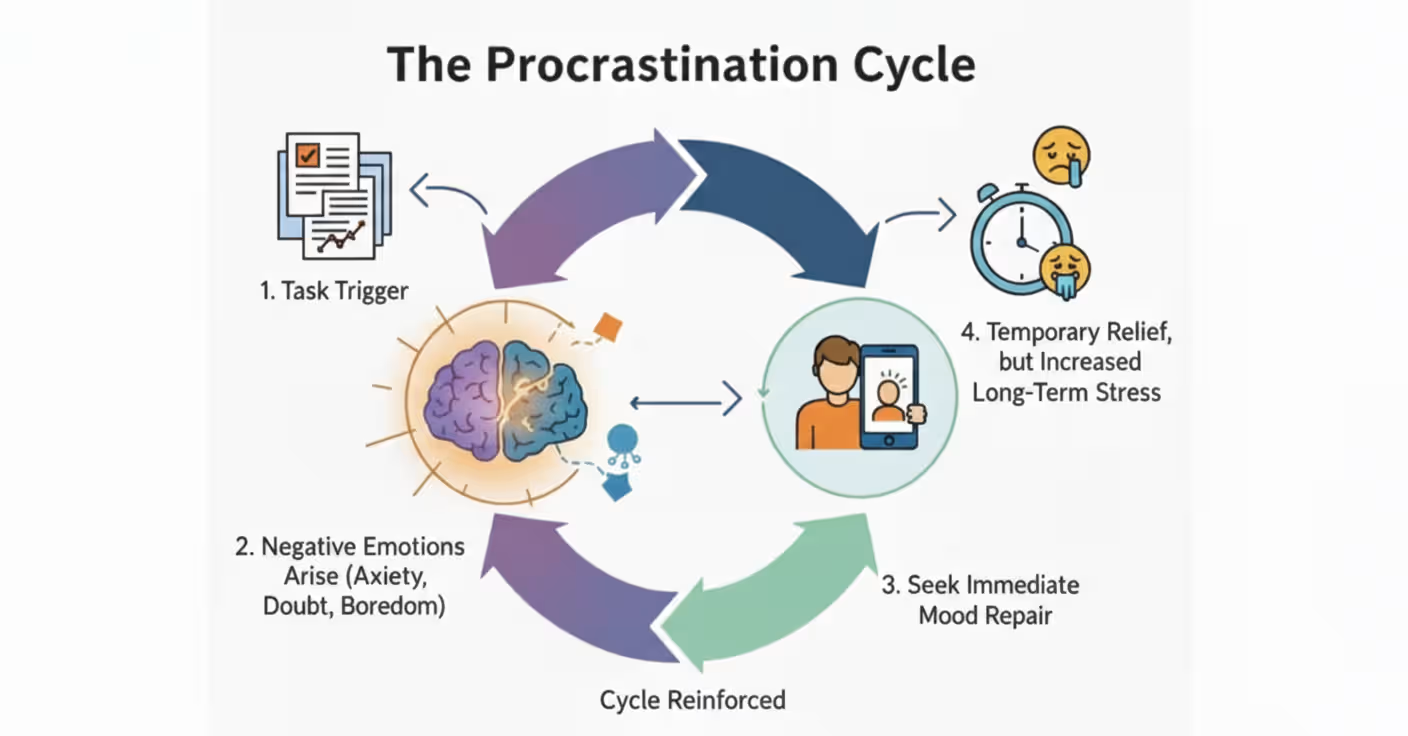
Anxiety is often sustained by a self-perpetuating cycle of thoughts, feelings, and physical sensations. It might begin with a "what if" thought, which triggers a feeling of fear or dread. This emotion then produces physical sensations, like a racing heart or tightness in the chest. Noticing these physical symptoms can then reinforce the initial anxious thought, creating a feedback loop that intensifies the experience. For example, a thought about an upcoming deadline leads to worry (emotion), which causes a knot in your stomach (sensation). Feeling the knot then validates the thought that the situation is catastrophic, and the cycle continues, trapping you in a state of escalating distress.
What is Mindfulness? A Foundation for Inner Calm
Mindfulness is a state of active, open attention to the present moment. It is a mental faculty that allows you to observe your thoughts, feelings, and bodily sensations without being consumed by them. Originating from ancient contemplative traditions, mindfulness has been embraced by modern psychology and neuroscience for its profound benefits on mental health, particularly in the realms of stress and anxiety reduction. It is not about emptying the mind but about becoming intimately aware of what is happening in the mind, moment by moment.
Defining Mindfulness: Presence Without Judgment
The core of mindfulness can be broken down into two key components: awareness and non-judgment. Awareness involves intentionally directing your attention to your inner and outer experiences as they unfold. This could be the sensation of your breath entering and leaving your body, the sound of birds outside your window, or the arising of an anxious thought. The second component, non-judgment, is crucial. It means observing these experiences with an attitude of curiosity, openness, and acceptance, rather than labeling them as "good" or "bad," trying to change them, or criticizing yourself for having them. This non-judgmental stance is what allows you to break free from habitual reactive patterns.
The Two Core Approaches: Focused Attention and Open Monitoring
Mindfulness practices generally fall into two categories. The first is Focused Attention (FA) meditation. In FA, you concentrate on a single object, most commonly the breath. You maintain focus on the sensations of breathing, and whenever the mind wanders—which it inevitably will—you gently and non-judgmentally guide your attention back to the breath. This practice trains the brain’s ability to concentrate and stabilize attention.
The second approach is Open Monitoring (OM) meditation. In OM, instead of focusing on a single object, you maintain a broad awareness of whatever arises in your experience from moment to moment. This could include thoughts, feelings, sounds, or physical sensations. You observe them as they come and go without getting attached to or carried away by any particular one. This practice cultivates a more spacious and less reactive awareness of your mental landscape.
Cultivating the Mind-Body Connection and Body Awareness
A significant aspect of mindfulness is its ability to bridge the gap between mind and body. Anxiety often causes a sense of disconnection, where the mind is lost in future worries while the body is tense and agitated. Mindfulness practices, particularly those like the body scan, systematically guide your attention through the body, helping you notice areas of tension, warmth, or tingling. This process enhances interoception—the ability to sense the internal state of your body. By becoming more attuned to your physical self, you can notice the early signs of anxiety and respond with grounding techniques before the feelings escalate, fostering a sense of integrated well-being.
How Mindfulness Works to Rewire Your Anxious Brain
The benefits of mindfulness are not merely psychological; they are rooted in its ability to induce tangible changes in the structure and function of the brain. Neuroscientific research has shown that consistent mindfulness practice can reshape neural pathways, effectively rewiring the brain to be less reactive to stress and more resilient. This process, known as neuroplasticity, is at the heart of how mindfulness provides lasting relief from anxiety. It moves beyond simple relaxation and actively trains your brain for greater calm and emotional balance.
Calming the Nervous System: Activating the Relaxation Response
Mindfulness practices, especially those centered on slow, deep breathing, directly counteract the "fight or flight" response. By intentionally slowing your breath, you activate the parasympathetic nervous system, which is responsible for the "rest and digest" state. This triggers what is known as the relaxation response, a physiological state of deep rest that changes the body's physical and emotional responses to stress. Heart rate and blood pressure decrease, breathing slows, and muscle tension is released. Regular practice strengthens this response, making it easier for your body to return to a state of equilibrium after experiencing a stressor. Furthermore, these practices can influence brainwave patterns, encouraging a shift from the high-frequency Beta waves associated with active thinking and anxiety to the slower Alpha and Theta waves linked to calm, relaxed awareness and meditative states.
Creating Space: Observing Anxious Thoughts and Emotions Without Reactivity
One of the most powerful ways mindfulness mitigates anxiety is by changing your relationship with your own thoughts. Anxiety often involves a process called cognitive fusion, where you become entangled with your anxious thoughts, believing them to be absolute truths. Mindfulness teaches cognitive defusion—the ability to observe your thoughts as transient mental events rather than objective reality. When an anxious thought like "I'm going to fail" arises, a mindful approach allows you to step back and notice it as just a thought. You can say to yourself, "I am having the thought that I am going to fail." This subtle shift creates a crucial space between you (the observer) and the thought. In this space, you have the freedom to choose your response rather than being automatically swept away by the emotion the thought provokes.
Enhancing Emotional Regulation and Cultivating Self-Compassion
Mindfulness practice strengthens the prefrontal cortex, the part of the brain responsible for executive functions like decision-making, emotional regulation, and impulse control. At the same time, it can reduce the reactivity of the amygdala, the brain's fear center. This rebalancing of activity between the prefrontal cortex and the amygdala enhances your ability to manage difficult emotions. When anxiety arises, you are better equipped to pause, assess the situation clearly, and respond thoughtfully rather than react impulsively. Additionally, mindfulness fosters self-compassion. Instead of criticizing yourself for feeling anxious, you learn to meet your difficult feelings with kindness and understanding. This compassionate stance is profoundly healing and reduces the secondary suffering—the anxiety about being anxious—that often accompanies these experiences.
Essential Mindfulness Practices for Immediate and Lasting Relief
Theory is valuable, but the true power of mindfulness is unlocked through practice. The following exercises are designed to provide both immediate relief during moments of acute anxiety and to build a foundation for long-term mental resilience. They are tools you can use anytime, anywhere, to anchor yourself in the present moment and calm your nervous system. Consistency is key; even a few minutes of practice each day can create significant change over time.
Mindful Breathing: Your Ever-Present Anchor
Your breath is the most accessible tool for mindfulness, as it is always with you. Mindful breathing involves focusing your attention on the physical sensation of your breath without trying to change it.
How to Practice:
- Find a comfortable seated position. You can close your eyes or keep a soft gaze.
- Bring your awareness to your breath. Notice the sensation of the air entering your nostrils, filling your lungs, and then leaving your body.
- Follow the entire journey of one breath in and one breath out. Notice the subtle rise and fall of your chest and abdomen.
- Your mind will wander. This is normal. When you notice your attention has drifted to thoughts or sounds, gently and without judgment, acknowledge the distraction and guide your focus back to the sensation of breathing.
- Continue for 3-10 minutes. This practice can be done anywhere—at your desk, in a waiting room, or before sleep—to quickly ground yourself.
The Body Scan Meditation: Reconnecting with Physical Sensations
The body scan is a foundational mindfulness meditation that cultivates a deep connection with your physical self. It helps you notice and release tension you may not have been aware of and grounds you firmly in the present moment.
How to Practice:
- Lie down comfortably on your back, with your arms by your sides and legs uncrossed. Close your eyes.
- Bring your attention to your breath for a few moments to settle in.
- Direct your focus to the toes of your left foot. Notice any sensations—tingling, warmth, pressure, or numbness—without judging them. If you feel nothing, simply notice the absence of sensation.
- On an inhale, imagine breathing into your toes. On an exhale, imagine releasing any tension.
- Slowly, move your awareness up your body, section by section: the sole of the foot, the ankle, the calf, the knee, the thigh. Repeat the process on your right leg.
- Continue this systematic sweep through your torso, arms, hands, neck, and face, bringing a curious and accepting awareness to each part.
- Once you reach the top of your head, take a moment to feel your entire body as one whole, breathing.
Guided Meditations: Structured Support for Your Practice
For beginners or those who find their minds are particularly busy, guided meditations can provide valuable structure. These audio recordings lead you through a mindfulness exercise, with a narrator offering instructions and reminders to help you stay focused. There are thousands of guided meditations available online and through apps, with varying lengths and themes specifically designed for anxiety, stress reduction, and relaxation. They can be an excellent way to build a consistent meditation habit.
Walking Meditation: Mindfulness in Motion
Mindfulness is not limited to sitting still. Walking meditation integrates mindful awareness with physical movement, making it a great option for those who feel restless.
How to Practice:
- Find a quiet place where you can walk back and forth, perhaps a hallway or a path outdoors.
- Begin walking at a slow, natural pace. Bring your attention to the physical sensations of walking.
- Notice the feeling of your foot lifting off the ground, moving through the air, and then making contact with the ground again. Feel the pressure shift from heel to toe.
- Coordinate your breath with your steps if you wish, perhaps taking one step per inhale and one per exhale.
- When your mind wanders, gently return your focus to the sensation of your feet on the ground. This practice transforms a simple walk into a grounding and centering exercise.
Grounding Techniques for Acute Anxiety and Panic
When anxiety spikes and you feel overwhelmed or dissociated, grounding techniques can quickly pull you back into the present moment and your body. The 5-4-3-2-1 method is a simple yet powerful technique.
How to Practice: Pause and, looking around you, silently name:
- 5 things you can see: The lamp on your desk, a crack in the ceiling, the color of the wall.
- 4 things you can feel: The texture of your clothing, the solidness of the chair beneath you, the coolness of a tabletop.
- 3 things you can hear: The hum of a computer, distant traffic, your own breathing.
- 2 things you can smell: The scent of coffee, the soap on your hands.
- 1 thing you can taste: The lingering taste of your last meal, or simply the taste inside your mouth. This exercise forcefully pulls your attention out of anxious thought loops and into the direct sensory experience of the present moment.
Mindful Movement: Yoga, Tai Chi, and Qigong
Practices like yoga, Tai Chi, and Qigong are forms of mindful movement. They combine physical postures, breathing exercises, and meditation. These disciplines are highly effective for anxiety because they release physical tension held in the body, calm the nervous system through coordinated breathwork, and train the mind to remain focused and present. Engaging in these activities fosters a holistic sense of well-being, addressing both the mental and physical components of stress and anxiety.
The RAIN Practice: Befriending Difficult Emotions
When a strong emotion like anxiety arises, our instinct is often to push it away. The RAIN practice, developed by meditation teacher Michele McDonald, offers a four-step process for mindfully working with difficult emotions instead of resisting them.
How to Practice:
- R - Recognize: Simply acknowledge what is happening. Silently say to yourself, "Anxiety is here," or "Fear is present."
- A - Allow: Allow the feeling to be there, just as it is. Don't try to fix it, change it, or judge it. Create space for the emotion without resisting it.
- I - Investigate: Bring a gentle, curious attention to the feeling. Where do you feel it in your body? What are its qualities? Is it sharp or dull, hot or cold? This is not an intellectual analysis but a kind, embodied inquiry.
- N - Nurture: Offer yourself some self-compassion. You might place a hand over your heart and offer yourself words of kindness, such as, "This is a moment of suffering. May I be kind to myself." This step helps to soothe and comfort the part of you that is hurting.
Integrating Mindfulness into Daily Life for Sustained Calm
Formal meditation practice is the foundation, but the ultimate goal of mindfulness is to bring that quality of awareness into every aspect of your life. Lasting calm is not achieved by sitting on a cushion for 20 minutes and then returning to a state of automatic, reactive living. It is about weaving moments of presence into the fabric of your day, transforming routine activities into opportunities for practice and stress reduction.
Beyond the Cushion: Micro-Practices for Everyday Moments
You don't need to set aside large blocks of time to practice mindfulness. Micro-practices are brief, intentional moments of awareness that can be integrated seamlessly into your existing routine.
- Mindful Morning Coffee: Instead of scrolling through your phone, pay full attention to your first cup of coffee or tea. Notice the warmth of the mug, the aroma, the taste.
- The Three-Breath Pause: Several times a day, simply pause and take three conscious breaths. Feel the full inhale and the full exhale. This can be done before answering the phone, sending an email, or entering a meeting.
- Mindful Chores: When washing dishes or folding laundry, bring your full attention to the task. Feel the warm water on your hands, notice the shapes and textures of the clothes. This transforms a mundane chore into a grounding exercise.
- Mindful Listening: During a conversation, practice listening with your full attention rather than planning your response. Hear the other person’s words and notice their tone and body language.
Cultivating a Mindful Routine: Consistency for Mental Wellbeing
Building a routine helps make mindfulness a stable and reliable part of your life. Start small and be consistent. Perhaps commit to a five-minute mindful breathing exercise every morning upon waking. This sets a calm and centered tone for the rest of your day. You could also schedule a short walking meditation during your lunch break or a body scan before bed to help release the day's stress and improve sleep. The key is not the duration but the regularity of the practice. A consistent routine strengthens the "mindfulness muscle," making it easier to access states of calm and clarity when you need them most.
Mindful Responses to Triggers: Changing Your Habitual Patterns
Mindfulness is especially powerful when applied to the specific situations that trigger your anxiety. The first step is to identify your common triggers—perhaps it's public speaking, receiving critical feedback, or being stuck in traffic. Once you are aware of a trigger, you can create a plan to respond mindfully instead of reacting automatically. When the trigger occurs, use it as a cue to pause and take a few deep breaths. Notice the anxious thoughts and feelings arising without judgment. You can use a grounding technique or the RAIN practice to navigate the difficult emotions. Over time, this practice weakens the old, automatic neural pathways of anxiety and builds new, more resilient pathways of mindful response. You are no longer a victim of your triggers but an active participant in managing your own mental state.
Mindfulness-Based Therapies and Their Synergy with Other Approaches
The principles of mindfulness have been so effective that they have been formally integrated into structured therapeutic programs, creating powerful, evidence-based treatments for anxiety, depression, and other mental health conditions. These therapies combine the practice of mindfulness meditations with concepts from cognitive psychology, offering a comprehensive approach to well-being. Furthermore, mindfulness is not an isolated solution; it works in powerful synergy with other therapeutic modalities, enhancing their effectiveness and providing clients with a more holistic toolkit for mental health.
Two of the most well-known and researched programs are Mindfulness-Based Stress Reduction (MBSR) and Mindfulness-Based Cognitive Therapy (MBCT). MBSR, developed by Jon Kabat-Zinn, is an eight-week program that teaches participants how to use mindfulness meditation, body awareness, and mindful movement to manage stress, pain, and illness. MBCT was adapted from MBSR and specifically designed to prevent relapse in individuals who have experienced recurrent depression. It integrates mindfulness practices with tools from Cognitive Behavioral Therapy (CBT), teaching participants to recognize and disengage from the negative thought patterns that can trigger depressive or anxious episodes.
The skills cultivated through mindfulness are highly complementary to traditional therapies like CBT and Dialectical Behavior Therapy (DBT). For example, a core tenet of CBT is identifying and challenging distorted thoughts. Mindfulness provides the initial, crucial skill of being able to notice these thoughts without immediately believing them—a process known as cognitive defusion. This creates the mental space necessary to then apply CBT techniques to evaluate and reframe those thoughts. Similarly, DBT emphasizes skills for distress tolerance and emotion regulation. Mindfulness practice directly enhances these skills by increasing one's ability to sit with uncomfortable feelings without being overwhelmed, fostering the emotional balance that is central to DBT's goals. By integrating mindfulness exercises into a broader therapeutic plan, individuals can achieve a deeper, more embodied understanding of their psychological patterns, leading to more profound and lasting change.
Conclusion
Navigating the complexities of anxiety requires more than just wishing it away; it demands effective tools and a new way of relating to your inner world. Mindfulness offers precisely that—a practical, accessible, and scientifically-validated path toward achieving not just momentary relaxation, but lasting calm and breakthrough relief. By understanding the nature of anxiety, the mechanics of mindfulness, and the profound ways it can rewire the brain, you are empowered to shift from a state of reactive fear to one of conscious, centered awareness.
Throughout this guide, we have explored the foundational principles and a wide array of mindfulness practices. From the simplicity of a mindful breath and the deep connection of a body scan to the emotional wisdom of the RAIN practice, these exercises are your anchors in the storm. They are not quick fixes but skills that, when cultivated with consistency, build a resilient mind capable of weathering life's challenges with greater ease and clarity. The key is integration—weaving these moments of presence into the fabric of your daily routine, transforming mundane activities into opportunities for grounding and peace.
Your journey begins with a single, intentional breath. Start small. Choose one practice from this guide that resonates with you and commit to trying it for just a few minutes each day. Be patient and compassionate with yourself, as you are learning a new skill. By embracing mindfulness, you are not just managing symptoms; you are embarking on a transformative journey to reclaim your mental health, cultivate profound self-awareness, and build a foundation for a calmer, more fulfilling life.